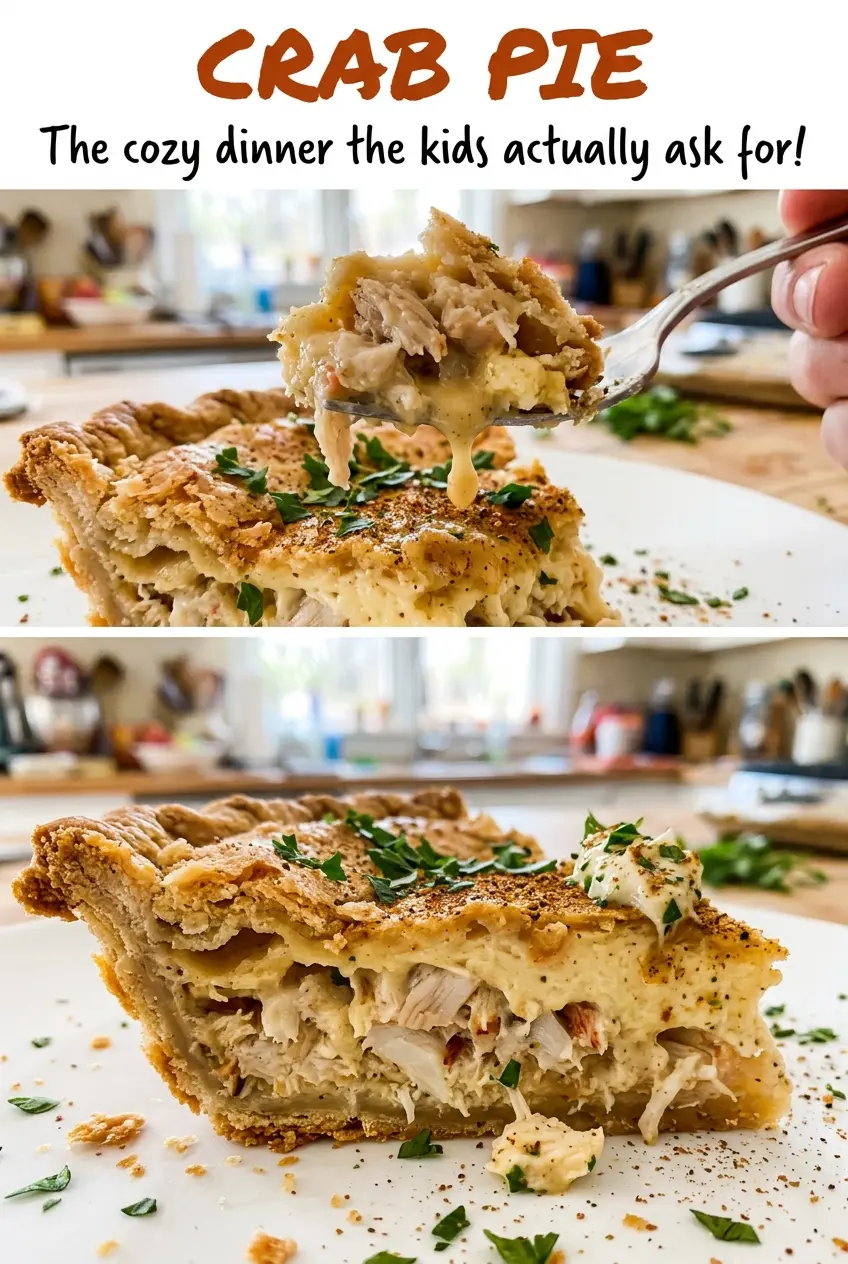
The moment the crust comes out of its first bake, you can see why this pie needs that extra bit of attention: the surface looks dry, but the pastry still has enough structure to hold a creamy crab filling without turning limp underneath. I set the frozen shell on a baking sheet before it goes in the oven, which makes it easier to move and catches any drips later. This Crab Pie lands somewhere between a savory custard and a seafood tart, with sharp cheddar and Old Bay giving the crab a familiar, gently spiced backdrop.
I like that the filling comes together in one bowl, but the crab doesn’t get whisked in with everything else. Folding it in at the end keeps the lump pieces recognizable instead of breaking them into fine shreds. Once the pie has rested, each slice holds together while staying tender in the middle, and the crab still gets to be the first thing you notice.
Kitchen Note
Fold the crab in gently, with a few broad strokes. I stop as soon as the pieces are coated; extra stirring breaks up the lumps and leaves you with less satisfying bites.
Save this Crab Pie for a dinner when you want tender crab, a savory cheddar custard, and a flaky deep-dish crust in every slice.
Why This Crab Pie Starts With a Nearly Baked Crust
Crab pie has a custard filling, so the crust is going into the oven with a fair amount of moisture sitting on top of it. A frozen shell baked just until its surface looks dry gives the bottom a head start before the filling arrives. Skip that second bake and the pastry can absorb custard instead of staying distinct and crisp at the edges.
The two-part bake solves a different problem at each stage. Parchment and pie weights hold the shell in place while the pastry begins to set; taking them out lets the exposed surface finish drying. Pricking the base gives steam a way out, while the baking sheet keeps the shell steady as you move it. Reducing the oven temperature for the filling then gives the egg custard time to set without treating the crust to the hotter blind-bake temperature.
That little pause between crust and filling is worth keeping. Let the shell finish its uncovered bake before pouring anything into it, and don’t rush the final rest after the pie comes out. The result is a slice with a defined pastry base rather than a soft layer that disappears into the custard.
How the Crab, Cheddar, and Custard Each Shape the Pie
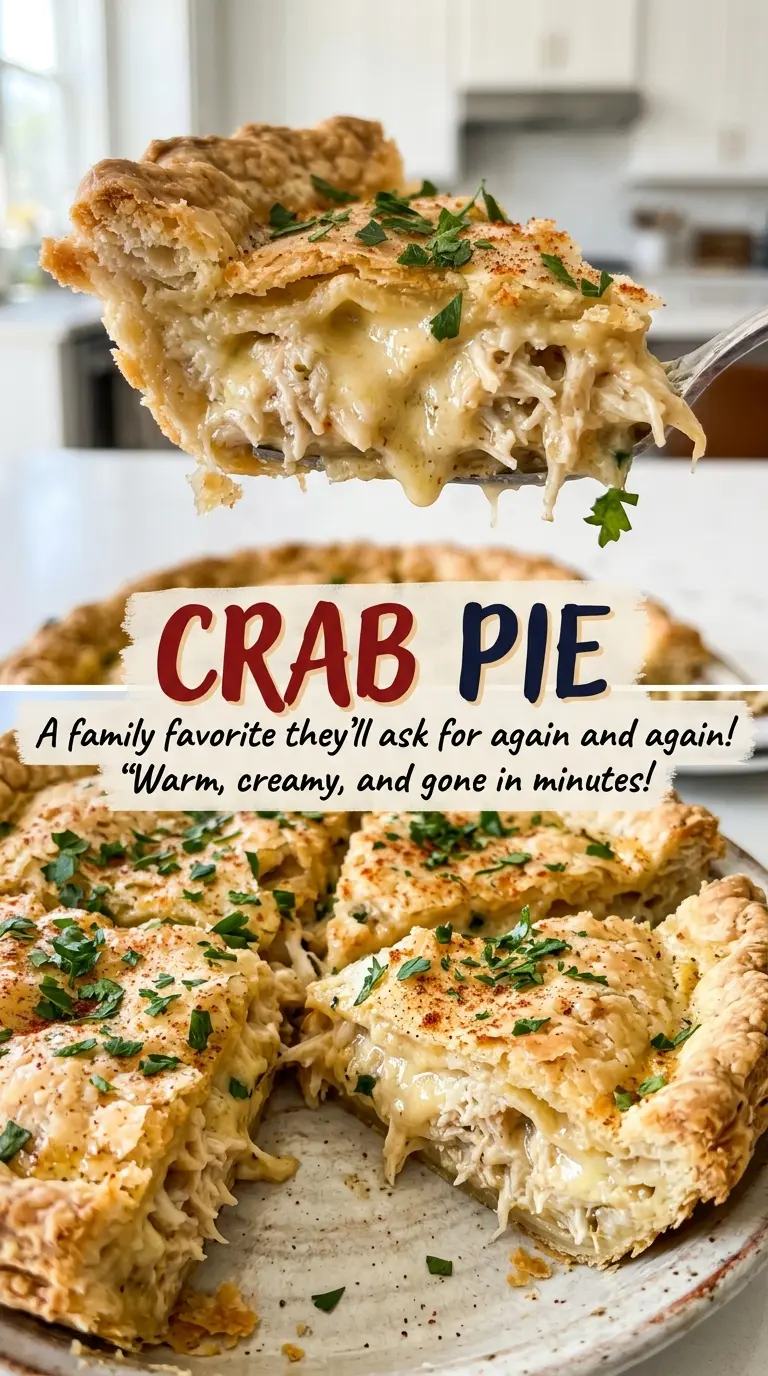
- Lump crabmeat — Its large pieces give the pie distinct bites of crab instead of an even, finely shredded filling. Pick through it carefully for shell fragments and pat it dry; moisture clinging to the meat can loosen the custard. Freshness matters more here than choosing the most expensive label.
- Eggs — Eggs are what set the filling into slices rather than leaving it pourable. Whisk them until the yolks and whites are blended, but there’s no need to beat in lots of air; a foamy mixture can make the finished surface less even.
- Half-and-half — This gives the custard a creamy texture without making it as heavy as a filling made with all cream. Keep it cold until you’re ready to mix. Whole milk will make a lighter, less rich pie, while heavy cream will make the custard richer and firmer.
- Old Bay and dry mustard — Old Bay supplies the recognizable savory seafood seasoning, while dry mustard adds a quiet sharpness that keeps the dairy and crab from tasting flat. Break up any clumps of dry mustard as you whisk so you don’t get a concentrated pocket in one slice.
- Sharp cheddar — Sharp cheddar gives the custard a savory edge that stands up to the crab. Pre-shredded cheese is convenient, but freshly shredded cheddar melts more smoothly because it doesn’t have the same anti-caking coating.
- Scallions — Thin slices distribute their mild onion flavor through the filling without overwhelming the crab. Slice them thinly so they soften as the pie bakes instead of leaving firm, oversized pieces.
- Frozen deep-dish crust — A deep-dish shell has the height and capacity this filling needs. Keep it frozen until it’s time to prick and blind-bake it, and choose a shell that’s labeled deep-dish rather than assuming every 9-inch crust holds the same amount.
From Blind-Baked Shell to a Just-Set Crab Custard
Set the shell before adding the filling
Heat the oven to 375°F with a rack in the center, and place the frozen pie crust on a rimmed baking sheet. Prick the base several times with a fork, line it with parchment, and fill it with pie weights. Bake for 15 minutes, then carefully lift out the parchment and weights; the shell will still need a short uncovered bake.
Dry the surface without overbrowning it
Return the crust to the oven for 5–8 minutes, until the surface looks dry. Watch the pastry near the end of that window; you’re looking for a dry-looking base, not deeply browned edges. Once it’s ready, reduce the oven temperature to 350°F before baking the filled pie.
Whisk the custard, then fold in the crab
In a medium bowl, whisk the eggs, half-and-half, Old Bay, dry mustard, and black pepper until evenly combined. Stir in the thinly sliced scallions and shredded sharp cheddar. Add the crab last and fold it through gently, then pour the filling into the prepared crust; rough mixing at this point will break up the lump pieces.
Bake until the center has just set
Keep the pie on the baking sheet and bake it at 350°F for 40–50 minutes. The center should look just set rather than liquid, and an instant-read thermometer inserted into the center should register 160°F. If the edges look done before the center reaches that point, trust the center reading and give it more time. Rest the pie for 15 minutes before slicing so the custard can settle.
Simple Changes That Still Let the Crab Lead
Use Gruyère for a nuttier cheese note
Replace the sharp cheddar with an equal volume of shredded Gruyère. It gives the custard a mellow, nutty flavor, so the pie tastes a little less sharp; keep the crab and seasoning unchanged.
Make it gluten-free with a deep-dish crust
Use a 9-inch frozen gluten-free deep-dish pie crust and follow its package directions for blind-baking, since gluten-free pastry brands vary. Fill and bake the custard at 350°F as usual; expect a more delicate, crumbly crust, but the crab filling stays the same.
Choose claw meat for smaller bites
Swap in the same weight of picked-over crab claw meat if you prefer a more budget-friendly option. It has smaller, less distinct pieces than lump crab, so the texture won’t be as chunky, but it still works in the egg custard.
Storage and Reheating
- Refrigerator: Cover and refrigerate within 2 hours; keep the pie for up to 3 days. The custard firms as it chills, and the crust softens slightly.
- Freezer: Freeze individual slices tightly wrapped for up to 1 month. Thaw them overnight in the refrigerator; the custard may be a little less silky after freezing.
- Reheating: Warm slices in a 300°F oven until heated through. Avoid a long blast in the microwave, which can make the egg custard rubbery and heat the crab unevenly.
Questions That Come Up When Making Crab Pie
Crab Pie
Ingredients
Equipment
Method
- Heat the oven to 375°F with a rack in the center, and set the frozen pie crust on a rimmed baking sheet.
- Prick the crust several times with a fork, line it with parchment paper, and fill it with pie weights. Bake for 15 minutes.
- Carefully remove the parchment and weights, then bake the crust for 5–8 minutes, until the surface looks dry; reduce the oven to 350°F.
- Whisk the eggs, half-and-half, Old Bay, dry mustard, and black pepper in a medium bowl, then stir in the scallions and cheddar.
- Gently fold in the crabmeat and pour the filling into the crust.
- Bake on the baking sheet for 40–50 minutes, until the center is just set and registers 160°F on an instant-read thermometer.
- Let the pie rest for 15 minutes before slicing.