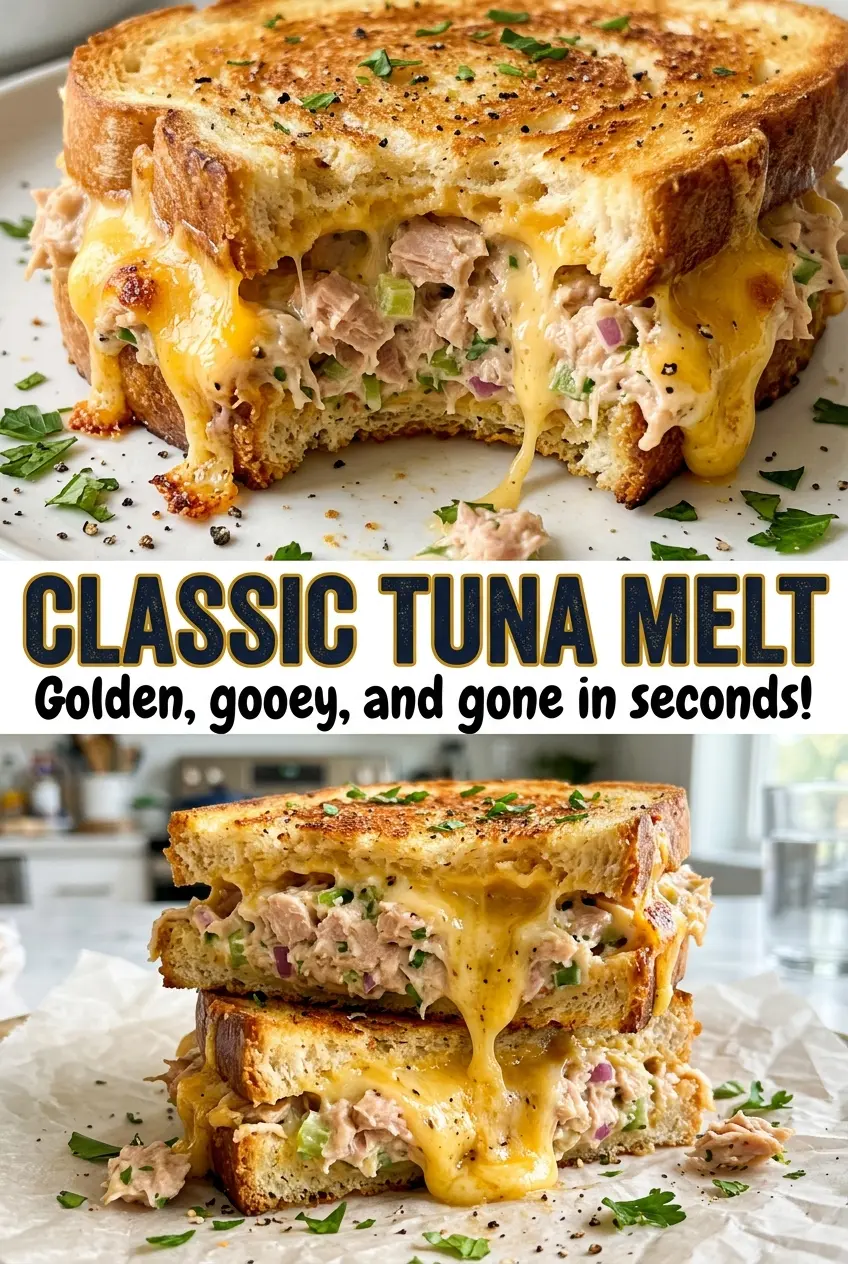
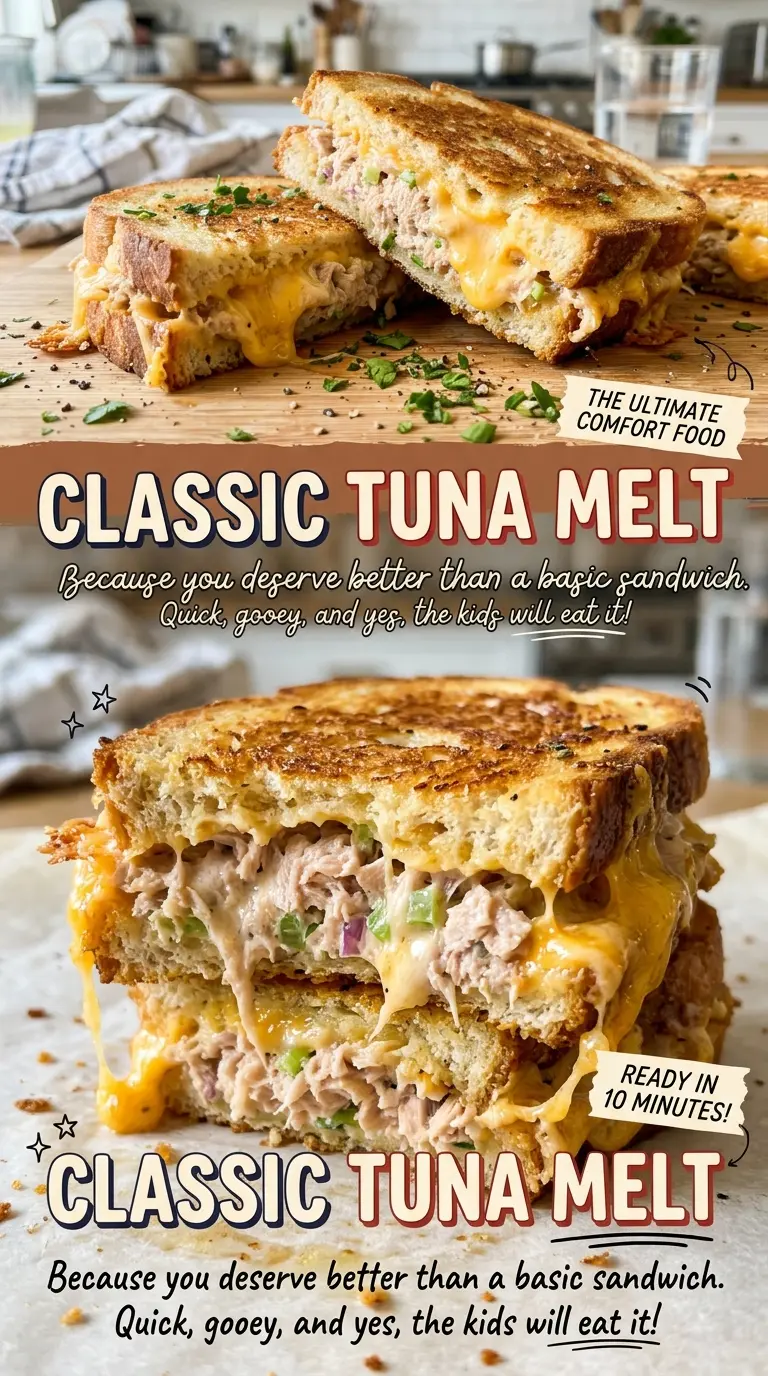
The first bite should give you a crisp, buttery edge before the warm cheddar and tuna filling come through. When I make a Classic Tuna Melt, I keep an eye on the contrast: golden bread outside, a soft center, and tuna salad that still has a little texture instead of turning into a paste.
That starts with the tuna salad, not the skillet. Flaking the tuna before stirring in the mayonnaise and finely chopped vegetables keeps the filling easy to spread, while Dijon and lemon juice give it a bright, savory edge. Then the covered skillet gives the cheddar time to melt as the bread browns. The finished sandwich is simple, but each layer has a job: buttery toast, sharp cheese, and cool, tangy tuna salad warmed through.
Kitchen Note
I keep the skillet at medium-low and cover it while the sandwiches cook. The lid helps the cheddar melt before the bread gets too dark, so resist the urge to turn up the heat for a faster crust.
Save this Classic Tuna Melt for the days you want crisp, buttery bread around warm tuna salad and melted sharp cheddar.
Why a Tuna Melt Needs Flakes, Not Tuna Paste
It’s easy to keep stirring tuna salad until everything looks perfectly smooth, but that’s not the texture I want between toasted bread. Flaked tuna gives the filling a little structure, and the small pieces of celery and red onion spread through it instead of disappearing into a uniform mash. Mix just until the mayonnaise and seasonings coat the tuna; there’s no need to crush it against the side of the bowl.
That texture matters once the sandwich warms. A thick, distinct filling is easier to portion onto the bread and stays pleasant alongside the melted cheddar. If the tuna salad is overworked, it can feel dense and pasty rather than tender. I also keep the filling in an even layer instead of building a tall mound, which makes each bite easier to manage and lets the center warm at the same pace as the crust.
What Each Tuna Melt Ingredient Brings to the Sandwich
- Tuna packed in water — It gives the salad a clean, savory base without adding extra oil. Drain it well before mixing; a budget-friendly canned tuna works here, since the mayonnaise and seasonings add plenty of flavor.
- Mayonnaise — Mayo binds the flakes and keeps the filling creamy. Use the kind you enjoy on a sandwich; the tuna salad depends on its richness, so a very lean substitute won’t give quite the same texture.
- Celery and red onion — Finely chopped celery brings a crisp bite, while red onion adds a sharper note. Take the time to chop both small so they distribute evenly instead of making the filling lumpy.
- Dijon mustard and lemon juice — Dijon adds a gentle mustard tang, and lemon keeps the tuna from tasting flat. Their brightness is useful in a rich sandwich; bottled lemon juice works, though fresh juice has a cleaner aroma.
- Sliced sharp cheddar — Sharp cheddar stands up to the seasoned tuna and melts into a distinct layer. Sliced cheese is convenient and melts evenly; a familiar grocery-store cheddar is all you need.
- Sandwich bread and softened butter — Soft sandwich bread folds around the filling without making the sandwich unwieldy. Softened butter spreads easily to the edges, which helps the outside brown evenly without tearing the slices.
Building the Tuna Melt Without Losing the Crunch
Mix a Textured Tuna Salad
Flake the well-drained tuna into a medium bowl, then add the mayonnaise, celery, red onion, Dijon, lemon juice, salt, and black pepper. Stir until the seasonings and vegetables are distributed, stopping before the tuna turns pasty. The finished salad should hold together when scooped, with recognizable flakes and small pieces of celery throughout. If liquid pools at the bottom of the bowl, drain the tuna more thoroughly next time before adding the dressing.
Butter and Fill the Bread
Spread softened butter on one side of each bread slice. Put cheese and one-quarter of the tuna salad on the unbuttered side of four slices, then top them with the remaining bread slices, buttered sides facing out. Keep the filling in a level layer so it sits neatly inside the sandwich rather than pressing against the edges. The buttered sides are the surfaces that will meet the skillet.
Toast Slowly Until the Cheddar Melts
Heat a 12-inch skillet over medium-low heat and cook two sandwiches at a time, covered, for 3–4 minutes per side. Look for golden-brown bread and cheddar that has softened and melted through the center. Flip carefully once the first side is browned, then cook the second side until it reaches the same color. Repeat with the remaining sandwiches, keeping the skillet at the same gentle heat.
Three Simple Ways to Adapt a Classic Tuna Melt
Make It Gluten-Free
Replace the sandwich bread with sturdy gluten-free sandwich bread. The filling and cheese stay the same, though gluten-free slices can be more delicate when toasted, so turn the sandwiches gently.
Take the Edge Off the Onion
Leave out the red onion for a milder tuna salad. You’ll lose some of its sharp bite, but the celery still gives the filling a fresh crunch.
Use Mild Cheddar for a Softer Cheese Flavor
Swap sharp cheddar for mild cheddar if you want the cheese to taste less pronounced. It still gives you a familiar melted-cheese layer, but the tuna salad’s Dijon and lemon will stand out more.
Storage and Reheating
- Refrigerator: Refrigerate leftover cooked sandwiches in an airtight container for up to 3 days. The bread will soften as it sits.
- Freezer: These melts don’t freeze well; the mayonnaise-based filling can separate, and the bread loses its toasted texture.
- Reheating: Warm a sandwich in a covered skillet over medium-low heat until the center is hot and the cheese softens again. A microwave warms it quickly but leaves the bread soft rather than crisp.
Questions I Get Asked About Tuna Melts
Classic Tuna Melt
Ingredients
Equipment
Method
- Flake the tuna into a medium bowl.
- Mix in the mayonnaise, celery, red onion, Dijon mustard, lemon juice, salt, and black pepper.
- Spread butter on one side of each bread slice.
- Place cheese and one-quarter of the tuna salad on the unbuttered side of four slices.
- Top with the remaining bread, buttered sides out.
- Heat a 12-inch skillet over medium-low heat.
- Cook two sandwiches at a time, covered, for 3–4 minutes per side, until the bread is golden brown and the cheese is melted; repeat with the remaining sandwiches.