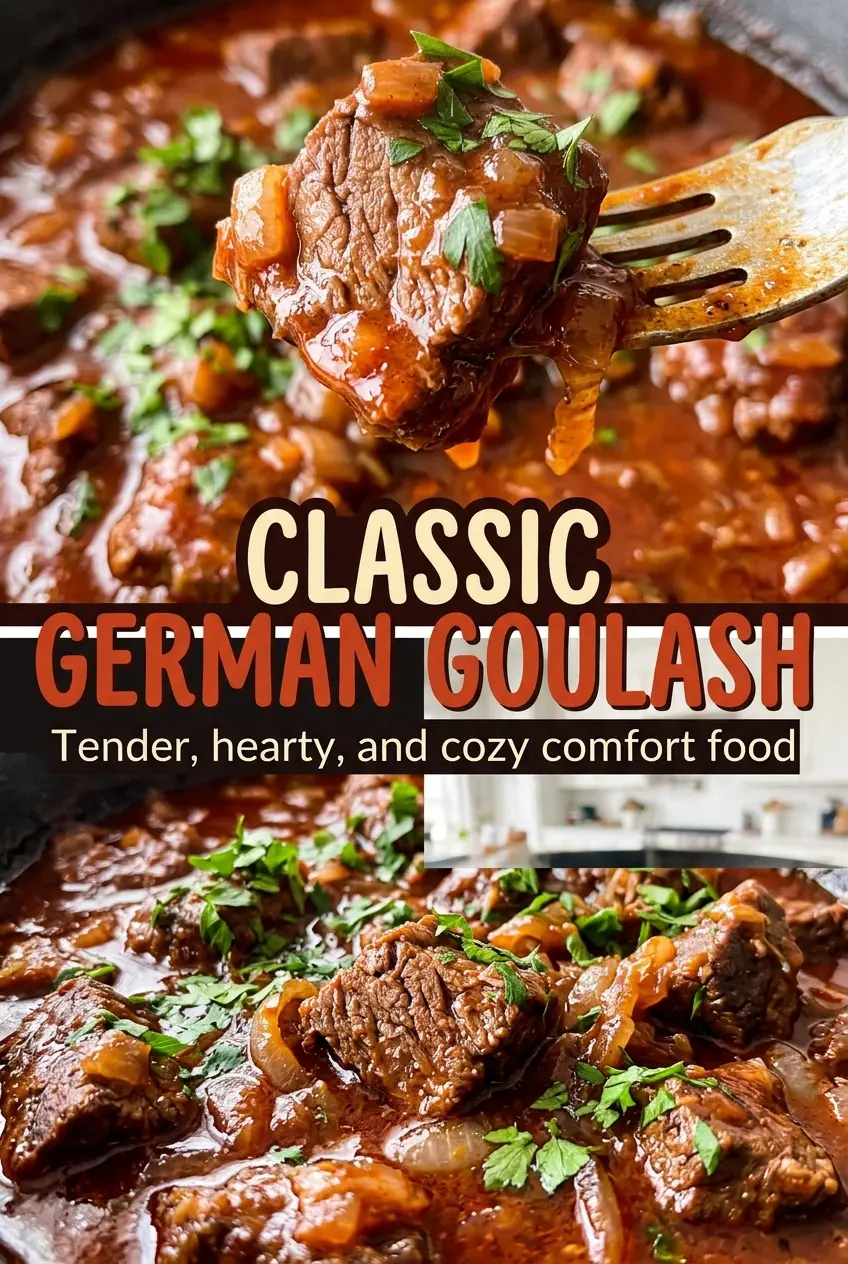
A Dutch oven full of browned beef, browned bits, and a heap of onions still looks more like the start of a stew than dinner. Then the onions soften into the pot, the paprika turns everything brick red, and the long simmer draws the separate pieces together. That’s when this Classic German Goulash starts to feel like itself: fork-tender beef under a sauce that clings instead of pooling thinly at the bottom.
This is a patient stovetop braise, not a complicated one. The work happens in a few short stretches at the stove, followed by time under the lid. I like how the finished pot has deep savory flavor without needing a long list of ingredients or a fussy sauce.
For six servings, it’s a satisfying dinner to make when you have time for a slow simmer. The beef turns tender, the onions become part of the sauce, and sweet paprika gives every bite its warm, unmistakable color.
Kitchen Note
Paprika only needs 30 seconds in the hot pot. Keep it moving, then get the beef and broth back in before it darkens; scorched paprika can turn bitter.
Save this Classic German Goulash for a slow-simmered dinner with fork-tender beef and a rich paprika sauce.
Why This Goulash Gets Its Body Without a Flour-Thickened Gravy
A paprika braise can turn out thin if the sauce is treated like flavored broth. This pot builds its texture from the ingredients already in it: onions soften into the cooking liquid, and the connective tissue in beef chuck breaks down during the long, gentle simmer. Together, they give the sauce body without a roux or a flour slurry.
That matters because flour would change the character of the dish, making the sauce heavier and dulling some of the beef and paprika flavor. The finished sauce should coat the beef and settle around it, not behave like a thick paste. If it still looks loose while the beef is cooking, give the braise time to finish; the texture comes together as the onions and beef soften. The payoff is a glossy, savory sauce with no separate thickening step.
What the Beef, Onions, and Paprika Bring to the Pot

- Beef chuck — Chuck has the connective tissue that softens during a long braise, giving the meat its tender texture. A fresh, affordable roast is a good choice here; trim the exterior fat and cut the beef into even pieces so they cook at a similar pace. Precut stew meat can vary in cut and size, so a whole chuck roast gives you more control.
- Yellow onions — Their sweetness and soft texture become part of the sauce rather than a separate garnish. White onions work in the same weight if that’s what you have, though their flavor is a little sharper. Slice them thinly so they soften evenly.
- Sweet paprika — This is the main source of the sauce’s warm color and rounded pepper flavor, so use paprika that smells fresh rather than dusty or flat. A basic grocery-store jar is fine if it’s fresh; an old jar won’t bring the same aroma. Smoked paprika makes a useful variation, but it shifts the flavor toward smoke.
- Caraway seeds and dried marjoram — Caraway brings an earthy, slightly minty note, while marjoram keeps the seasoning gentle and herbal. Dried oregano can stand in for marjoram in the same quantity, though its flavor is more assertive. If caraway is unavailable, leaving it out is better than replacing it with a spice that changes the whole direction of the pot.
- Tomato paste and garlic — Tomato paste gives the sauce savory depth, while fresh minced garlic adds a sharper note. A tube or can of tomato paste works equally well; the important detail is to stir it into the onions before adding the liquid so it blends into the base.
- Beef broth — Broth carries the browned beef flavor through the braise. Beef stock works in the same volume and usually gives a fuller, more gelatin-rich sauce; choose a standard or low-sodium version depending on how salty you like the finished dish.
Building the Braise in the Same Dutch Oven
Brown the Beef in Batches
Pat the beef dry, season it with kosher salt and black pepper, and heat the vegetable oil in a 6-quart Dutch oven over medium-high heat. Brown the beef in three batches, using one tablespoon of oil for each batch, then transfer it to a plate. Give each piece room to make contact with the pot; crowded beef releases moisture and steams instead of developing browned edges. Those browned surfaces add depth to the sauce later.
Soften the Onions Until Golden
Add the thinly sliced onions to the pot and cook them over medium heat, stirring occasionally, for 15 to 20 minutes. They’ll soften gradually, shrink down, and turn golden rather than staying pale and crisp. Scrape the bottom as you stir so the onions pick up some of the browned flavor left by the beef. If the onions are still firm, they need more time before the seasonings go in.
Layer in the Tomato Paste and Seasonings
Stir the tomato paste and minced garlic into the onions and cook for 1 minute. Add the sweet paprika, caraway seeds, and dried marjoram, stirring until the spices smell fragrant. Keep them moving so the paprika doesn’t sit against the hot pot and scorch. The onion mixture should look evenly red before the liquid goes in.
Let the Covered Pot Simmer Gently
Return the beef and any juices on the plate to the Dutch oven, then add the beef broth and bay leaf. Bring everything to a gentle simmer, cover the pot, and lower the heat. Simmer for 2 1/2 to 3 hours, stirring occasionally, until the beef is fork-tender and the sauce has thickened. A vigorous boil isn’t the goal; look for a quiet, steady simmer under the lid.
How to Shift the Paprika Flavor—or Make the Pot Gluten-Free
A Smokier Paprika Sauce
Replace half of the sweet paprika with smoked paprika. You’ll keep the familiar paprika base but add a gentle smoky edge; using all smoked paprika gives the sauce a more pronounced smoke and less of the sweet paprika character.
A Gluten-Free Version
Use beef broth labeled gluten-free. The goulash doesn’t rely on flour for its texture, so this one ingredient swap keeps the sauce’s character intact while making the dish suitable for a gluten-free meal.
Storage and Reheating
- Refrigerator: Store in a covered container for 3 to 4 days. The sauce may thicken as it chills, and the beef will firm up when cold.
- Freezer: Freeze the cooled goulash with its sauce in an airtight container for up to 3 months. Thaw it overnight in the refrigerator for the most even reheating.
- Reheating: Warm it gently in a covered pot over low heat, stirring occasionally, until it reaches 165°F throughout. Avoid a hard boil, which can break the tender beef into smaller pieces.
Questions That Come Up While the Goulash Simmeres
Classic German Goulash
Ingredients
Equipment
Method
- Pat the beef dry and season it with the salt and pepper.
- Heat the oil in a 6-quart Dutch oven over medium-high heat.
- Brown the beef in 3 batches, using 1 tablespoon of oil per batch.
- Transfer the browned beef to a plate.
- Add the onions to the pot and cook over medium heat, stirring occasionally, for 15 to 20 minutes until softened and golden.
- Stir in the tomato paste and garlic and cook for 1 minute.
- Stir in the paprika, caraway seeds, and marjoram for 30 seconds.
- Return the beef and any accumulated juices to the pot, add the broth and bay leaf, and bring to a gentle simmer.
- Cover the pot and simmer over low heat for 2 1/2 to 3 hours, stirring occasionally, until the beef is fork-tender and the sauce has thickened.