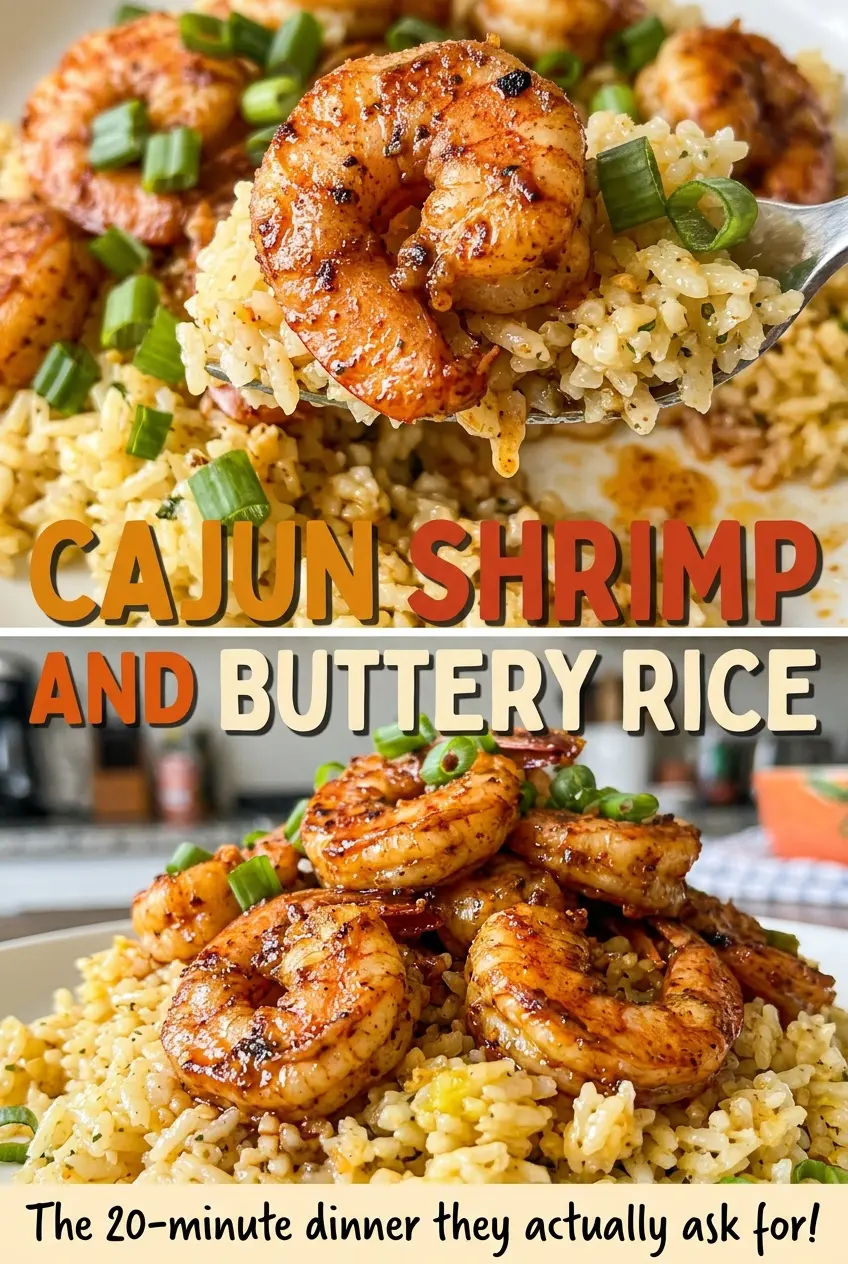
The rice smells buttery before the broth even comes to a boil, and that’s a good sign: the grains have had a minute to toast instead of going straight into liquid. I like that little start because it gives Cajun Shrimp and Buttery Rice a fuller, nutty base without adding another pan or extra steps. Once the rice is covered, there’s time to season the shrimp and get the skillet ready.
The shrimp cook in two batches, which might seem fussy until you see how quickly they turn opaque in a single layer. Crowding them traps steam and makes it harder to get an even cook; a 12-inch skillet gives each piece room to meet the hot surface. Garlic goes in only after both batches are cooked, so it perfumes the pan without sitting over the heat long enough to turn bitter. A squeeze of lemon and fresh parsley finish the shrimp with a bright, savory edge over the soft rice.
Kitchen Note
Give the rice its full covered rest after it comes off the heat. I’ve found that waiting those five minutes before fluffing lets the grains settle instead of seeming wet and clumpy.
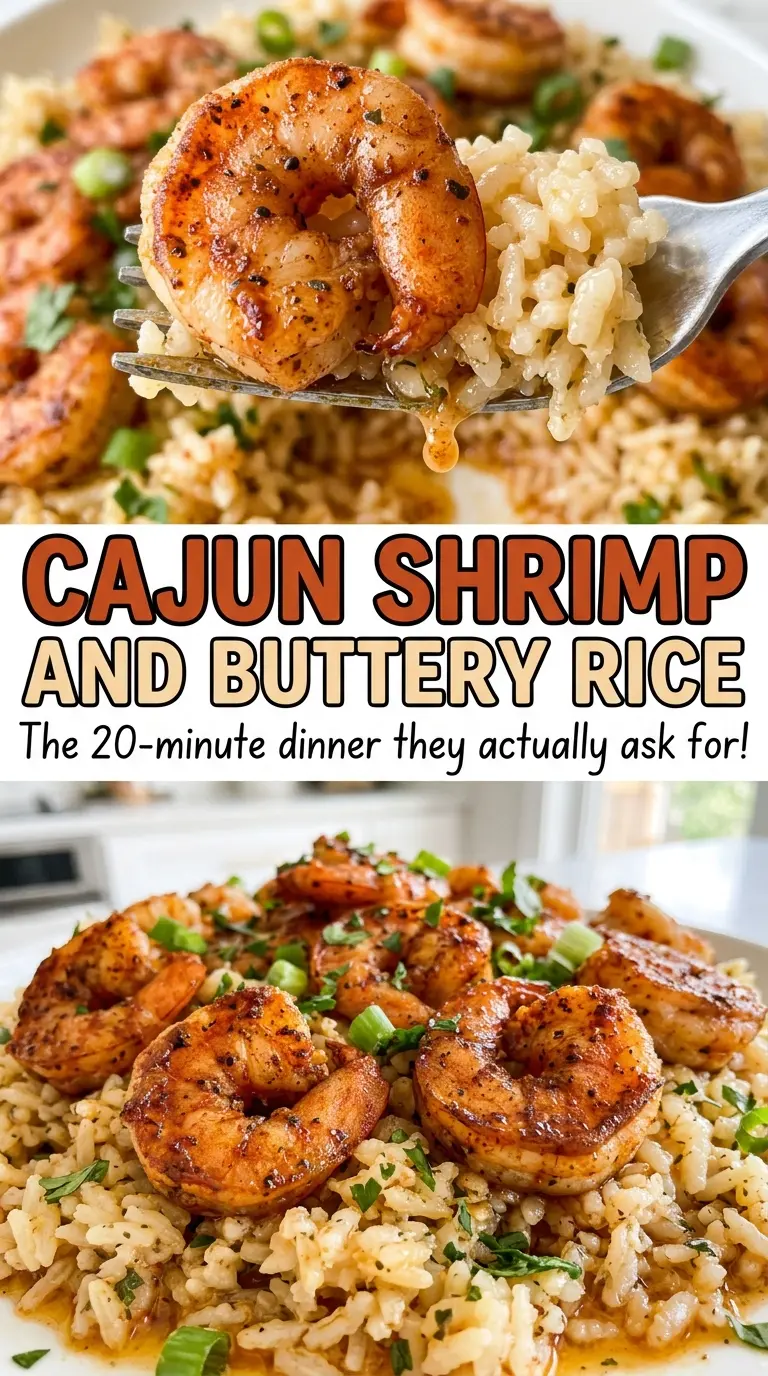
Save Cajun Shrimp and Buttery Rice for a weeknight when you want tender, spice-coated shrimp and buttery rice from one straightforward dinner.
Why the Cajun Seasoning Goes on the Shrimp, Not in the Pan
Seasoning the shrimp before they hit the skillet gives each piece an even coating, so you get Cajun flavor in every bite rather than a few concentrated patches of spice in the oil. It also keeps the skillet’s job simple: the shrimp cook in olive oil, and the garlic joins only at the end. That order matters because garlic needs a much shorter time in the hot pan than the shrimp do.
There’s a practical difference between shrimp that sear and shrimp that steam. When the pieces are spread in a single layer, the pan can cook them evenly; too many at once release moisture into the skillet and make the surface crowded. Splitting the shrimp into two batches takes a little longer, but it gives you control over doneness and keeps the second batch from sitting under the first. Once the cooked shrimp return to the skillet, the garlic needs only a brief stir to become fragrant. The lemon and parsley go in off the heat, where their fresh, bright notes stay clear instead of getting lost in a long cook.
How the Rice, Shrimp, and Finish Each Build Flavor
- Long-grain white rice — Its separate, tender grains suit a saucy shrimp topping. A basic bag works well here; swapping in brown rice or another rice type changes the cooking time and liquid needs, so stick with long-grain white rice for this timing.
- Unsalted butter — Butter coats the rice as it toasts and gives it a rounded, rich base. Unsalted butter also lets the salt level stay controlled alongside the broth. For a dairy-free version, olive oil is the most practical swap, though the rice will taste less buttery.
- Low-sodium chicken broth — The broth seasons the rice from within, while its lower sodium level leaves room for the added salt and Cajun seasoning elsewhere in the dish. A carton of standard broth is fine; using water instead will make the rice taste plainer.
- Large shrimp — Peeled, deveined shrimp with the tails removed are easy to season and serve over rice without extra handling at the table. Fresh or frozen shrimp both work; if using frozen, thaw them completely and pat away excess moisture before seasoning so they cook rather than steam.
- Cajun seasoning — This is the main source of spice and savory flavor on the shrimp, and brands vary in heat and saltiness. Use a brand you already enjoy; check its salt level when choosing how salty you like the overall dish.
- Olive oil — It helps the shrimp cook in the skillet without competing with the Cajun seasoning. A standard olive oil is a sensible choice here; there’s no need to use a special finishing oil.
- Garlic, lemon, and parsley — Fresh minced garlic brings a quick savory aroma, while lemon juice and chopped parsley give the finished shrimp a fresher contrast to the buttery rice. Fresh lemon and parsley make the finish brighter; the garlic should be minced before you start cooking so it’s ready for its short turn in the pan.
The Rice-to-Skillet Timing That Keeps Both Parts Ready Together
Toast the Rice Before Adding Broth
Melt the butter in a medium saucepan over medium heat, stir in the rice, and cook it for 1 minute. The grains should look glossy as the butter coats them, but they shouldn’t brown. Add the chicken broth and salt, bring everything to a boil, then cover the pan and reduce the heat to low. Keep the rice at a gentle simmer for 15–18 minutes, until the liquid is absorbed and the grains are tender.
Let the Covered Rice Rest
Take the saucepan off the heat when the rice is tender and the broth has been absorbed. Leave it covered for 5 minutes; lifting the lid during this rest lets steam escape before the grains have settled. After the rest, fluff the rice with a fork so the grains loosen without turning mushy. Keep the pan covered while you cook the shrimp.
Cook the Shrimp in Two Uncrowded Batches
Toss the peeled and deveined shrimp with the Cajun seasoning until each piece is coated. Heat half the olive oil in a 12-inch skillet over medium-high heat, then arrange half the shrimp in a single layer. Cook for 2–3 minutes per side, until opaque and cooked to 145°F, and transfer them to a plate. Add the remaining oil and shrimp, then cook that batch for 2–3 minutes per side to the same visual and temperature cues.
Finish with Garlic, Lemon, and Parsley
Return the first batch of shrimp to the skillet and add the minced garlic. Stir for 30 seconds, just until the garlic smells fragrant; leaving it in longer can make it taste harsh. Remove the skillet from the heat before stirring in the lemon juice and chopped parsley. Spoon the shrimp over the fluffed rice while the rice is warm.
Simple Changes That Keep the Shrimp-and-Rice Balance
Make the Rice Dairy-Free
Replace the butter with the same amount of olive oil when toasting the rice. The grains will still cook in the broth, but you’ll lose the round, buttery flavor and get a cleaner, lighter finish instead.
Dial Back the Cajun Heat
Use less Cajun seasoning when coating the shrimp if you want a gentler, less assertive spice level. The shrimp will still pick up savory seasoning, though the finished dish won’t have the same bold Cajun kick.
Skip the Parsley for a Simpler Finish
Leave out the parsley if you don’t have it. The shrimp will still get a bright note from the lemon juice, but the finish will be less herbal and fresh-tasting.
Storage and Reheating
- Refrigerator: Refrigerate leftovers within 2 hours and keep them in an airtight container for 3–4 days. The rice will firm up as it chills, and the shrimp may be a little less tender after reheating.
- Freezer: Freeze the rice and shrimp in airtight containers for up to 2 months for best quality. Thaw overnight in the refrigerator; the rice may lose some fluffiness and the shrimp can soften slightly.
- Reheating: Warm gently in a covered skillet with a splash of chicken broth, stirring carefully, or microwave in short intervals until steaming hot throughout. Avoid prolonged high heat, which can toughen the shrimp.
Questions That Come Up When Cooking Cajun Shrimp and Rice
Cajun Shrimp and Buttery Rice
Ingredients
Equipment
Method
- Melt the butter in a medium saucepan over medium heat.
- Stir in the rice and cook for 1 minute.
- Add the chicken broth and salt, and bring to a boil.
- Cover and reduce the heat to low; simmer for 15–18 minutes, until the liquid is absorbed and the rice is tender.
- Remove the saucepan from the heat and let the rice stand, covered, for 5 minutes.
- Fluff the rice with a fork.
- Toss the shrimp with the Cajun seasoning until evenly coated.
- Heat half the olive oil in a 12-inch skillet over medium-high heat, then cook half the shrimp in a single layer for 2–3 minutes per side, until opaque and cooked to 145°F; transfer to a plate.
- Add the remaining olive oil and shrimp to the skillet and cook for 2–3 minutes per side, until opaque and cooked to 145°F.
- Return the first batch of shrimp to the skillet, add the garlic, and cook for 30 seconds, stirring, until fragrant.
- Remove the skillet from the heat and stir in the lemon juice and parsley.
- Serve the shrimp over the buttery rice.