The oil line is the part of a turkey fry I never guess at. A few inches too much can leave you with a pot that bubbles over when the turkey goes in, while too little oil leaves the top exposed. That simple water test takes the guesswork out before the burner is anywhere near the pot. It’s one reason Cajun deep fried turkey feels manageable, even if you’ve never lowered a whole bird into hot oil.
The other detail that makes a difference is getting the turkey dry, then seasoning it in two ways: a butter-and-broth mixture goes into the meat, and Cajun seasoning coats the skin and cavity. I let the seasoned bird chill uncovered before frying. The result is richly seasoned meat under a browned, spiced skin, with the fryer temperature and a thermometer—not a hunch—guiding the finish.

Kitchen Note
The injection mixture needs another whisk now and then while you work. Butter and broth don’t stay evenly blended on their own, so re-mixing helps each small injection carry both through the turkey.
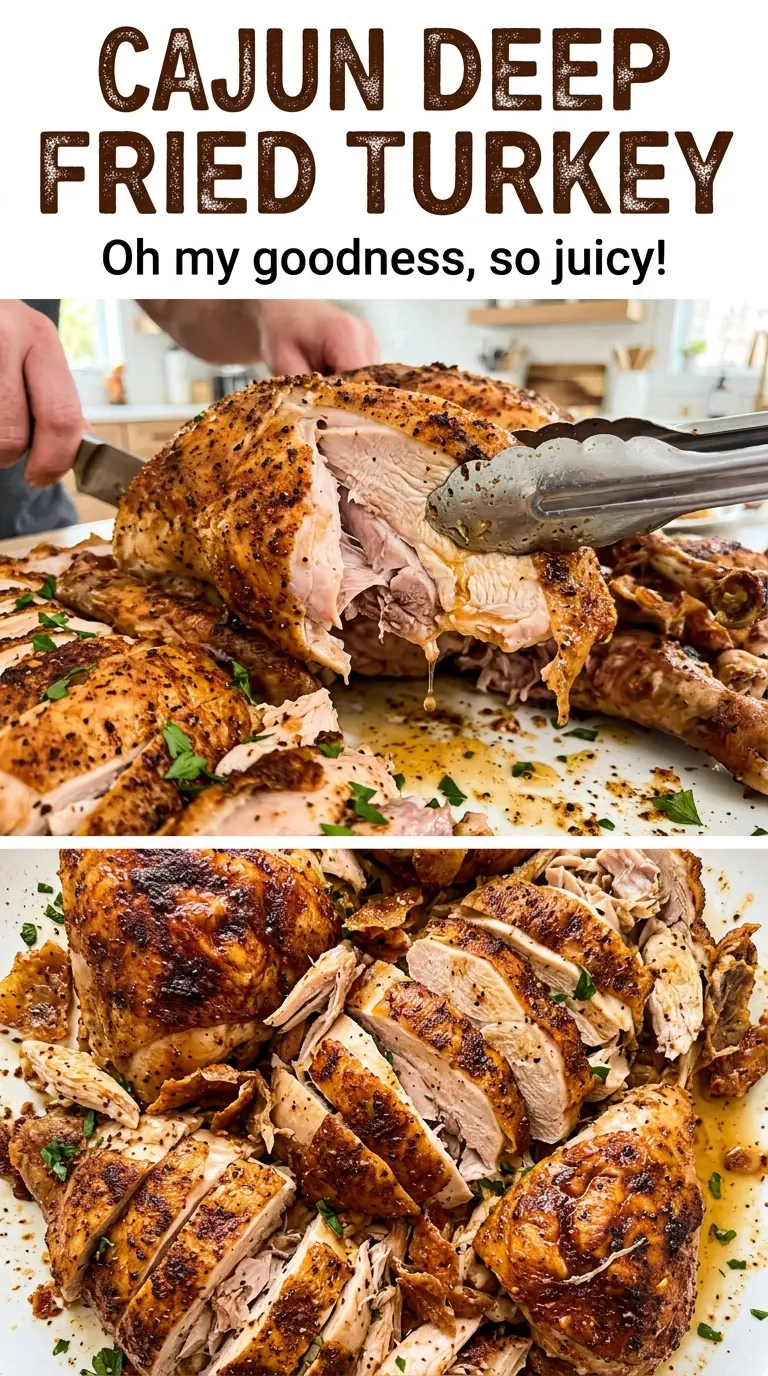
Save this Cajun deep fried turkey for a celebration meal with deeply seasoned meat and a crisp, spiced skin.
Why Guessing the Oil Level Can Turn a Turkey Fry Into an Overflow
A turkey displaces a surprising amount of oil. Measuring with water first lets you see how high the oil will rise once the bird is in the pot, before you heat anything. The marked level also gives you a clear stopping point when you add the peanut oil, so you’re not relying on a gallon estimate or a last-minute adjustment over a hot burner.
Use the actual turkey, basket, and fryer pot for the test. Put the bird in a clean, leakproof food-safe bag with the air pressed out, then add cold water until it sits about an inch above the turkey. The water must still stay below the fryer’s maximum-fill line. If those two conditions don’t fit your pot, don’t ignore the fill line to force a deeper level. Mark the water level, remove the turkey, discard the water, and dry the pot and basket completely before adding oil. That mark is your guide for the peanut oil later.
What the Injection and Cajun Seasoning Each Bring
- Whole turkey — A completely thawed bird in the specified size range fits the frying time and oil-level test used here. Choose a plain, unseasoned turkey when possible; a bird already injected or heavily salted can make the Cajun seasoning taste more assertive than intended.
- Peanut oil — It’s the frying oil used for this method. The amount depends on your pot and the marked fill level, so the water test matters more than pouring in a fixed number of gallons. Use fresh oil with a clean smell; oil that already smells stale carries that taste into the skin.
- Butter and chicken broth — Melted butter gives the injection mixture richness, while broth makes it fluid enough to distribute with a meat injector. Choose broth you like the taste of, since it goes into the turkey itself. A low-cost broth works; the Cajun seasoning will remain the dominant flavor.
- Cajun seasoning — This blend seasons both the meat and the outside, so its salt and heat level shape the finished turkey. Brands vary, and there’s no need for an expensive specialty blend if you already like the taste of your usual one. For a different heat level, choose a milder or hotter Cajun seasoning while keeping the recipe’s total amount and division unchanged.
- Garlic powder — It blends smoothly into the injection mixture, unlike fresh chopped garlic, which could interfere with an injector. A basic jar is fine as long as it still smells fragrant.
The Oil-Level Test, Injection, and Frying Sequence
Mark the Oil Level Before Adding Peanut Oil
Set the 30-quart outdoor fryer pot on level ground and put the turkey in its basket inside a clean, leakproof food-safe bag, pressing out the air. Add cold water until it reaches about an inch above the turkey, without crossing the fryer’s maximum-fill line. Mark the water level, lift out the turkey, and discard the water. Dry the pot and basket completely; leftover water doesn’t belong in the hot oil.
Inject the Meat in Small Amounts
Whisk the melted butter, chicken broth, part of the Cajun seasoning, and garlic powder until combined. Use a meat injector to distribute the mixture in small amounts through the breasts, thighs, and drumsticks. Work across each area rather than emptying a large amount in one spot. Whisk the mixture again as needed while injecting so the butter and broth stay distributed.
Season the Skin and Let the Turkey Chill
Rub the remaining Cajun seasoning over the turkey’s skin and inside the cavity. Set the bird uncovered on a rimmed baking sheet in the refrigerator for the stated chilling window. This gives the seasoning time to sit on the turkey and lets the outside dry. Keep the baking sheet on a refrigerator shelf where it can sit undisturbed.
Heat the Fryer Outdoors
Place the fryer outdoors on level, noncombustible ground at least 10 feet from buildings; never use it in a garage, on a deck, or under a roof. Add peanut oil only to the mark and never above the maximum-fill line, then heat it to 350°F following the fryer manufacturer’s directions. Keep the turkey completely dry again, including inside the cavity, before it goes near the oil. Water on the bird can cause dangerous splattering.
Lower Slowly, Fry, and Rest Before Carving
Place the turkey breast-side up in the fryer basket. Turn off the burner, lower the basket slowly into the oil, then turn the burner back on and keep the oil between 325°F and 350°F. Fry for 3 to 4 minutes per pound; the full bird takes about 36 to 56 minutes, but check the thickest parts of the breast and thigh without touching bone and remove it when both reach 165°F. Lift the basket carefully, drain it over the pot, then move the turkey to a wire rack and rest it for 20 minutes before carving.
How to Adjust the Cajun Heat or Make This Gluten-Free
Choose a hotter Cajun blend for more kick
Use a hotter Cajun seasoning in the same total amount, keeping the same portions for the injection and the skin. That changes the heat without changing the frying method. Since blends differ in salt as well as spice, taste the blend before choosing it.
Use gluten-free seasoning and broth
For a gluten-free version, replace the Cajun seasoning and chicken broth with gluten-free versions of those same ingredients, using the same amounts. The seasoning blend’s heat and salt may differ, but the injection and skin-seasoning method stays the same.
Storage and Reheating
- Refrigerator: Refrigerate carved leftovers within 2 hours and use them within 3 to 4 days. The skin softens in storage, while the meat stays suitable for reheating.
- Freezer: Freeze carved portions in airtight packaging for up to 2 to 3 months for best quality. Thaw them in the refrigerator before reheating.
- Reheating: Reheat sliced portions covered in a microwave, turning them between intervals, or in a covered baking dish until hot throughout. Reheating the whole bird takes longer and is more likely to dry the breast before the center warms.
Questions That Come Up Before the Turkey Goes in the Fryer
Cajun Deep Fried Turkey
Ingredients
Equipment
Method
- Pat the turkey dry inside and out, making sure the cavity contains no ice or water; do not rinse it.
- For the oil-level test, set a 30-quart outdoor turkey-fryer pot on level ground.
- Place the turkey in its basket inside a clean, leakproof food-safe bag with the air pressed out.
- Add cold water until it reaches about 1 inch above the turkey without exceeding the fryer’s maximum-fill line, then mark the level.
- Remove the turkey and discard the water, then dry the pot and basket completely.
- Whisk the melted butter, chicken broth, 2 tablespoons of the Cajun seasoning, and garlic powder until combined.
- Whisk the mixture again as needed while injecting.
- Use a meat injector to distribute the mixture in small amounts throughout the breasts, thighs, and drumsticks.
- Rub the remaining 1 tablespoon Cajun seasoning over the turkey’s skin and inside the cavity.
- Refrigerate the turkey uncovered on a rimmed baking sheet for 8 to 24 hours.
- Set the fryer outdoors on level, noncombustible ground at least 10 feet from buildings, and never use it in a garage, on a deck, or under a roof.
- Add peanut oil to the marked level without exceeding the maximum-fill line.
- Heat the oil to 350°F, following the fryer manufacturer’s directions.
- Pat the turkey completely dry again, including the cavity.
- Place the turkey breast-side up in the fryer basket.
- Turn off the burner and lower the basket slowly into the oil.
- Turn the burner back on and maintain the oil between 325°F and 350°F.
- Fry for 3 to 4 minutes per pound, about 36 to 56 minutes, checking the thickest parts of the breast and thigh without touching bone.
- Remove the turkey when both reach 165°F.
- Lift the basket carefully and let the turkey drain over the pot.
- Transfer the turkey to a wire rack and rest for 20 minutes before carving.