When the linguine comes out of the skillet, the sauce should cling to the strands instead of collecting in a puddle at the bottom of the bowl. I simmer it until it coats a spoon, then let the crab warm briefly in the sauce. That keeps the Cajun crab pasta creamy and the crab’s sweet flavor easy to taste.
The sauce starts with softened onion and red bell pepper, and the flour gets stirred in before the broth and cream. That order gives the sauce time to thicken without a long simmer. Parmesan adds savory depth, while a little fresh lemon juice cuts through the richness. Tossing the drained linguine straight into the skillet brings everything together while it’s hot.

Kitchen Note
Even picked-over lump crab can hide a bit of shell, so I check it once more before it goes into the skillet. A gentle fold keeps the larger pieces intact instead of turning them into shreds.
Save this Cajun crab pasta for a night when you want creamy linguine with a little Cajun warmth and tender lump crab in every serving.
Why This Creamy Sauce Thickens Before the Crab Goes In
Crab needs only a short time in the hot sauce, but the sauce itself needs enough body to cling to linguine. Flour does that work. Stirring it with the softened vegetables and seasonings before adding liquid gives it a chance to disperse through the butter instead of clumping when the broth hits the pan.
Once the broth and cream are whisked in, a gentle simmer thickens the mixture in just a few minutes. I look for a sauce that coats the back of a spoon; it should move slowly, not run off like broth. That texture matters because the pasta will loosen the sauce a little as you toss everything together. A longer, harder boil isn’t the fix for a thin sauce here—the gentle simmer gives the flour time to thicken it while keeping the cream smooth.
What the Crab, Cajun Seasoning, and Cream Each Bring
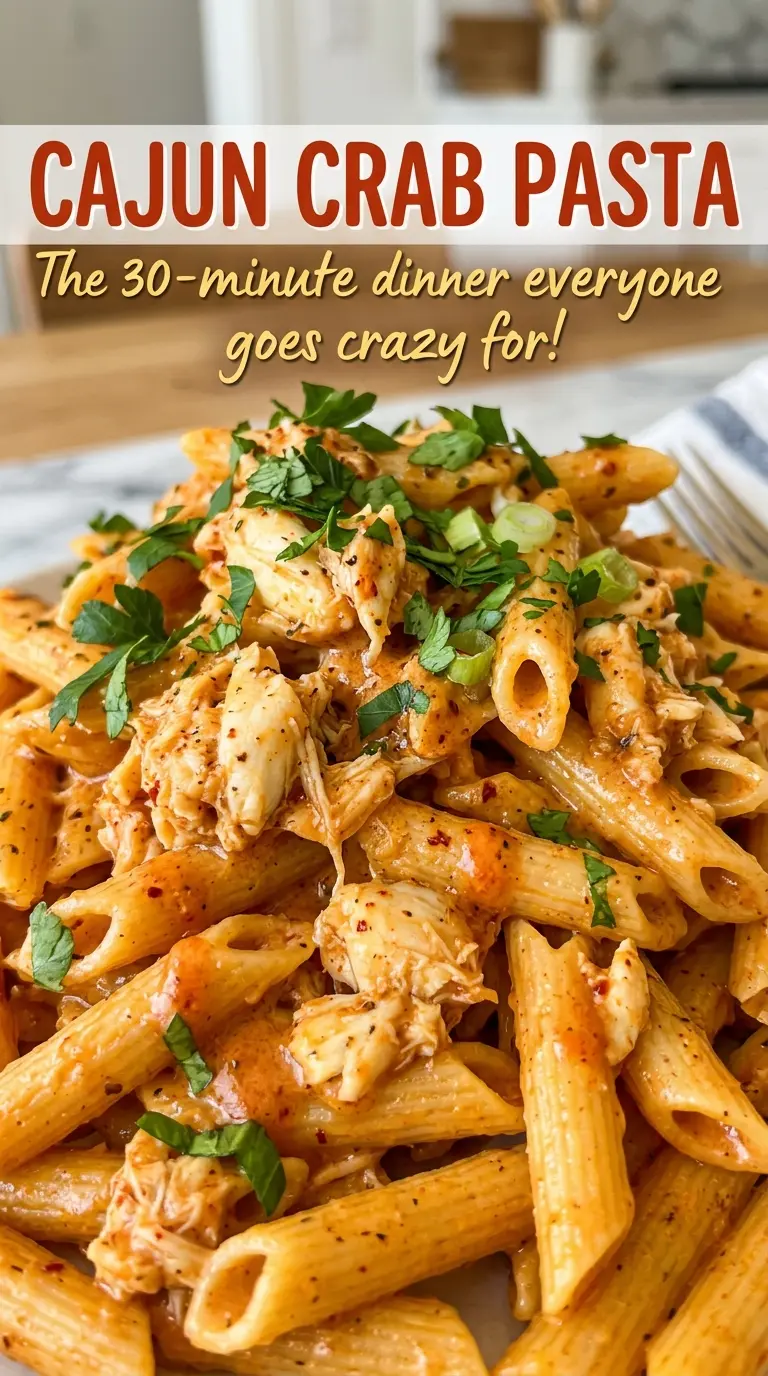
- Lump crab meat — The large pieces give each forkful a tender, sweet bite that smaller crab pieces can’t quite match. Refrigerated lump crab is worth choosing when you want distinct chunks; claw meat is a practical swap with a deeper flavor and smaller pieces. Pick through either type for shell fragments before adding it.
- Cajun seasoning — This blend brings the dish’s characteristic heat and savory spice. A familiar grocery-store blend works well; the heat and salt level vary by brand, so taste the finished sauce before deciding whether you want a milder or bolder version next time.
- Heavy cream and chicken broth — Cream gives the sauce its rich texture, while low-sodium broth keeps it from feeling overly heavy. Half-and-half can replace the cream, but the sauce will be less rich and may need a little more time at a gentle simmer to reach the same spoon-coating texture.
- All-purpose flour — It thickens the sauce without requiring a long reduction. For a gluten-free version, use a 1:1 gluten-free flour blend in its place; some blends leave the sauce a touch less silky.
- Parmesan and lemon juice — Parmesan melts into the sauce and adds a salty, savory finish, so freshly grated cheese gives the smoothest result. Fresh lemon juice has a brighter edge than bottled juice, though bottled juice works in a pinch.
- Linguine — Its long, flat strands catch the cream sauce nicely. Fettuccine or spaghetti can stand in; cook the alternative according to its package directions and stop at al dente.
The Timing That Keeps the Linguine and Sauce Ready Together
Cook the Linguine Until Just Al Dente
Bring the water to a boil in a large pot, add the kosher salt and linguine, and cook according to the package directions, about 8 to 10 minutes, until al dente. The noodles should still have a slight bite because they’ll be tossed with the hot sauce. Drain them when they’re ready. There’s no need to cook them until soft in the pot.
Soften the Onion and Red Pepper
While the pasta cooks, melt the butter in a 12-inch skillet over medium heat. Add the finely chopped onion and red bell pepper, then cook for 4 to 5 minutes, stirring, until softened. Keep the pieces moving so they soften evenly without browning heavily. This is the point to let the vegetables turn tender, not to rush them over high heat.
Cook the Seasoned Flour Before Adding Liquid
Stir in the minced garlic and cook for 30 seconds, just until fragrant. Add the flour, Cajun seasoning, and black pepper, then cook for 1 minute while stirring so the flour coats the vegetables. Gradually whisk in the broth and heavy cream; adding the liquid in stages helps keep the sauce smooth. Bring it to a gentle simmer and cook for 3 to 5 minutes, stirring often, until it coats a spoon.
Finish the Sauce and Toss the Pasta
Stir in the Parmesan until it melts, then gently fold in the crab and lemon juice. Cook for 2 to 3 minutes, just until the crab is heated through; a hard boil isn’t needed. Add the drained linguine to the skillet and toss gently until the strands are coated. Serve once the pasta and sauce are combined, while the sauce is still glossy.
Three Useful Ways to Change Up This Cajun Crab Pasta
Make the Whole Dish Gluten-Free
Use gluten-free linguine and the 1:1 gluten-free flour blend in place of the all-purpose flour. The sauce may have a slightly different finish depending on the blend, and gluten-free pasta can become soft quickly, so check it as it cooks and drain it when it’s al dente.
Trade the Crab for Cooked Shrimp
Use an equal amount of cooked shrimp in place of the lump crab and fold it in at the same stage, with the lemon juice. The shrimp gives the pasta a firmer, more familiar seafood bite; use cooked shrimp for this quick warming step rather than adding raw shrimp directly to the finished sauce.
Set the Cajun Heat to Your Liking
For a gentler sauce, use less Cajun seasoning than the listed amount; for more heat and spice, use a little more. Keep the rest of the sauce unchanged so the cream, broth, and Parmesan still balance the seasoning.
Storage and Reheating
- Refrigerator: Refrigerate leftovers within 2 hours in a covered container and use within 3 days. The pasta will absorb some sauce as it sits.
- Freezer: Freezing isn’t a good fit for this cream sauce; it can separate, and the crab’s texture suffers after thawing.
- Reheating: Warm leftovers gently in a skillet over low heat, stirring carefully until hot throughout. Avoid boiling the sauce, which can make the cream separate and break up the crab.
Questions That Come Up When Making Cajun Crab Pasta
Cajun Crab Pasta
Ingredients
Equipment
Method
- Bring the water to a boil in a large pot.
- Add the salt and linguine, and cook according to the package directions until al dente, about 8 to 10 minutes; drain.
- While the pasta cooks, melt the butter in a 12-inch skillet over medium heat.
- Add the onion and bell pepper and cook for 4 to 5 minutes, stirring, until softened.
- Stir in the garlic and cook for 30 seconds.
- Stir in the flour, Cajun seasoning, and black pepper and cook for 1 minute.
- Gradually whisk in the broth and heavy cream, bring to a gentle simmer, and cook for 3 to 5 minutes, stirring often, until the sauce thickens enough to coat a spoon.
- Stir in the Parmesan until melted.
- Gently fold in the crab and lemon juice and cook for 2 to 3 minutes, just until the crab is heated through.
- Add the drained linguine to the skillet and toss gently until coated with sauce.