As the butter turns nutty in the saucepan, those golden flecks appear quickly—one minute it looks pale, the next it’s ready to leave the heat. I stir in the sage right away, then let the butter cool until it spreads easily without running off the turkey. That timing gives this Brown Butter Sage Roast Turkey its deep, toasted aroma without scorching the herbs.
The overnight rest is what makes the skin feel less damp when it’s time to roast. Salt has time to season the meat, and the uncovered turkey dries in the refrigerator instead of trapping moisture against the skin. When the brown butter goes on, some slips under the breast and thigh skin, where it can flavor the meat as the turkey roasts.
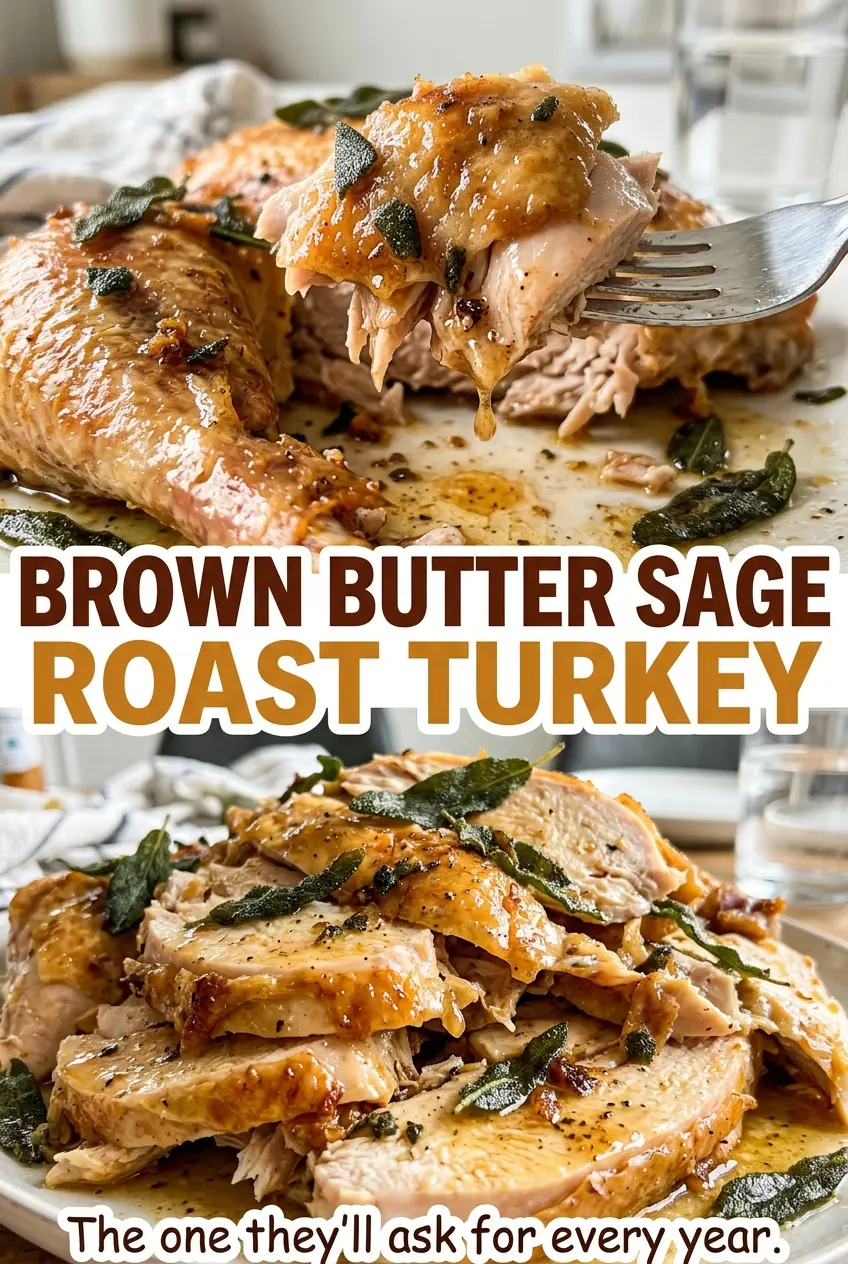
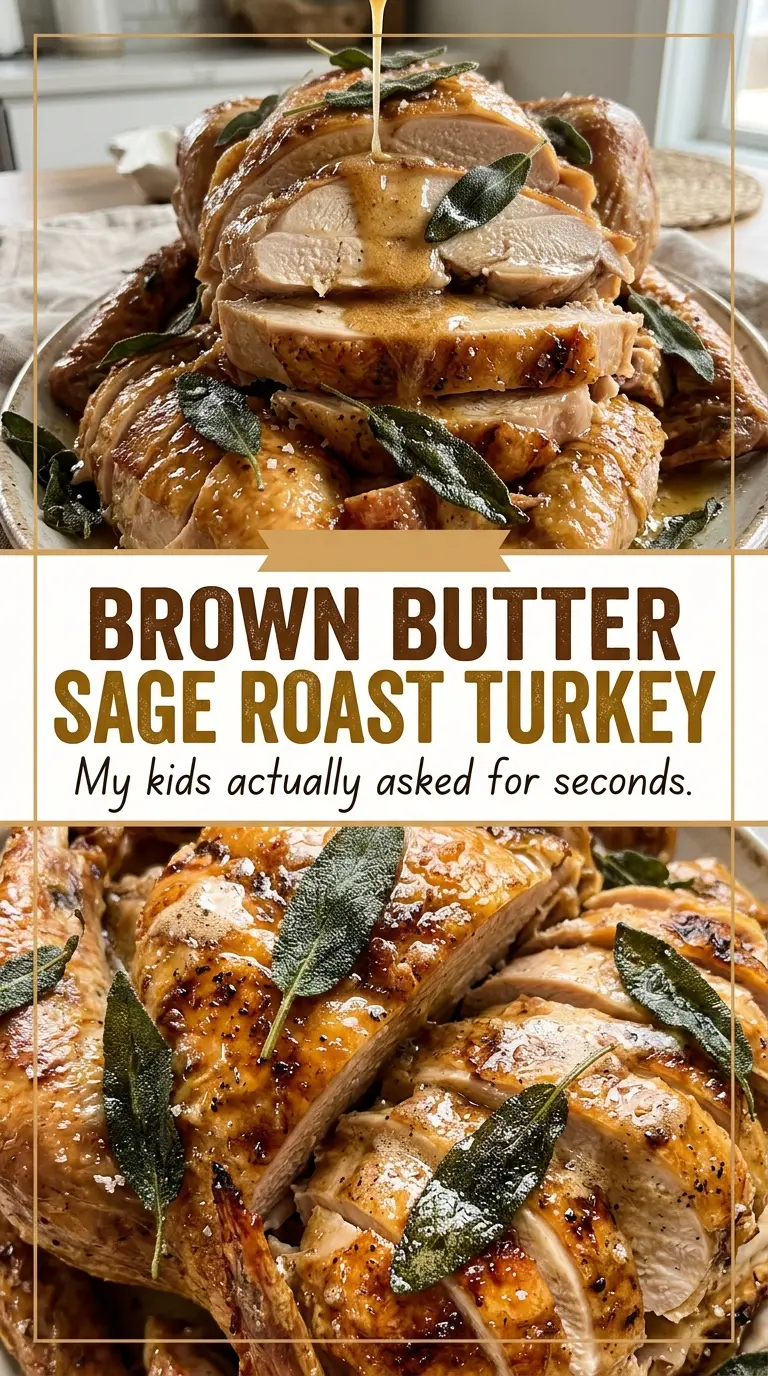
On the table, the turkey has fragrant sage tucked into buttery skin, with lemon, onion, and garlic warming inside the cavity. The breast stays juicy, and the pan catches the drippings as the bird turns golden.
Kitchen Note
Let the sage butter cool until it’s thick enough to cling to a spoon but still easy to spread. If it’s warm and runny, it slides off the skin before you can get an even coating.
Save this Brown Butter Sage Roast Turkey for a holiday table with golden skin, nutty butter, and sage in every slice.
Why the Turkey Needs an Uncovered Rest Before the Butter Goes On
A wet surface works against the finish you want. When the turkey sits uncovered in the refrigerator after salting, moisture on the skin has a chance to evaporate. The salt also seasons beyond the very outside of the meat, so the result tastes more even than a quick rub applied just before roasting.
Give that rest its full window: at least 12 hours, and up to 24. The bird should be fully thawed before it goes into the refrigerator, and it needs enough room for air to circulate around it. A crowded shelf or a turkey covered tightly with plastic holds moisture close to the skin, which defeats the drying part of the process.
There’s no need to rinse the salt away afterward. Rinsing puts moisture back on the skin and can spread raw poultry juices around the sink. Go straight from the refrigerator to loosening the skin and applying the sage butter, then let the oven do the rest.
What the Butter, Sage, and Cavity Aromatics Each Bring
- Whole turkey — Choose a fully thawed bird in the stated size range so it fits the roasting setup and cooks on the expected schedule. A basic supermarket turkey works well; the most important detail is having the neck and giblets removed before seasoning. A smaller bird isn’t a direct swap for this timing because it will cook faster.
- Unsalted butter — Unsalted butter gives the kosher salt room to do its job without making the seasoning harder to judge. A standard grocery-store butter is fine; browning technique matters more here than buying a specialty brand. For a dairy-free adaptation, use stick-style plant-based butter; the difference in browning is explained in the variations below.
- Fresh sage — Fresh leaves bring a clean, woodsy aroma that stays noticeable against the rich butter. Choose leaves that look fresh rather than bruised or limp. If you only have dried sage, use one-third as much by volume; its flavor is more concentrated and its texture won’t disappear into the butter in the same way.
- Onion, lemon, and garlic — These aromatics perfume the cavity as the turkey roasts rather than acting as stuffing. Ordinary produce is all you need, since it’s the warm fragrance they lend that matters most. Keep the pieces quartered or halved as listed so they’re easy to place loosely inside the bird.
How to Season, Butter, and Roast the Turkey Without Rushing It
Dry the Skin and Give the Salt Time
Pat the fully thawed turkey dry with paper towels, then set it breast side up on a rack in a 16×13-inch roasting pan. Rub the kosher salt and black pepper over the outside and inside the cavity. Refrigerate the bird uncovered for 12 to 24 hours; the skin should look dry when you take it out, not slick with moisture.
Brown the Butter Before Adding Sage
Melt the unsalted butter in a 1-quart saucepan over medium heat, stirring often for 5 to 8 minutes. Watch for golden-brown flecks and a nutty smell; the color can change quickly near the end, so stay by the pan. Take it off the heat before stirring in the chopped sage. Let it cool until it’s thickened but still spreadable.
Get the Sage Butter Under the Skin
Heat the oven to 325°F with a rack in the lower third. Carefully loosen the skin over the breast and thighs, taking care not to tear it, then spread about two-thirds of the sage butter underneath. Rub the rest over the outside of the turkey. Place the onion, lemon, and garlic loosely in the cavity, tuck the wing tips under the bird, and pour the water into the pan around the rack.
Roast to Temperature, Then Let the Juices Settle
Roast at 325°F and begin checking the temperature after 2 1/2 hours; the turkey usually takes about 3 to 3 3/4 hours. If the breast browns too quickly, tent it loosely with foil rather than covering the whole bird. The turkey is done when a thermometer reads 165°F in the thickest part of the breast and the innermost part of the thigh, away from bone. Transfer it to a carving board, tent loosely with foil, and rest for 30 minutes before carving.
Three Flavor Changes That Still Work With This Roast
Make the Roast Dairy-Free
Replace the unsalted butter with the same volume of stick-style dairy-free butter. It won’t develop the same browned milk solids or identical nutty depth, so watch for a toasted aroma rather than expecting the same flecks; the sage still gives the coating its herbal character.
Trade the Lemon for Orange
Put a quartered orange in the cavity in place of the lemon. The citrus aroma becomes softer and sweeter, which pairs well with the browned butter, though you lose the lemon’s sharper, brighter edge.
Use Rosemary Instead of Sage
Swap the chopped sage for half as much finely chopped fresh rosemary. Rosemary is more piney and assertive, so using less keeps it from taking over the butter. Stir it in after the pan comes off the heat, just as you would with the sage.
Storage and Reheating
- Refrigerator: Refrigerate carved leftovers within 2 hours and use them within 3 to 4 days. The skin softens in storage, while the meat stays tender if it’s covered.
- Freezer: Freeze carved turkey in airtight freezer-safe containers for up to 2 to 3 months for best quality. Thaw it in the refrigerator before reheating.
- Reheating: Put the meat in a covered baking dish with a splash of water and warm it in a 325°F oven until it reaches 165°F throughout. Keep it covered; uncovered reheating dries the edges before the center is hot.
Questions That Come Up While Roasting This Turkey
Brown Butter Sage Roast Turkey
Ingredients
Equipment
Method
- Pat the turkey dry with paper towels and set it breast side up on a rack in a 16x13-inch roasting pan.
- Rub the kosher salt and black pepper all over the turkey, including inside the cavity.
- Refrigerate the turkey uncovered for 12 to 24 hours.
- Melt the unsalted butter in a 1-quart saucepan over medium heat, stirring often, for 5 to 8 minutes, until golden-brown flecks form and it smells nutty.
- Take the pan off the heat and stir in the finely chopped fresh sage leaves.
- Cool the brown butter until thickened but still spreadable.
- Heat the oven to 325°F with a rack in the lower third.
- Carefully loosen the skin over the breast and thighs.
- Spread about two-thirds of the sage brown butter under the skin and the rest over the outside of the turkey.
- Loosely place the quartered yellow onion, quartered lemon, and halved garlic in the cavity.
- Tuck the wing tips under the bird.
- Pour the water into the roasting pan around the rack.
- Roast at 325°F, tenting the breast loosely with foil if it browns too quickly, and begin checking the temperature after 2 1/2 hours; the turkey will usually take about 3 to 3 3/4 hours and is done when a thermometer reads 165°F in the thickest part of the breast and the innermost part of the thigh, away from bone.
- Transfer the turkey to a carving board and tent loosely with foil.
- Rest for 30 minutes before carving.