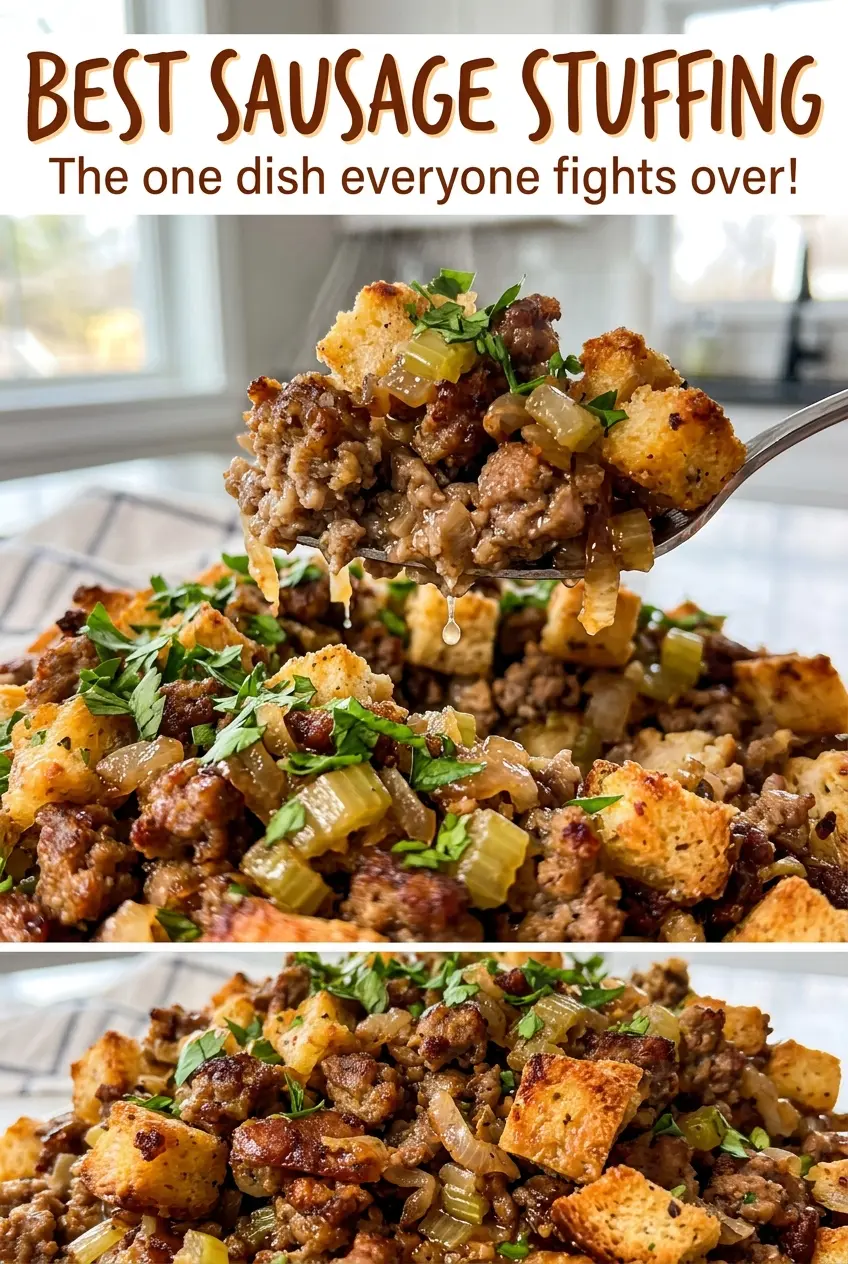
When the foil comes off, the top is still pale and the middle is soft and steamy. That’s exactly where this sausage stuffing should be before its uncovered stretch in the oven. The final 20 to 25 minutes turn the top golden while the center stays tender, giving every scoop a little contrast.
I make Best Sausage Stuffing with browned breakfast sausage, buttery onion and celery, and dried bread cubes that soak up a savory broth-and-egg mixture. It’s familiar holiday-table food, but it works just as well whenever you want a hearty baked side. The sausage browns in the same skillet used for the vegetables, so the butter picks up those savory browned bits instead of leaving them behind.
Gentle folding matters once the liquid goes in. I stop as soon as the cubes look evenly moistened, then let the oven finish the job: first covered for a soft, steamy center, then uncovered for a crisp, golden top.
Kitchen Note
Give the baked stuffing its full 10-minute rest before serving. That short pause lets the center settle, so the first scoop holds together instead of falling apart in the dish.
Save Best Sausage Stuffing for a golden-topped bake with savory sausage, soft bread, and a tender center.
Why This Stuffing Bakes Covered Before It Gets a Golden Top
Stuffing has two different jobs to do in the oven. The bread needs time in a steamy environment to absorb the broth and egg without drying out, while the surface needs direct heat to turn crisp and golden. One long uncovered bake can brown the top before the center has had a chance to set evenly.
Covering the dish tightly for the first part of baking helps hold in moisture as the bread warms through. Taking the foil off for the final stretch changes the surface: moisture can escape, and the exposed cubes toast instead of staying pale. It’s a simple change in oven exposure, not a different mixture, that gives you both a tender middle and a browned top.
That contrast is especially useful with dried bread cubes. They start out ready to absorb liquid, so the covered bake gives them time to soften before the top is asked to crisp. Keep the foil snug for the first bake, then let the final uncovered bake do its work without stirring or pressing down the mixture.
How the Sausage, Bread, and Egg Build the Stuffing’s Texture
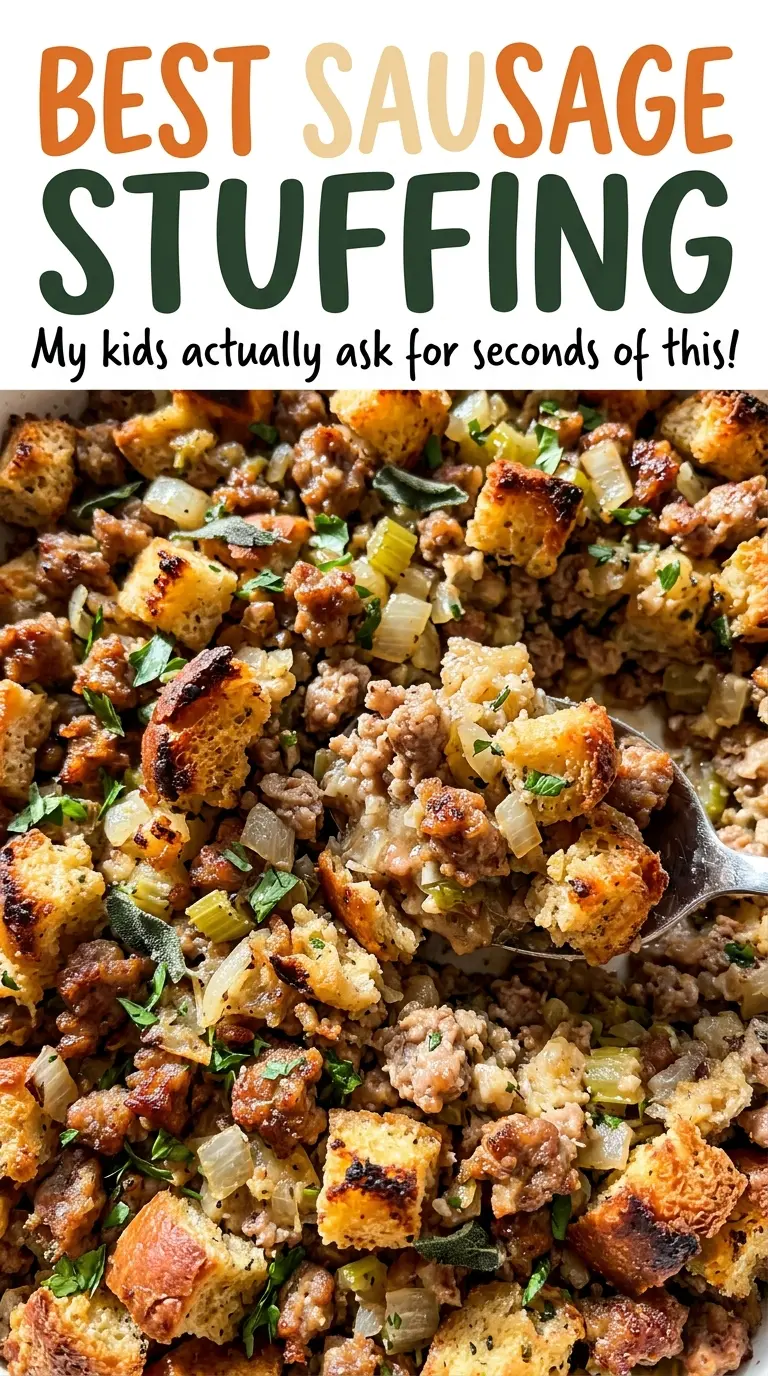
- Bulk pork breakfast sausage brings seasoning, savory browned bits, and richness to the base. Bulk sausage is easiest to break into small pieces; turkey breakfast sausage can stand in at the same weight, though its leaner texture makes the stuffing less rich.
- Unseasoned dried bread cubes give you control over the herbs and salt, and their dry surface takes up the broth mixture. Seasoned cubes bring their own salt and flavor, so they can make the finished dish taste more heavily seasoned than intended.
- Unsalted butter, onion, and celery make the aromatic base tender and buttery without competing with the sausage. Unsalted butter lets the measured kosher salt stay predictable; salted butter would add extra salt, so it’s not a one-for-one flavor match.
- Rubbed sage and dried thyme give the stuffing its warm, savory character. Rubbed sage has a soft, leafy texture that disperses through the bread; dried thyme adds a quieter herbal note. Keep both dried as listed so the seasoning distributes evenly in the short cook with the vegetables.
- Chicken broth and eggs do different jobs: broth moistens the cubes, while eggs help the baked mixture set. Low-sodium broth keeps the sausage and measured salt in balance. Vegetable broth is a useful swap for a vegetarian version, though it changes the savory base.
- Fresh parsley adds a clean, green note among the richer ingredients. Chop it shortly before using for the freshest flavor; leaving it out makes a more sausage-and-herb-forward stuffing without changing the bake.
Building the Stuffing in Four Stages, from Skillet to Baking Dish
Brown the Sausage in Small Pieces
Heat the oven to 350°F and coat a 9×13-inch baking dish with nonstick cooking spray. In a 12-inch skillet over medium heat, cook the sausage for 8 to 10 minutes, breaking it into small pieces as it browns. The pieces should lose their pink color and develop browned edges; check that the sausage reaches 160°F before transferring it to a large bowl. Large chunks take longer to brown through, so keep breaking them up as you cook.
Soften the Vegetables in the Same Skillet
Melt the butter in the skillet you used for the sausage, then add the chopped onion and celery. Cook for 7 to 9 minutes, stirring now and then, until both vegetables have softened rather than browned deeply. Stir in the rubbed sage, dried thyme, kosher salt, and black pepper for 30 seconds. That brief time in the warm butter helps the dried herbs release their aroma without scorching.
Moisten the Bread Without Mashing It
Add the skillet mixture, dried bread cubes, and chopped parsley to the bowl with the sausage, then toss to combine. In a separate medium bowl, whisk the chicken broth and eggs until blended and pour them over the bread mixture. Fold gently until the cubes look evenly moistened; vigorous stirring breaks them down and can leave you with a dense, pasty texture. If you spot a dry pocket at the bottom, bring it up with a gentle fold.
Bake Until the Top Is Golden and the Center Is Set
Transfer the mixture to the prepared dish and cover it tightly with foil. Bake for 30 minutes, then remove the foil and continue baking for 20 to 25 minutes, until the top is golden and the center reaches 165°F. The surface should look toasted, not wet or pale, and the middle should be hot all the way through. Let the dish rest for 10 minutes before serving.
Three Practical Ways to Adapt Best Sausage Stuffing
Use Gluten-Free Bread Cubes
Replace the unseasoned dried bread cubes with the same weight of unseasoned gluten-free dried bread cubes. The savory sausage and herb base stays the same, though gluten-free cubes can have a different texture, so fold gently and check that the mixture is evenly moistened before it goes into the dish.
Make a Vegetarian Version
Swap in plant-based breakfast sausage and use vegetable broth in place of the chicken broth. Brown the plant-based sausage according to its package directions, then continue with the same vegetables, bread, and baking method. The result keeps the familiar sage-and-celery character but has a lighter, less pork-forward flavor.
Leave Out the Parsley for a Deeper Herb Flavor
Omit the fresh parsley if you want the sausage, sage, and thyme to stand out more clearly. The stuffing will lose that fresh green note, but its texture and baking method stay the same.
Storage and Reheating
- Refrigerator: Refrigerate leftovers within 2 hours in a covered, airtight container and use within 3 to 4 days. The top softens as it sits.
- Freezer: Freeze cooled portions in airtight, freezer-safe containers for up to 3 months for best quality. Thaw overnight in the refrigerator before reheating.
- Reheating: Reheat covered in a 350°F oven until the center reaches 165°F. Covering helps keep the bread from drying out; avoid reheating until the edges are hot while the middle is still cold.
Questions That Come Up When Making Sausage Stuffing
Best Sausage Stuffing
Ingredients
Equipment
Method
- Heat the oven to 350°F.
- Coat a 9x13-inch baking dish with nonstick cooking spray.
- Cook the sausage in a 12-inch skillet over medium heat for 8 to 10 minutes, breaking it into small pieces, until browned and cooked to 160°F.
- Transfer the sausage to a large bowl.
- Melt the butter in the same skillet.
- Add the onion and celery and cook for 7 to 9 minutes until softened.
- Stir in the sage, thyme, salt, and pepper for 30 seconds.
- Add the skillet mixture, bread cubes, and parsley to the bowl with the sausage and toss to combine.
- Whisk the chicken broth and eggs in a medium bowl.
- Pour the broth mixture over the bread mixture and fold gently until evenly moistened.
- Transfer the mixture to the prepared baking dish and cover tightly with foil.
- Bake for 30 minutes.
- Remove the foil and bake for 20 to 25 minutes, until the top is golden and the center reaches 165°F.
- Rest the stuffing for 10 minutes before serving.