The first thing I notice when this stew gets going is the deep, savory smell left in the Dutch oven after the beef and bacon are browned. That layer on the bottom isn’t something to scrub away; it becomes part of the wine-rich sauce. I make this Beef Bourguignon when I want a slow oven braise that turns a few familiar ingredients into a full, hearty pot for six.
The beef needs time, but the hands-on work happens in short stages: crisp the bacon, brown the meat, then build the braising liquid in the same pot. I cook the mushrooms separately so they brown before they meet the stew, rather than simmering pale in the liquid from the start. By the time the beef is fork-tender, the sauce is full-bodied and the mushrooms and pearl onions still have their own character.
Kitchen Note
Add the pearl onions straight from the freezer after the mushrooms have browned. They heat through in the skillet without needing a separate thaw, and you can keep your attention on the mushrooms while they shed their moisture.
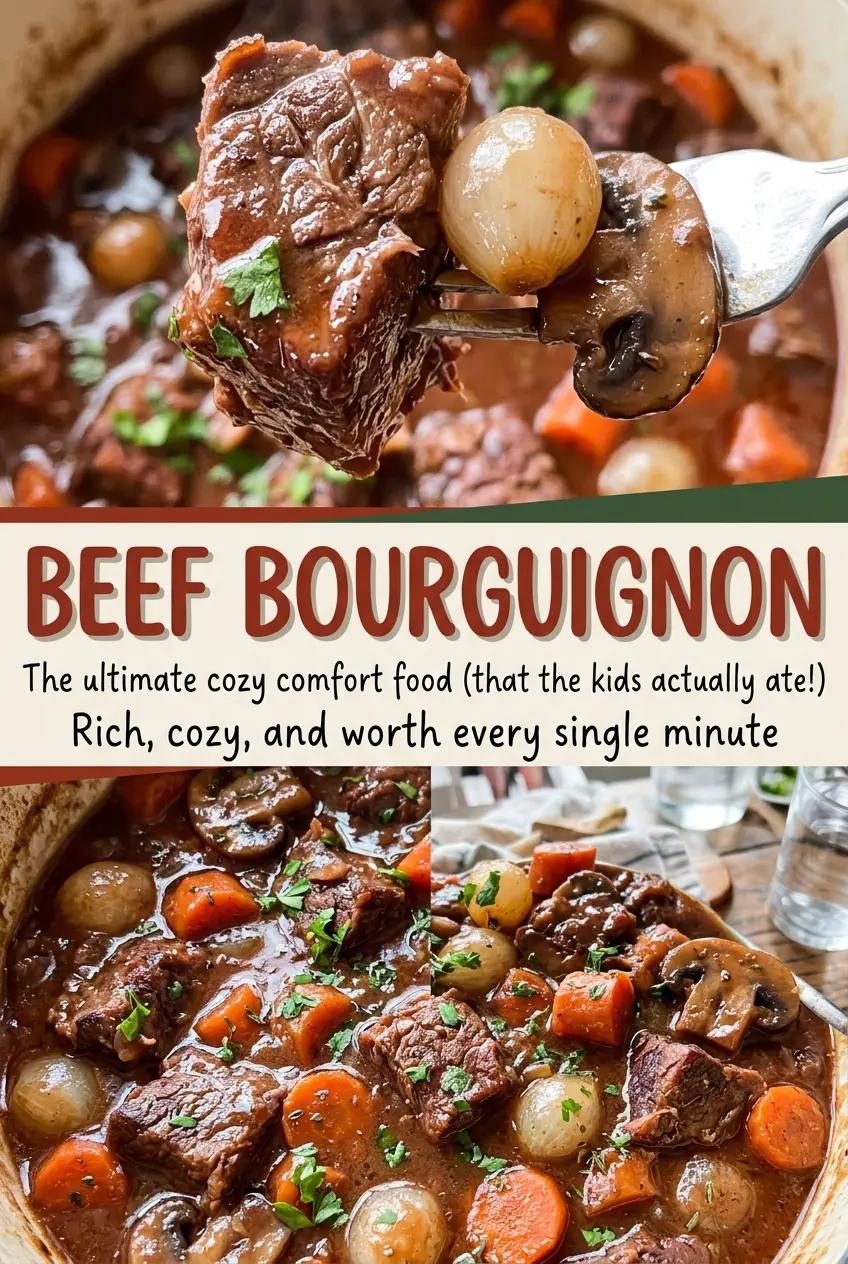
Save this Beef Bourguignon for a slow-braised dinner with fork-tender beef, browned mushrooms, and a deep red-wine sauce.
Why the Flour Goes in Before the Wine
Flour needs a brief turn in the pot before the wine arrives. After it coats the softened onion and carrots, a minute of stirring cooks away the raw-flour taste and helps it disperse through the liquid instead of clumping. The sauce thickens as the stew braises, so you don’t need to finish it with a separate thickener.
Pouring in the wine also gives you a chance to lift the browned bits from the bottom of the Dutch oven. Those bits carry the flavor from the bacon and beef into the sauce. Let the wine simmer for five minutes before adding the broth and returning the meat; that short reduction keeps the braising liquid from tasting like wine poured straight from the bottle. Scrape the bottom as you stir, especially around the edges where browned pieces tend to cling.
What the Beef, Wine, and Separate Mushroom Sauté Bring to the Pot
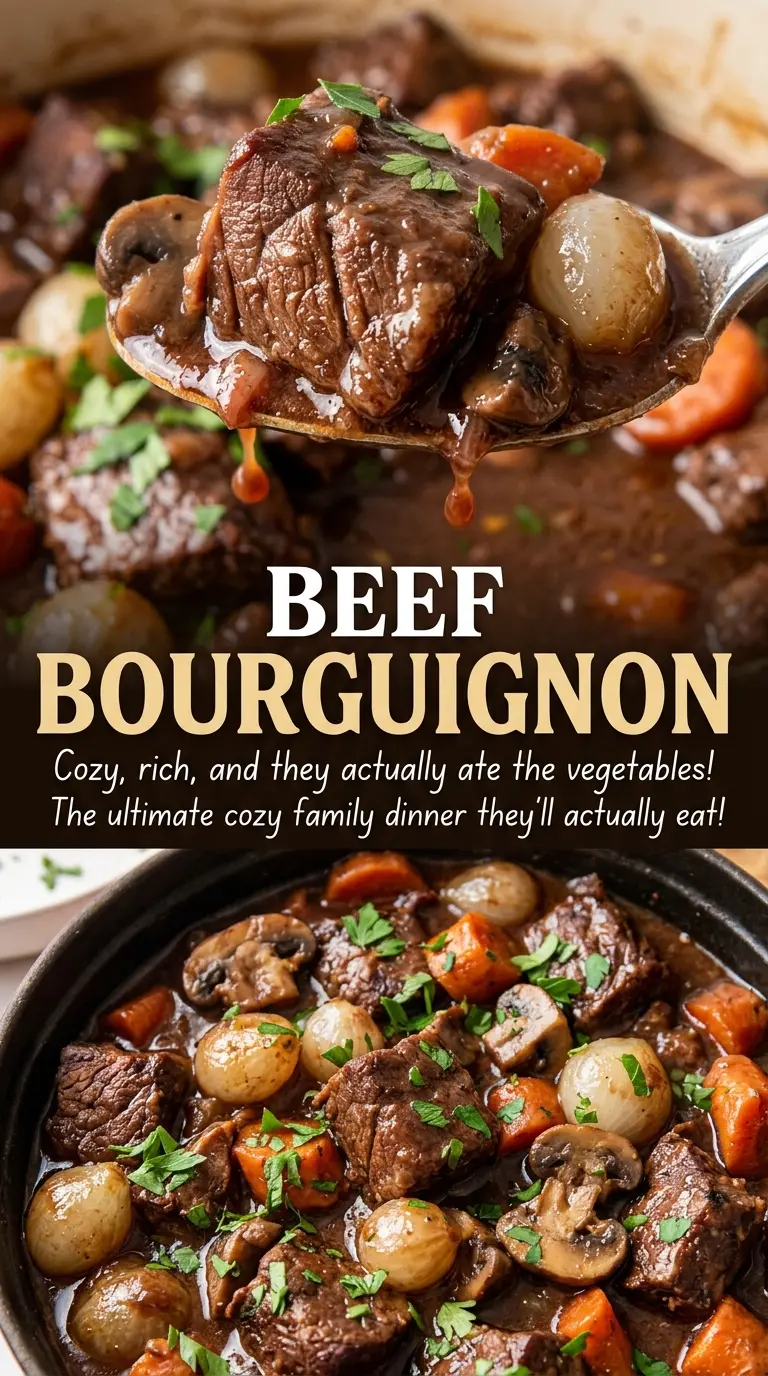
- Beef chuck — Chuck has the connective tissue that softens during a long braise, giving you tender pieces and a richer sauce. Ask for boneless chuck and cut it into even 2-inch cubes so the pieces cook at a similar pace. Leaner cuts won’t give the same result.
- Dry red wine — The wine is a major part of the braising liquid, so choose a dry red such as Burgundy or Pinot Noir. A sweet wine would pull the sauce in a different direction. You don’t need a special occasion bottle, but avoid anything labeled sweet.
- Bacon — Diced bacon renders fat for the first layer of savory flavor and leaves browned bits in the pot. A fresh package is fine; there’s no need for specialty bacon here. If you leave it out, the stew will be less smoky and rich, as described in the variations.
- All-purpose flour — This thickens the wine and broth as they braise together. It also helps the sauce cling to the beef. Keep it in the recipe if you want the intended consistency; leaving it out produces a thinner stew.
- Cremini mushrooms and frozen pearl onions — Creminis hold their shape well after browning and a short simmer in the stew. Halving them gives each piece a browned cut surface. Frozen pearl onions save the peeling step and go directly into the skillet after the mushrooms.
- Fresh thyme and bay leaves — These herbs quietly season the long braise. Tie the thyme sprigs together if you want them easier to retrieve, then discard the stems and bay leaves before serving.
The Four Stages That Turn Chuck into a Tender Braise
Render the Bacon, Then Brown the Beef
Heat the oven to 325°F and pat the beef dry before seasoning it with kosher salt and freshly ground black pepper. In a 6-quart Dutch oven over medium heat, cook the diced bacon for 6–8 minutes until crisp, then lift it out with a slotted spoon. Add the vegetable oil and brown the beef in three batches, about 3 minutes per side, transferring each batch to the plate with the bacon. The beef should develop dark golden patches; pale, wet surfaces mean the pieces need more contact with the hot pot before you turn them.
Soften the Vegetables and Build the Braising Liquid
Cook the diced onion and carrot chunks in the same pot for 6–8 minutes, stirring occasionally, until softened. Stir in the tomato paste and minced garlic for 1 minute, then sprinkle in the flour and stir for another minute. Pour in the wine and scrape up the browned bits as it simmers for 5 minutes. Add the broth, thyme, bay leaves, beef, and bacon, then bring the pot to a simmer before covering it.
Braise Until the Beef Gives Easily
Move the covered Dutch oven to the oven and bake for 2 1/2–3 hours. Keep the lid on during the braise so the liquid doesn’t reduce too quickly. The best doneness cue isn’t the clock alone: a fork should slide into the beef easily, and a piece should yield without feeling chewy. If the beef still resists, give it more time in the oven and check again.
Brown the Mushrooms and Finish the Stew
Melt the butter in a 12-inch skillet over medium-high heat, add the halved cremini mushrooms, and cook for 8–10 minutes until browned and their liquid has evaporated. Add the frozen pearl onions and cook for 5–7 minutes, stirring occasionally, until hot. Discard the bay leaves and thyme stems, then stir the mushroom mixture into the stew. Simmer over medium-low heat for 5 minutes, take the pot off the heat, and let it rest for 10 minutes before serving.
Two Small Changes That Give the Stew a Different Character
Choose Pinot Noir for a Lighter Wine Note
Use Pinot Noir in place of Burgundy, or choose Burgundy when you want a deeper, more robust red-wine character. Both are dry red wine options for the braise; the choice changes the wine’s expression without changing the method.
Leave Out the Bacon for a Less Smoky Stew
Skip the bacon and use the vegetable oil to brown the beef as usual. The finished stew will have less smoky depth, with the beef and wine more prominent. Keep in mind that the bacon also contributes savory richness to the pot.
Storage and Reheating
- Refrigerator: Refrigerate within 2 hours and keep for 3–4 days. The beef stays tender, though the sauce will thicken as it chills.
- Freezer: Freeze in airtight containers for up to 2–3 months. The mushrooms may soften after thawing, but the stew still freezes well.
- Reheating: Warm gently in a covered saucepan over low heat, stirring occasionally, until the center reaches 165°F. If the sauce has thickened in the refrigerator, stir in a little broth to loosen it; avoid boiling hard, which can break up the tender beef.
Questions That Come Up When Braising Beef Bourguignon
Beef Bourguignon
Ingredients
Equipment
Method
- Heat the oven to 325°F.
- Pat the beef dry and season it all over with the salt and pepper.
- In a 6-quart Dutch oven over medium heat, cook the bacon for 6–8 minutes until crisp; transfer it to a plate with a slotted spoon.
- Add the vegetable oil to the pot and brown the beef in 3 batches, about 3 minutes per side; transfer each batch to the plate with the bacon.
- Add the onion and carrots to the pot and cook for 6–8 minutes, stirring occasionally, until softened.
- Stir in the tomato paste and garlic and cook for 1 minute.
- Sprinkle the flour over the vegetables and cook for 1 minute, stirring.
- Pour in the wine, scrape up the browned bits, and simmer for 5 minutes.
- Add the broth, thyme, bay leaves, beef, and bacon, then bring to a simmer.
- Cover the Dutch oven and bake for 2 1/2–3 hours, until the beef is fork-tender.
- Melt the butter in a 12-inch skillet over medium-high heat, add the mushrooms, and cook for 8–10 minutes until browned and their liquid has evaporated.
- Add the frozen pearl onions and cook for 5–7 minutes, stirring occasionally, until hot.
- Discard the bay leaves and thyme stems, then stir the mushroom and onion mixture into the stew.
- Simmer over medium-low heat for 5 minutes.
- Rest off the heat for 10 minutes before serving.