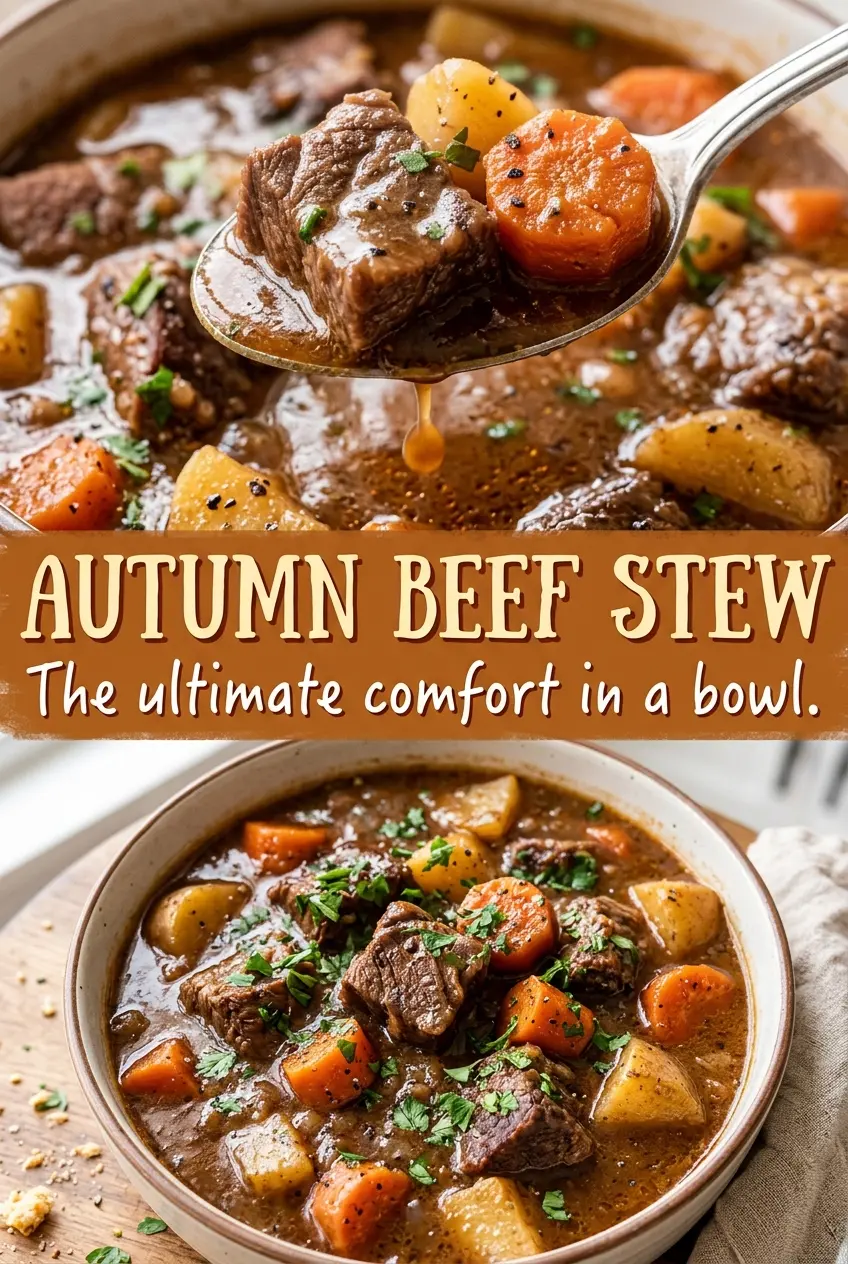
The browned bits on the bottom of the Dutch oven look stubborn until the red wine hits them; then they loosen into the broth and deepen its color. That’s one of my favorite moments while making Autumn Beef Stew, because the beef leaves something behind for the whole pot, not just browned edges on its own. Chuck becomes tender during the long simmer, and the carrots and Yukon gold potatoes make each bowl hearty without turning the broth heavy.
I cut the beef into generous, even pieces so it has time to soften without disappearing into the sauce. The vegetables go in later, which gives them their own shorter cooking window instead of asking them to last through the entire braise. By the time the peas and parsley go in, the stew is rich and savory, with a little lift at the finish and enough broth to spoon up with every bite.
Kitchen Note
Add the peas at the very end and give them just five minutes uncovered. They warm through without getting soft and dull while the stew finishes.
Save this Autumn Beef Stew for a deeply savory pot of tender chuck, soft carrots, and Yukon gold potatoes.
Why the Flour Goes In Before the Wine
Flour stirred into the softened onion coats the ingredients and cooks briefly before any liquid goes into the pot. That short cook matters: it removes the raw-flour taste and helps the broth thicken gradually, rather than leaving you to chase a loose sauce at the end. Tomato paste follows and gets its own minute in the pot, giving the base a deeper, rounder savory note.
Then the wine loosens the browned fond from the bottom. Scrape as you pour so those caramelized bits dissolve into the liquid instead of staying stuck to the pot. The broth, Worcestershire, thyme, and bay leaves join after the wine has simmered for a few minutes. Together, they make a stew that has body and depth but still tastes like beef and vegetables, not a flour-thickened gravy.
What the Beef, Potatoes, and Broth Each Bring to the Pot
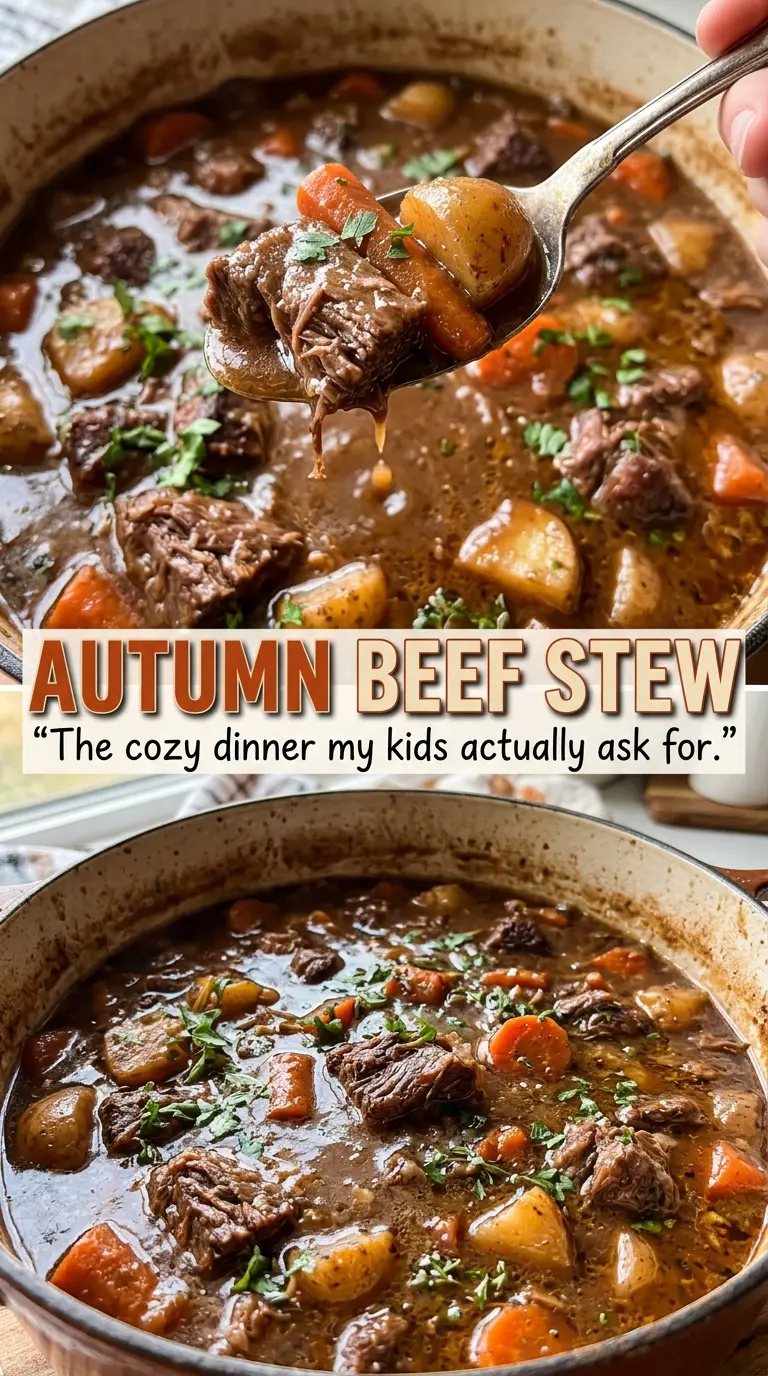
- Beef chuck — Chuck has the connective tissue that softens through a slow braise and gives the broth a fuller feel. A well-marbled piece is useful, but there’s no need to seek out a premium roast; trim excess fat and cut the meat into even cubes. Lean cuts don’t make the same tender, spoon-ready stew.
- Dry red wine — Choose a dry bottle you’d be happy to drink, but save the expensive one for the glass. The wine adds acidity and depth as it joins the browned bits in the pot. For a no-wine adaptation, use low-sodium beef broth in its place; the stew will be a little less bright and wine-rich.
- Low-sodium beef broth — A basic, good-quality broth works well here. Low-sodium broth leaves room for the salt on the beef and the Worcestershire without making the finished pot taste too salty. A premium broth isn’t necessary when the other ingredients have time to build flavor.
- Yukon gold potatoes — Their creamy texture suits the stew, and they keep a satisfying shape through the vegetable simmer. Cut the pieces evenly so they soften at about the same pace. There isn’t an exact substitute among the ingredients in this pot; a different potato can change how much it holds together.
- Carrots — Firm carrots are all you need; even pieces matter more than finding unusually sweet ones. The specified cut keeps them substantial after their shorter simmer with the potatoes. If the pieces vary widely, the small ones will soften sooner.
- Frozen peas and fresh parsley — Frozen peas are convenient and consistent, while fresh parsley adds a clean, green finish. Use fresh parsley for that final sprinkle; dried parsley won’t give the same fresh contrast. The peas don’t need to simmer with the beef.
Building the Stew in Stages Without Rushing the Braise
Browning the Chuck in Two Batches
Pat the beef dry, season it with the kosher salt and black pepper, then heat a tablespoon of olive oil in a 6-quart Dutch oven over medium-high heat. Brown half the beef on all sides for 4–5 minutes and transfer it to a plate; add the remaining oil and brown the rest for another 4–5 minutes. Give the pieces room to make contact with the pot, or they’ll steam instead of developing browned surfaces. You’re looking for color on several sides, not a cooked-through center.
Softening the Onion and Cooking the Flour
Add the chopped onion and cook over medium heat, stirring, until softened, about 5 minutes. Stir in the garlic for 30 seconds, then add the flour and cook for 1 minute. Keep stirring so the flour coats the onion without catching on the bottom. Stir in the tomato paste and cook it for 1 minute before adding any liquid.
Deglazing and Starting the Gentle Braise
Pour in the red wine and scrape the bottom of the pot to release the browned bits. Let it simmer for 2–3 minutes; it should bubble gently rather than boil hard. Stir in the beef broth, Worcestershire sauce, thyme, and bay leaves, then return the beef and any juices to the pot. Bring everything to a gentle simmer, cover, and cook over low heat for 1 1/2 hours.
Simmering the Vegetables and Finishing
Stir in the carrots and potatoes, cover the pot, and simmer gently for 35–45 minutes. Check for tender vegetables and beef that yields easily to a fork; the pot should stay at a gentle simmer, not a rolling boil. Stir in the peas and cook uncovered for 5 minutes. Remove the bay leaves and finish with chopped fresh parsley before serving.
Two Simple Ways to Adapt This Beef Stew
Make It Without Red Wine
Replace the red wine with 1 cup of the low-sodium beef broth. The stew will still have a savory base, though it won’t have quite the same acidity or wine depth. Scrape up the browned bits as you pour in the broth, then continue with the remaining steps.
Leave Out the Peas
For a stew without peas, leave them out and finish with the parsley. The bowl will be more focused on the beef, carrots, and potatoes, with no other change to the simmering stages.
Storage and Reheating
- Refrigerator: Store in a covered container for 3–4 days. The broth thickens as it chills, and the potatoes soften a little more.
- Freezer: Freeze cooled stew in airtight portions for up to 3 months. The potatoes may be softer after thawing, but the stew still reheats well.
- Reheating: Warm gently in a covered saucepan over low heat, stirring now and then, until it reaches 165°F. Avoid a hard boil, which can break up the potatoes and beef.
Questions That Come Up While Making Autumn Beef Stew
Autumn Beef Stew
Ingredients
Equipment
Method
- Pat the beef dry.
- Season the beef all over with the salt and pepper.
- Heat 1 tablespoon of the olive oil in a 6-quart Dutch oven over medium-high heat.
- Brown half the beef on all sides for 4–5 minutes.
- Transfer the browned beef to a plate.
- Add the remaining oil and brown the rest of the beef for 4–5 minutes.
- Add the onion to the pot and cook over medium heat, stirring, until softened, about 5 minutes.
- Add the garlic and cook for 30 seconds.
- Stir in the flour and cook for 1 minute.
- Stir in the tomato paste and cook for 1 minute.
- Pour in the red wine and scrape up the browned bits from the bottom of the pot.
- Simmer for 2–3 minutes.
- Stir in the beef broth, Worcestershire sauce, thyme, and bay leaves.
- Return the beef and any juices to the pot.
- Bring to a gentle simmer, cover, and cook over low heat for 1 1/2 hours.
- Stir in the carrots and potatoes.
- Cover and simmer gently for 35–45 minutes, until the beef is fork-tender and the vegetables are tender.
- Stir in the peas and cook uncovered for 5 minutes.
- Remove the bay leaves.
- Sprinkle with the parsley before serving.