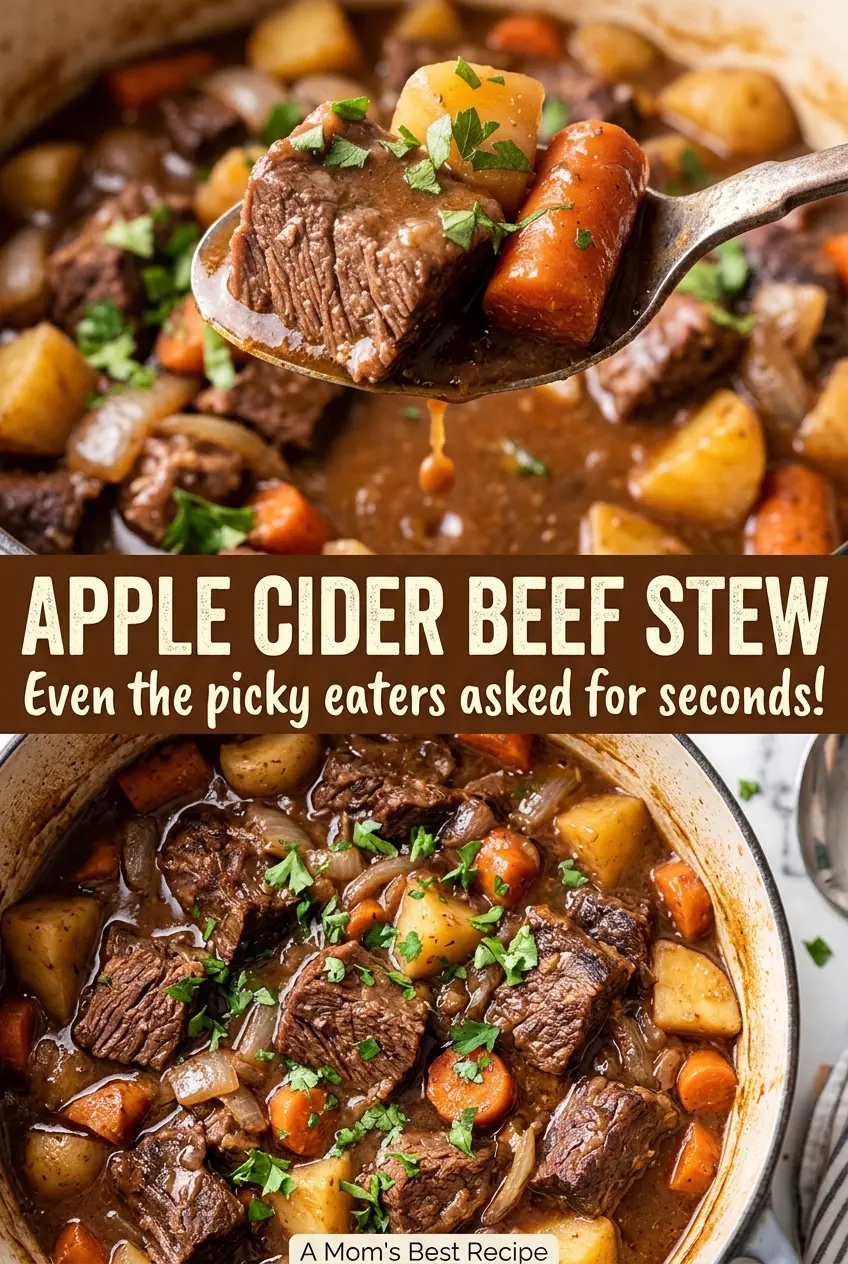
When the first browned beef comes out of the Dutch oven, the bottom is dotted with dark, savory bits that look like they might stick. They’re exactly what you want. Once the onion softens and the apple cider goes in, those browned bits loosen into the broth and give this Apple Cider Beef Stew a deep, slow-cooked flavor.
I cook the flour briefly with the onion mixture before adding any liquid. That small step helps it blend smoothly into the cider and beef broth, so the stew thickens without a raw flour taste. The finished broth is hearty but still spoonable, with fork-tender beef, carrots, and potatoes tucked into every serving.
Kitchen Note
Give the stew its full 10-minute rest off the heat before serving. The simmering settles, and the thick broth sits evenly around the beef and vegetables instead of rushing into the bottom of the bowl.
Save this apple cider beef stew for a cold night when you want tender beef and a rich, savory broth with a hint of cider.
Why Apple Cider Makes This Beef Stew Rounder, Not Sweet
Apple cider brings a gentle fruitiness to the pot, but it doesn’t turn the broth into something sugary. The cider is balanced by twice as much beef broth, along with the savory beef, onion, garlic, and tomato paste. It adds a mellow note in the background rather than taking over the stew.
The order matters, too. Browning the beef first gives the broth a savory foundation; tomato paste adds another concentrated, earthy layer before the cider and broth loosen everything from the bottom of the pot. The result has more depth than a broth-only stew, without needing extra seasoning or a complicated sauce. If you’ve only used cider in baked goods or as a drink, this is a good example of how it can work in a long savory braise.
Which Ingredients Give the Broth Its Body and Balance
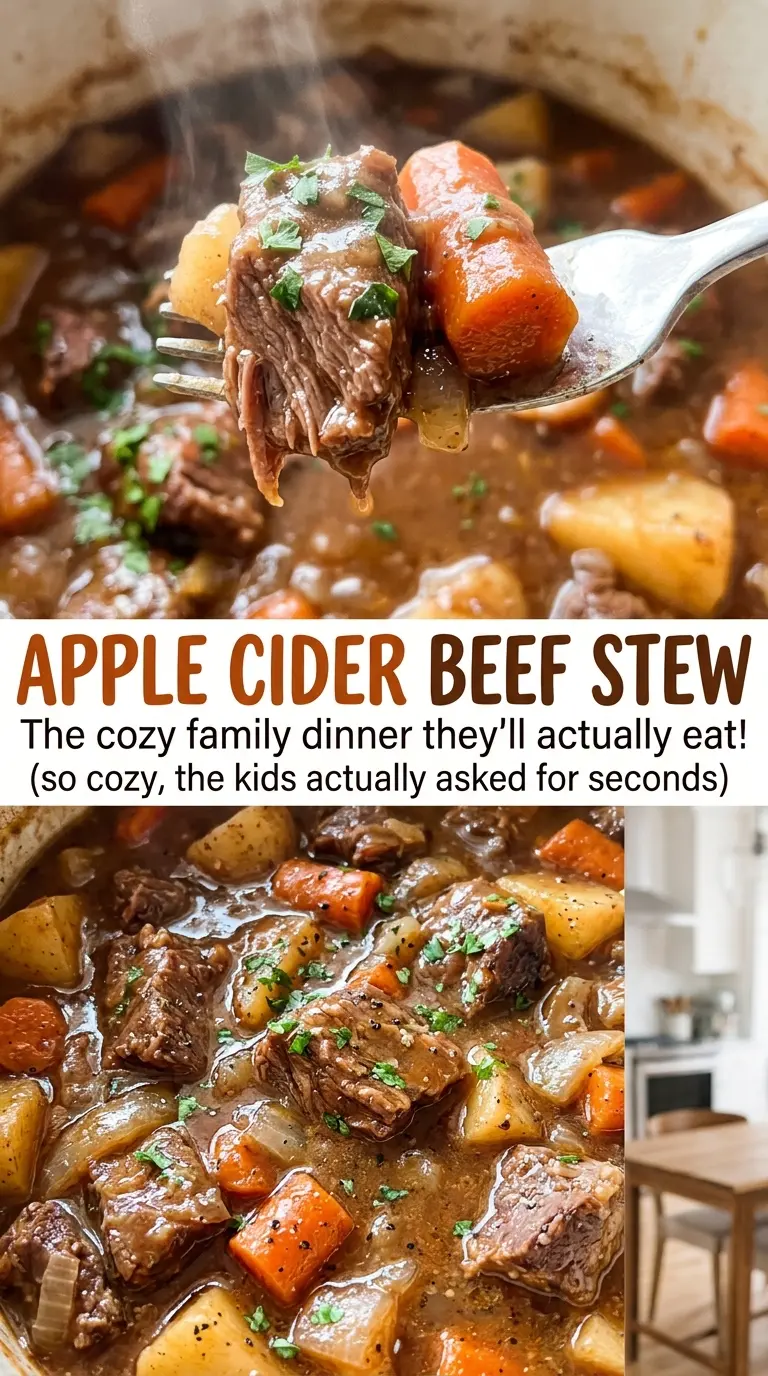
- Beef chuck — Its connective tissue softens during the long simmer, giving you tender chunks and a fuller broth. Ask for chuck cut into even pieces; neatly sized cubes cook more consistently than a mix of scraps.
- Apple cider — Cider supplies the stew’s subtle fruit note. A regular grocery-store cider works well here; a strongly spiced cider would bring flavors that aren’t part of this savory version.
- Low-sodium beef broth — It adds the main savory liquid while leaving room to season the beef without making the finished stew too salty. A basic carton is fine; the low-sodium label matters more than paying extra for a specialty broth.
- All-purpose flour and tomato paste — The flour gives the broth body, while tomato paste deepens its savory flavor. Smooth tomato paste from a tube or can works equally well; cook it briefly with the garlic so it blends into the base.
- Yukon Gold potatoes — Their creamy texture holds up well in a simmering stew. Keep the pieces close to the size in the recipe so they soften without disappearing into the broth.
- Carrots, onion, garlic, thyme, and bay leaves — These build the familiar savory-sweet flavor around the beef. Ordinary yellow onions and dried thyme are exactly right; peel the carrots and cut the vegetables evenly for a more consistent finish.
Build the Braise Before the Vegetables Go In
Brown the Chuck in Two Rounds
Pat the beef dry, season it with kosher salt and black pepper, and heat 1 tablespoon of vegetable oil in a 6-quart Dutch oven over medium-high heat. Brown half the beef for 3 to 4 minutes per side, then transfer it to a plate and repeat with the remaining oil and beef. The pieces should have dark, browned surfaces rather than gray patches. Working in batches gives the beef room to brown instead of crowding and steaming in its own moisture.
Soften the Onion and Toast the Tomato Paste
Add the diced onion to the pot and cook over medium heat for 5 minutes, stirring and scraping up the browned bits as it softens. Stir in the minced garlic and tomato paste, then cook for 1 minute. The onion should look softened, and the tomato paste should darken slightly and coat the bottom of the pot. Keep the mixture moving so the garlic doesn’t scorch.
Thicken the Liquid Before the Long Simmer
Stir in the flour and cook for 1 minute, then gradually pour in the apple cider and beef broth while stirring until smooth. Add the bay leaves, dried thyme, and browned beef with any juices on the plate. Bring the pot to a gentle simmer, cover it, and cook over low heat for 1 1/2 hours, stirring occasionally. If the liquid is bubbling hard, lower the heat; a steady gentle simmer keeps the beef from cooking aggressively.
Add the Vegetables and Finish Gently
Stir in the carrots and Yukon Gold potatoes, cover the pot, and simmer for 35 to 45 minutes, until the beef is fork-tender and the vegetables are tender. Check a larger piece of beef with a fork; it should yield easily rather than feel rubbery. Remove the bay leaves, then take the pot off the heat and let the stew rest for 10 minutes before serving. That short pause gives the broth time to settle around the tender pieces.
Three Smart Ways to Adjust the Cider, Starch, or Flour
Make It Gluten-Free with a 1:1 Flour Blend
Replace the all-purpose flour with the same amount of a gluten-free 1:1 baking flour blend, then follow the same method. The broth should still thicken, though blends can give it a slightly different texture. Choose a blend intended to replace wheat flour cup for cup, not a single-ingredient starch.
Leave Out the Potatoes for a Lighter Bowl
Skip the potatoes and keep the carrots and beef. The stew will be less starchy and less filling, with a broth that feels a little lighter; there’s no need to change the cider or broth.
Dial Back the Cider
For a more restrained fruit note, use 1 cup of cider and replace the other cup with beef broth. The stew stays savory and full-bodied, but the cider is less noticeable.
Storage and Reheating
- Refrigerator: Store in an airtight container for 3 to 4 days. The potatoes will soften and absorb some broth as the stew sits.
- Freezer: Freeze in airtight containers for up to 2 to 3 months. The flavor holds well, though the potatoes may be softer after thawing.
- Reheating: Warm gently on the stovetop, stirring now and then, until the stew reaches 165°F. Add a splash of beef broth if it has thickened; avoid a hard boil, which can make the beef seem firmer.
Questions That Come Up While This Stew Simmering
Apple Cider Beef Stew
Ingredients
Equipment
Method
- Pat the beef dry with paper towels.
- Season the beef with the salt and pepper.
- Heat 1 tablespoon of the oil in a 6-quart Dutch oven over medium-high heat.
- Brown half the beef for 3 to 4 minutes per side, then transfer it to a plate.
- Repeat with the remaining oil and beef.
- Add the onion to the pot and cook over medium heat for 5 minutes, stirring and scraping up browned bits.
- Add the garlic and tomato paste and cook for 1 minute.
- Stir in the flour and cook for 1 minute.
- Gradually pour in the apple cider and beef broth, stirring until smooth.
- Add the bay leaves, thyme, and browned beef with any accumulated juices.
- Bring the stew to a gentle simmer, cover, and cook over low heat for 1 1/2 hours, stirring occasionally.
- Stir in the carrots and potatoes, cover, and simmer for 35 to 45 minutes, until the beef is fork-tender and the vegetables are tender.
- Remove the bay leaves and let the stew rest off the heat for 10 minutes.
- Serve the stew.