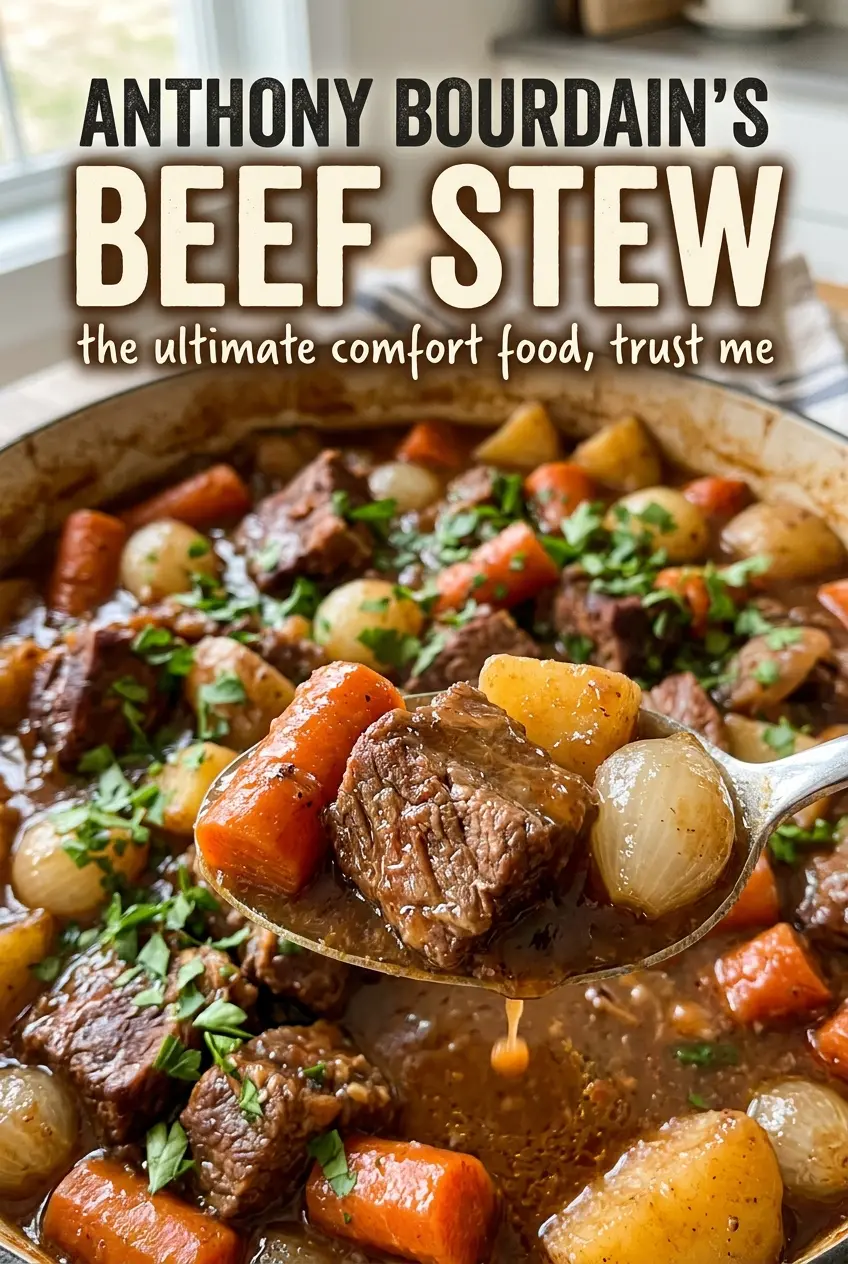
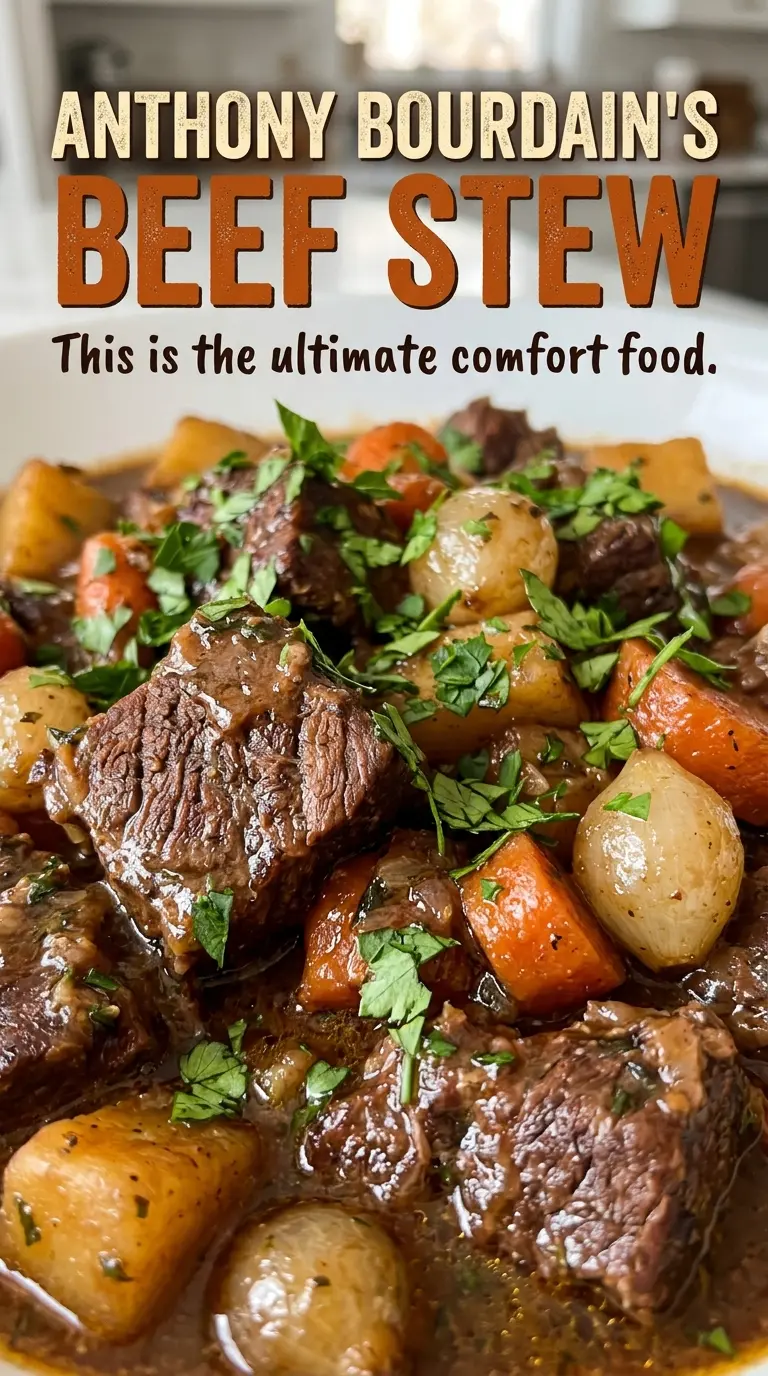
The bacon gives off a steady sizzle in the Dutch oven, and the beef leaves brown patches on the bottom that smell almost toasted. That’s the start of Anthony Bourdains Beef Stew: a deep, red-wine braise with enough time to turn chuck tender without losing its shape. The sauce starts out loose, then takes on a dark, glossy look as it simmers.
I like the balance here: bacon brings a smoky note, while thyme and bay leaves keep the long-cooked beef from tasting heavy. Carrots go in later, so they soften without disappearing into the sauce. By the time the lid comes off, the beef yields to a fork and the carrots are tender, with a spoon-coating sauce around them.
Kitchen Note
Pat the beef dry before it goes into the pot, and brown it in batches rather than crowding the Dutch oven. If the pieces are packed together, they’ll steam instead of picking up those browned edges that give the stew its savory base.
Save Anthony Bourdains Beef Stew for a slow-simmered dinner with tender beef, smoky bacon, and a rich red-wine sauce.
Why the Wine Gets a Head Start Before the Broth
Wine isn’t just a splash of flavor in this stew; it makes up a large part of the braising liquid. That’s why it goes into the pot before the broth. A short boil gives the wine a chance to mellow and mingle with the tomato paste, flour, and browned bits before the longer, covered simmer begins.
That order also helps the finished sauce taste rounded rather than like broth with wine stirred into it at the end. The wine’s acidity cuts through the richness of the beef and bacon, while the flour gives the liquid body as it cooks. Choose a dry red you’d be happy to drink, but it doesn’t need to be an expensive bottle. A very sweet wine would push the sauce in a different direction, so stick with dry.
The other useful detail is that the sauce thickens in two stages. The flour starts the job, and an uncovered simmer at the end lets excess liquid evaporate if the stew still looks thin. You’re aiming for a sauce that clings to the beef, not a paste that hides it.
What the Chuck, Bacon, and Wine Contribute to This Braise
- Beef chuck — Chuck has enough connective tissue to become tender during a long, gentle braise while still holding together in cubes. Ask the butcher to cut it, or choose a piece you can cut into even pieces yourself. Similar-sized cubes cook more evenly than a mix of small and large chunks.
- Thick-cut bacon — It brings smoke and savory depth that leaner bacon won’t contribute in quite the same way. A standard grocery-store thick-cut bacon works well; the important thing is to cook it until crisp before transferring it out of the pot.
- Dry red wine — Since wine is a major part of the cooking liquid, its taste carries through. Use a dry red you enjoy drinking; the most expensive bottle isn’t necessary. Avoid sweet red wine, which can leave the sauce tasting too sweet as it reduces.
- Tomato paste and flour — Tomato paste adds concentrated savory flavor, and the flour helps give the braising liquid a fuller texture. Stir both into the softened vegetables before adding the wine so the flour disperses through the base instead of clumping.
- Carrots — Cutting them into substantial pieces helps them stay distinct through the final simmer. Smaller pieces soften sooner and are more likely to break down before the beef is ready.
Building the Braise Without Losing the Browned Bits
Render the Bacon, Then Brown the Beef
Cook the chopped bacon in a 6-quart Dutch oven over medium heat until crisp, 6 to 8 minutes. Transfer it to a plate and pour off the rendered fat, then add the olive oil. Brown the beef in batches, turning it to color several sides, about 8 minutes per batch; move each batch to the plate with the bacon. Don’t rush the sear by filling the pot all at once.
Soften the Vegetables and Coat the Flour
Add the onion and celery to the pot and cook over medium heat until softened, 5 to 7 minutes. Stir in the garlic and tomato paste and cook for 1 minute, stirring so the paste doesn’t catch on the bottom. Sprinkle in the flour and stir for 1 minute. The mixture will look thick and a little pasty before the liquid goes in.
Deglaze and Start the Slow Simmer
Pour in the wine and scrape the bottom of the pot to loosen the browned bits. Bring it to a boil and cook for 5 minutes, then stir in the broth, thyme, bay leaves, beef, and bacon. Bring the pot to a gentle simmer, cover it, and cook over low heat for 1 1/2 hours. Keep the simmer gentle rather than letting the liquid boil hard.
Add the Carrots and Finish the Sauce
Stir in the carrots, cover the pot again, and simmer until the beef is fork-tender and the carrots are tender, 45 to 60 minutes. If the sauce looks thinner than you want, uncover the pot and simmer for 10 to 15 minutes to thicken it. Remove the thyme stems and bay leaves before serving. The beef should yield easily to a fork, not resist or feel rubbery.
How to Adapt the Wine, Bacon, or Flour
A gluten-free pot with a cup-for-cup flour blend
Swap the all-purpose flour for the same volume of a cup-for-cup gluten-free all-purpose flour blend. Stir it into the vegetables as you would regular flour. The sauce may have a slightly different finish depending on the blend, but this keeps the stew’s thickened, savory base intact.
A lighter-tasting red wine
Use a lighter-bodied dry red if you’d like the wine to sit more gently in the sauce. Keep it dry rather than sweet; that preserves the savory balance while giving the finished braise a softer wine character.
Leave out the bacon
For a less smoky stew, skip the bacon and use the listed olive oil to brown the beef. The result will still be a hearty beef braise, but it won’t have the same smoky depth or richness that the bacon brings.
Storage and Reheating
- Refrigerator: Refrigerate in shallow, airtight containers within 2 hours and keep for 3 to 4 days. The sauce will thicken as it chills, and the fat may firm up on top.
- Freezer: Freeze in airtight freezer-safe containers for up to 2 to 3 months for the best quality. Thaw overnight in the refrigerator before reheating.
- Reheating: Warm gently on the stovetop, stirring now and then, until the stew reaches 165°F. Avoid a hard boil, which can make the beef seem tougher and break down the carrots.
Questions That Come Up While This Beef Stew Simmer
Anthony Bourdains Beef Stew
Ingredients
Equipment
Method
- Pat the beef dry and season it with the salt and pepper.
- Cook the bacon in a 6-quart Dutch oven over medium heat until crisp, 6 to 8 minutes.
- Transfer the bacon to a plate and pour off the rendered fat.
- Add the olive oil to the pot and brown the beef in batches, turning to brown several sides, about 8 minutes per batch.
- Transfer the browned beef to the plate with the bacon.
- Add the onion and celery and cook over medium heat until softened, 5 to 7 minutes.
- Stir in the garlic and tomato paste and cook for 1 minute.
- Sprinkle in the flour and stir for 1 minute.
- Pour in the wine and scrape up the browned bits.
- Bring the wine to a boil and cook for 5 minutes.
- Stir in the broth, thyme, bay leaves, beef, and bacon.
- Bring to a gentle simmer, cover, and cook over low heat for 1 1/2 hours.
- Stir in the carrots, cover, and simmer until the beef is fork-tender and the carrots are tender, 45 to 60 minutes.
- Uncover and simmer for 10 to 15 minutes if the sauce needs thickening.
- Remove the thyme stems and bay leaves.