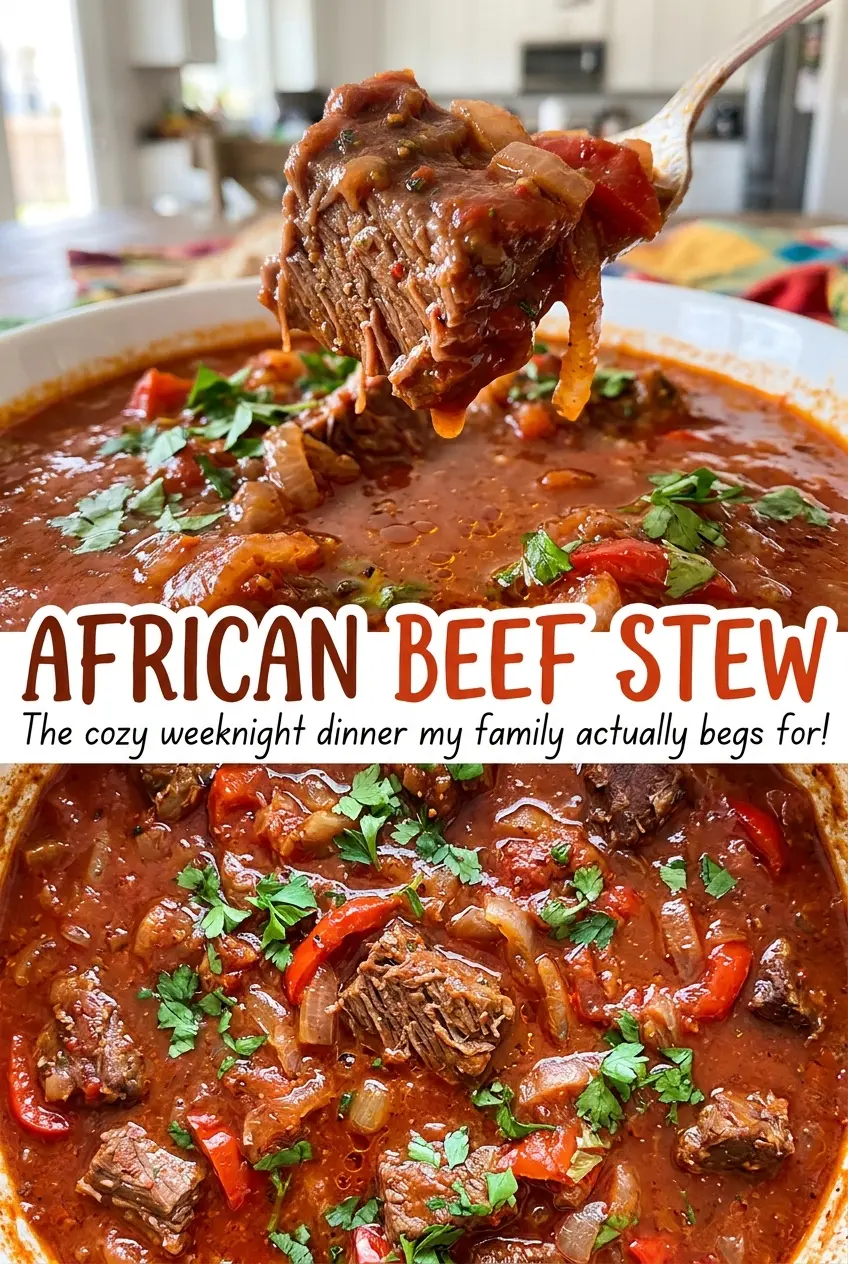
By the time the lid comes off, the crushed tomatoes have turned the broth brick red, and the potatoes and carrots are tender but still easy to pick up on a spoon. That balance is what I want from African beef stew: beef that yields without shredding into the sauce, with enough tomato broth to coat everything without turning it into a paste.
I cook the beef first, then give the potatoes and carrots their own stretch in the pot near the end. Chuck needs a long, quiet simmer, while the vegetables don’t. Curry powder, paprika, thyme, ginger, and garlic season the tomato base; a whole pierced chile brings warmth without leaving pieces to bite into.
A six-quart Dutch oven holds everything with room to spare once the vegetables go in. This is a one-pot dinner, but not a rushed one: browning takes separate batches, and the covered simmer does most of the work. The broth stays loose enough to ladle over the chunks, while the carrots bring a gentle sweetness to each spoonful.
Kitchen Note
Pierce the Scotch bonnet or habanero just once and leave it whole while the stew simmers. The small opening seasons the broth without scattering chile through the pot, and the pepper comes out before serving.
Save this African beef stew for a night when you want tender chuck, a tomato-rich broth, and vegetables that hold their shape.
Why Crowded Beef Turns Gray Before It Ever Browns
Beef chuck has plenty of connective tissue, so it benefits from a long, gentle simmer. Before that simmer, though, the beef needs a chance to brown. When too many cubes go into the Dutch oven at once, they release moisture into a crowded pot and steam instead of developing the browned surfaces that give the finished broth a deeper, more savory taste.
Working in batches takes a little longer at the stove, but each piece gets contact with the hot pot. That browned flavor doesn’t stay on the beef alone: when the tomatoes and broth go in, the liquid loosens the browned bits from the bottom and carries them through the stew. Don’t rush the browning to get every cube in the pot at once. The batches build flavor in a way that extra seasoning can’t quite replace, and the later simmer takes care of turning the chuck tender.
What Chuck, Crushed Tomatoes, and Yukon Golds Bring to This Pot
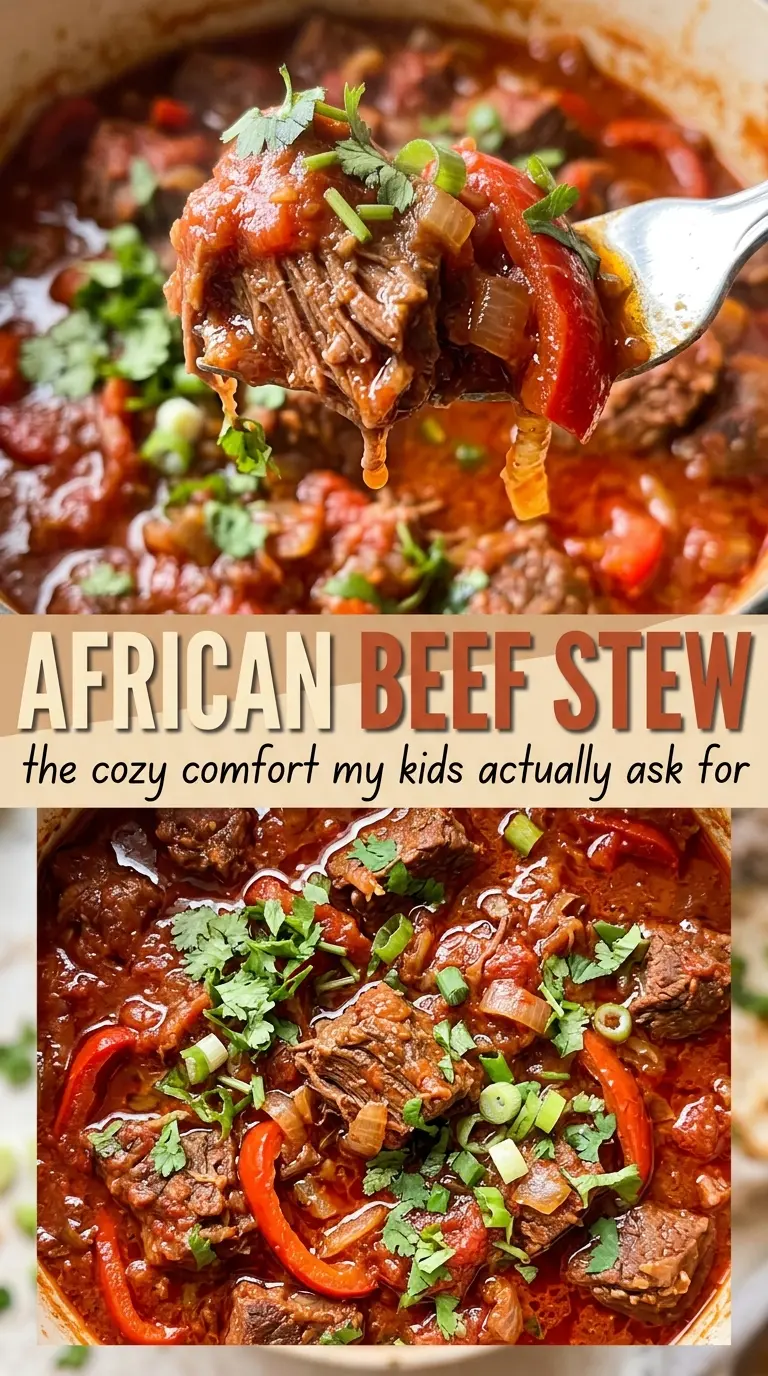
- Beef chuck — This cut has enough connective tissue to become tender during the long covered simmer. Choose evenly cut cubes so they cook at a similar pace; lean steak doesn’t give the stew the same tender, slow-cooked texture.
- Crushed tomatoes and tomato paste — The paste adds concentrated tomato flavor, while canned crushed tomatoes give the broth its body. A basic can of crushed tomatoes works well here; there’s no need to pay extra for a premium brand. Stir the paste into the aromatics so it cooks briefly before the liquid goes in.
- Onion, bell pepper, garlic, and ginger — These soften into the base rather than staying as a separate garnish. Fresh ginger is worth grating yourself for its bright, clean bite, while ordinary yellow onion and red bell pepper are just right. Mince the garlic and grate the ginger before they go into the pot so they cook quickly and evenly.
- Curry powder, paprika, and thyme — Together they season the tomato broth with warmth and an earthy, savory note. Use a curry powder that smells fragrant when you open the jar; stale spices give the stew a flatter aroma. Dried thyme fits the long simmer without needing any special preparation.
- Yukon Gold potatoes and carrots — These bring substance and sweetness, and their one-inch pieces finish cooking during the final simmer. Yukon Golds are a good fit because they hold their shape in a stew; cut the carrots to a similar size so neither vegetable is left firm while the other turns soft.
- Scotch bonnet or habanero — Either works as the whole, pierced chile in this pot. Choose between the two based on what you can find and your preferred chile; the single pepper seasons the broth as it simmers. Keep the bay leaf whole as well so both aromatics are easy to remove before serving.
Building the Tomato Broth Before the Vegetables Go In
Brown the Chuck in Uncrowded Batches
Pat the beef dry, season it all over with kosher salt and black pepper, and heat the vegetable oil in a six-quart Dutch oven over medium-high heat. Brown the beef in batches, turning it to color several sides; plan on about eight minutes per batch. Transfer each batch to a plate as it browns. If the cubes look wet instead of browned, give the pot more room by keeping the batches small.
Soften the Aromatics and Wake Up the Spices
Add the chopped onion and red bell pepper to the pot, then cook, stirring occasionally, until softened, about five minutes. Stir in the garlic, grated ginger, tomato paste, curry powder, paprika, and dried thyme. Cook this mixture for one minute, stirring so the garlic and spices meet the warm oil without sitting still on the bottom. The vegetables should look softened, and the spice mixture should smell fragrant before the liquids go in.
Give the Beef Its First Covered Simmer
Add the crushed tomatoes, beef broth, pierced chile, bay leaf, and browned beef with any juices from the plate. Bring the pot to a boil, then cover it and lower the heat to a gentle simmer. Let it simmer over low heat for one hour. Keep the lid on so the beef cooks steadily in the tomato broth instead of losing too much liquid.
Add the Vegetables for the Finish
Stir in the potato chunks and carrot pieces, then cover the pot again. Simmer for 30 to 40 minutes, until the beef is fork-tender and the vegetables are cooked through. Check a potato and a piece of carrot for tenderness rather than judging only by the time; both should yield when pierced. Remove the hot pepper and bay leaf before serving.
How to Tune the Heat or Make a Lower-Starch Pot
Pick Scotch bonnet or habanero
Use either chile in the same whole, pierced form. The stew keeps its gently warming chile note; the exact character and heat can vary between the two peppers, so choose the one you prefer rather than adding more than one.
Leave out the chile for a milder stew
Omit the Scotch bonnet or habanero if you want the tomato, ginger, and spices to lead without chile heat. The broth will be milder and less warming, while the beef and vegetables remain the same.
Replace the potatoes with carrots
For a lower-starch version, leave out the Yukon Gold potatoes and use an equal volume of additional carrots cut into one-inch pieces. The stew will have a sweeter vegetable base and less of the soft, hearty texture potatoes bring.
Storage and Reheating
- Refrigerator: Store in a covered container for 3 to 4 days. The potatoes soften a little as they sit in the broth.
- Freezer: Freeze cooled portions in airtight containers for up to 3 months. The stew freezes well, though the potatoes may be softer after thawing.
- Reheating: Warm gently in a saucepan over medium-low heat, stirring occasionally, until the stew reaches 165°F. Avoid a hard boil, which can break up the softened potatoes.
Questions That Come Up While This Stew Simmer
African Beef Stew
Ingredients
Equipment
Method
- Pat the beef dry and season it all over with the salt and black pepper.
- Heat the vegetable oil in a 6-quart Dutch oven over medium-high heat, then brown the beef in batches, turning to brown several sides, about 8 minutes per batch; transfer the browned beef to a plate.
- Add the onion and bell pepper to the pot and cook, stirring occasionally, until softened, about 5 minutes.
- Stir in the garlic, ginger, tomato paste, curry powder, paprika, and thyme, and cook for 1 minute.
- Add the crushed tomatoes, beef broth, Scotch bonnet or habanero, bay leaf, and browned beef with any juices; bring to a boil, then cover and simmer over low heat for 1 hour.
- Stir in the potatoes and carrots, cover, and simmer until the beef is fork-tender and the vegetables are cooked through, 30 to 40 minutes.
- Remove the hot pepper and bay leaf, then serve.