The onion should turn soft and almost sweet before the broth goes in; if it’s still sharp, the whole pot tastes like the vegetables never had a chance to settle. I give the onion, carrots, and celery a few minutes in olive oil, then cook the garlic and tomato paste briefly before adding liquid. That small head start gives this vegetable soup a savory base instead of a thin broth with vegetables floating through it. Those few minutes are easy to miss when everything is headed into one pot.
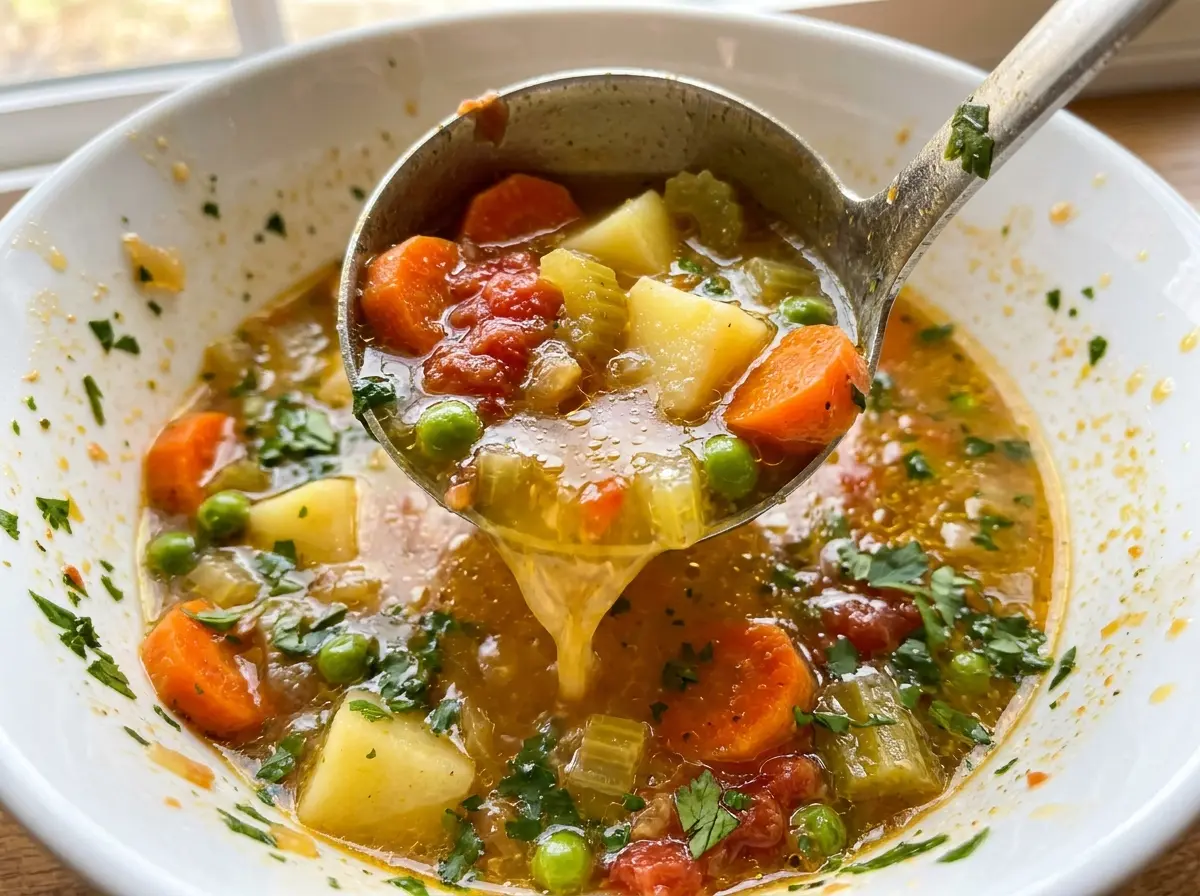
I keep the potatoes and green beans in the simmer long enough to become tender, but save the frozen corn and peas for the last five minutes. They warm through without losing their shape or turning dull. The soup stays brothy, with Yukon Gold cubes that hold together and green beans that still have a little bite. Each spoonful tastes like a pot that has taken its time, even though most of the work is chopping.
Kitchen Note
The bay leaf can hide under the potatoes once the pot is full. I lift it out before serving; its job is to season the broth, not become a surprise bite.
Save this vegetable soup for a dinner that needs a full pot of tender vegetables in a savory, brothy base.
Why the Frozen Corn and Peas Go In After the Potatoes
Potatoes and fresh green beans need time in the simmer to turn tender. Frozen corn and peas don’t need that same stretch of cooking, and leaving them in the pot from the start can make them soft by the time the potatoes are ready. Stirring them in for the last five minutes gives them time to heat through while keeping their shape and color.
The timing also gives the soup a better balance in the bowl. The potatoes make the broth feel more substantial as they soften, while the corn and peas stay distinct instead of blending into the base. Wait until the potatoes and green beans are tender before adding the frozen vegetables; if you add them early, you can’t bring back their firmer texture. That short finish is what keeps the pot tasting like several vegetables, not one long-cooked mix.
What Each Vegetable Adds to This Brothy Pot

- Onion, carrots, and celery — These make the first layer of sweetness and savory flavor. Ordinary, fresh produce is fine here; the even dice matters more than buying oversized vegetables. If you’re out of celery, leave it out rather than replacing it with a different vegetable that would bring its own sweetness or texture.
- Garlic and tomato paste — Garlic brings a sharp, savory note, while tomato paste gives the broth a concentrated tomato base. A standard can of tomato paste works well; there’s no need for a specialty brand. If the paste is missing, you can omit it, but the broth will taste less rounded and more simply tomato-and-vegetable based.
- Vegetable broth and diced tomatoes — The broth carries the flavor through the whole pot, so choose one you like the taste of on its own. Canned diced tomatoes are a practical choice here, and their juices belong in the soup too. There’s no need to drain them or buy a premium variety.
- Yukon Gold potatoes — These potatoes soften into a pleasantly creamy bite while still holding their shape. Their texture is different from the crisp vegetables, and none of the other vegetables in this pot replaces that starchy heft. Cut them into even cubes so they cook at roughly the same pace.
- Green beans, corn, and peas — Fresh green beans give the longer simmer a sturdy vegetable to work on; trim the ends and cut them into short pieces. The frozen corn and peas are convenient and work straight from the freezer. If you leave out one of these vegetables, the soup still cooks, but you’ll have less of its particular sweetness and texture.
The Four Stages That Build the Soup’s Texture
Soften the Aromatic Vegetables
Heat the olive oil in a 6-quart pot over medium heat, then add the diced onion, carrots, and celery. Cook for 6 to 8 minutes, stirring occasionally, until the onion has softened. The vegetables should look glossy and relaxed, not browned or crisp at the edges. If the onion still looks firm, give the mixture a little more attention within that cooking window before moving on.
Give the Garlic and Tomato Paste a Brief Cook
Stir in the minced garlic and tomato paste and cook for 1 minute. Keep stirring so the garlic doesn’t sit against the hot pot and scorch. The paste should spread through the softened vegetables and look darker and less raw. This is a short stage; the garlic needs to become fragrant without turning brown.
Simmer the Potatoes and Green Beans
Add the vegetable broth, diced tomatoes with their juices, potatoes, green beans, thyme, bay leaf, salt, and pepper, then bring the pot to a boil. Reduce the heat to maintain a gentle simmer, cover the pot partially, and cook for 15 to 20 minutes. Check that the potatoes and green beans are tender before moving on; a hard boil can knock the vegetables around and make their edges break down.
Finish with the Frozen Vegetables
Stir in the frozen corn and peas and simmer for 5 minutes, until they’re heated through. The soup should stay at a gentle simmer rather than boiling hard. Lift out the bay leaf before serving. The corn and peas should be warm and plump, with the potatoes and green beans still holding their shape.
Three Practical Ways to Adapt the Pot
A Less Starchy, Lower-Carb Bowl
Leave out the potatoes and frozen corn, keeping the other ingredients and their listed amounts. The soup will be lighter and more broth-forward, without the creamy bite from the potatoes or the sweetness of the corn.
A Pea-Forward Version
Leave out the corn and use 2 cups of frozen peas in its place, adding them at the same point near the end. The soup will taste sweeter and have a softer, more uniform finish than the version with both vegetables.
A More Tomato-Forward Broth
Cook 2 tablespoons of tomato paste with the garlic instead of 1 tablespoon, keeping the diced tomatoes and broth as listed. The base will taste more concentrated and tomato-rich without changing the vegetables or their cooking order.
Storage and Reheating
- Refrigerator: Keep the soup in a covered container for 3 to 4 days. The potatoes may soften a little as they sit in the broth.
- Freezer: It freezes well for up to 3 months. Cool it, transfer it to freezer-safe containers, and leave a little room at the top; thaw overnight in the refrigerator for a more even reheat. The potatoes may be softer after thawing.
- Reheating: Warm it gently on the stovetop, stirring now and then, until it reaches 165°F. Avoid a hard boil, which can break up the potatoes and soften the green beans further.
Questions That Come Up When Making Vegetable Soup
Vegetable Soup
Ingredients
Equipment
Method
- Heat the olive oil in a 6-quart pot over medium heat.
- Add the onion, carrots, and celery and cook for 6 to 8 minutes, stirring occasionally, until the onion is softened.
- Stir in the garlic and tomato paste and cook for 1 minute.
- Add the vegetable broth, diced tomatoes, potatoes, green beans, thyme, bay leaf, salt, and pepper, and bring the soup to a boil.
- Reduce the heat to maintain a gentle simmer, cover partially, and cook for 15 to 20 minutes, until the potatoes and green beans are tender.
- Stir in the corn and peas and simmer for 5 minutes, until heated through.
- Remove the bay leaf before serving.