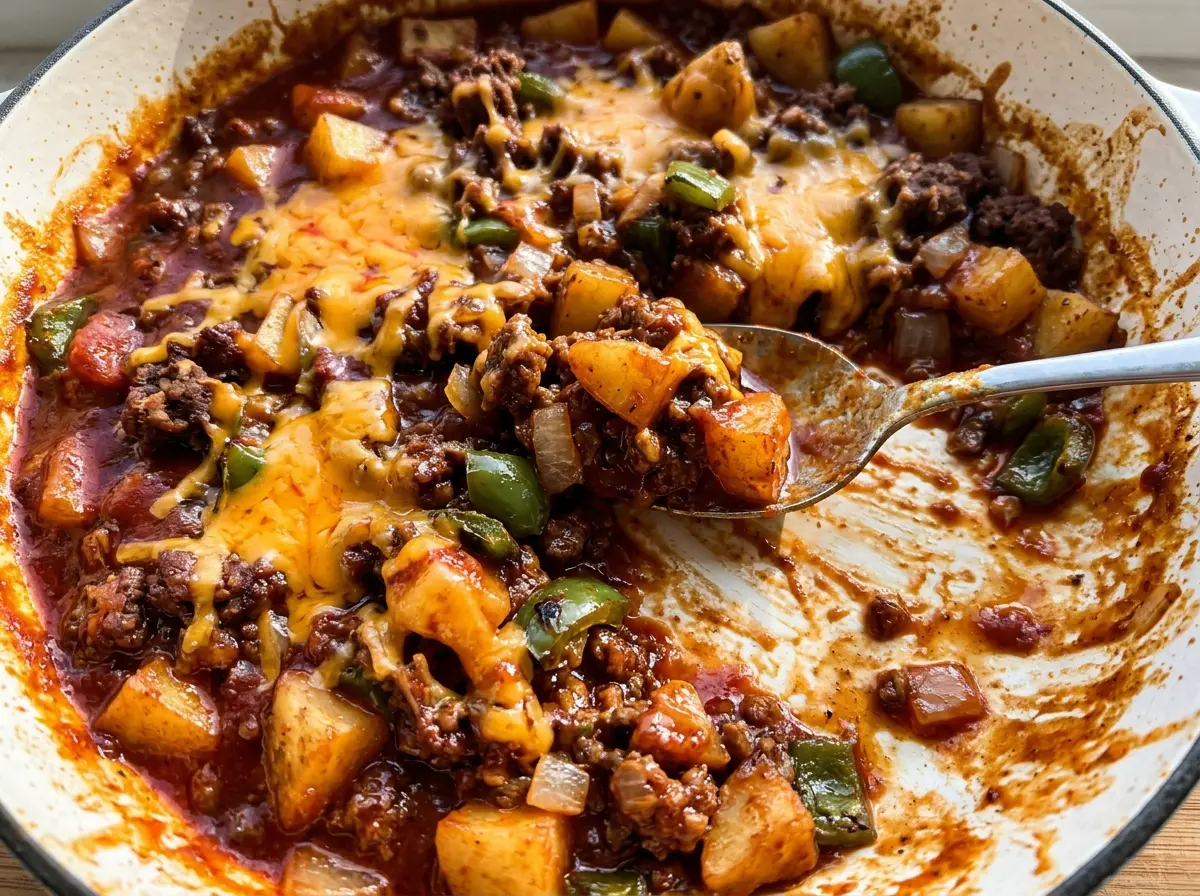
The potatoes are the part that can make or break a skillet dinner: leave them too large and the sauce is ready before they soften; cut them evenly and they turn tender right on time. In this Sloppy Joe Potato Skillet, the beef gets browned first, then the potatoes simmer covered in beef broth while the vegetables soften around them.
I keep the beef on a clean plate while the potatoes cook, which gives them room in the pan and keeps the tomato sauce from getting in too early. The sauce comes together in a bowl while you wait, so the final stretch is quick and easy to watch.
Once the sauce thickens around the beef and potatoes, every forkful has that tangy, familiar sloppy Joe flavor with a tender potato bite underneath.
Kitchen Note
When you brown the beef, drain away the excess fat but keep the browned meat and any juices on the plate. Those juices go back into the skillet at the end, where they belong in the sauce.
Save this Sloppy Joe Potato Skillet for a cozy one-pan dinner with tender potatoes and tangy beef sauce.
Why the potatoes simmer before the sloppy Joe sauce goes in
Tomato sauce and ketchup make a thick coating, but the potatoes need a chance to cook through in broth first. Starting them in the covered skillet gives the cubes steady heat and moisture without a dense sauce clinging to their surfaces. When they’re fork-tender, the sauce can go in and reduce quickly around the beef.
That order also makes the timing easier to judge. Before adding the sauce, you can check a potato directly: it should give way to a fork without crumbling apart. If you add the tomato mixture before the potatoes are tender, the skillet gets thicker and harder to stir while the centers are still cooking. Keep the lid on during the potato simmer, then take it off for the short finish so excess liquid can cook away and the sauce can cling to everything.
The result isn’t a bowl of potatoes under a separate topping. The beef, potatoes, and vegetables finish together in a sauce that’s thick enough to coat, not pool at the bottom.
Russets, tomato sauce, and ketchup each have a different job

- Russet potatoes — Their starchy texture turns tender and slightly fluffy as they simmer. Cut the cubes evenly so they finish at the same time; waxier potatoes hold their shape more firmly and won’t give quite the same soft bite. There isn’t a direct swap that keeps the texture identical, so russets are the best choice here.
- Ground beef — The 85% lean beef has enough fat to brown well and leave flavor in the skillet, while still allowing you to drain off excess after browning. A leaner grind works, but the finished beef will be less rich; a fattier one simply needs more careful draining.
- Green bell pepper — It brings a mild, savory sweetness that fits the classic sauce. Red bell pepper is the easiest swap; it tastes sweeter and makes the skillet a little less sharp.
- Beef broth — The broth supplies the liquid that cooks the potatoes and adds a savory base. Water can stand in if needed, though the potato layer will taste less beefy before the sauce goes in.
- Tomato sauce and ketchup — Tomato sauce gives the mixture its smooth tomato base; ketchup contributes sweetness and tang. They aren’t interchangeable cup for cup, since extra ketchup would make the sauce sweeter and thicker.
- Worcestershire sauce and yellow mustard — Worcestershire adds a savory, tart note, while mustard sharpens the tomato flavor. If you’re choosing a replacement Worcestershire sauce for a dietary need, pick one that meets that requirement; leaving it out makes the sauce less savory.
Brown the beef, soften the potatoes, then thicken the sauce
Brown the beef without crowding the pan
Heat a 12-inch deep skillet with a lid over medium-high heat, then add the ground beef with part of the salt and the black pepper. Break it up as it cooks for 6–8 minutes, until browned and at 160°F on an instant-read thermometer. Move it to a clean plate and drain excess fat before starting the vegetables. If the beef is still in large clumps, break those up now so the sauce coats it evenly later.
Soften the vegetables before adding garlic
Lower the heat to medium and add the vegetable oil, diced onion, and diced green bell pepper. Cook for 4–5 minutes, stirring, until the vegetables have softened. Stir in the minced garlic and cook for 30 seconds; garlic needs only that short time here, so don’t leave it to brown. You should smell it clearly before the potatoes go in.
Simmer the potato cubes covered
Stir in the peeled, 1/2-inch potato cubes, beef broth, and the remaining salt. Cover the skillet and simmer over medium-low heat for 12–16 minutes, stirring once halfway through. The potatoes are ready when a fork slides into a cube without resistance, but the pieces still hold their shape. If they’re not tender yet, keep the skillet covered and give them a little more time before moving on.
Let the sauce reduce around the beef
While the potatoes cook, stir the tomato sauce, ketchup, Worcestershire sauce, yellow mustard, brown sugar, and paprika together in a small bowl. Add that mixture and the cooked beef, including any juices on the plate, to the skillet. Simmer uncovered over medium heat for 4–6 minutes, stirring occasionally, until the sauce thickens and the beef is hot. The sauce should cling to the potatoes and meat rather than look watery around the edges.
Simple swaps that change the skillet without changing its character
Swap in red bell pepper
Use diced red bell pepper in place of the green pepper. It softens in the same stage and gives the finished skillet a sweeter, gentler pepper flavor.
Make the sauce less sweet
Leave out the packed light brown sugar for a sharper, more tomato-forward sauce. The ketchup still brings sweetness, but the finish won’t have the same rounded, slightly sweet note.
Make it gluten-free
Use gluten-free versions of the beef broth, Worcestershire sauce, ketchup, tomato sauce, and yellow mustard. The beef-and-potato skillet keeps its same texture and sweet-tangy taste; check that each packaged item is labeled gluten-free.
Storage and Reheating
- Refrigerator: Refrigerate leftovers within 2 hours in a covered container and use within 3–4 days. The potatoes soften as they sit in the sauce.
- Freezer: Freeze in an airtight, freezer-safe container for up to 2–3 months. Thawed potatoes will be softer and may break apart more easily.
- Reheating: Warm gently in a covered skillet over medium-low heat, stirring now and then; add a small splash of beef broth if the sauce has thickened too much. Heat leftovers to 165°F, and avoid high heat, which can make the potatoes fall apart before the center is hot.
Questions that come up while making this skillet
Sloppy Joe Potato Skillet
Ingredients
Equipment
Method
- Heat a 12-inch deep skillet with a lid over medium-high heat. Add the ground beef, 1/4 teaspoon of the salt, and the black pepper; cook for 6–8 minutes, breaking it up, until browned and it reaches 160°F on an instant-read thermometer.
- Transfer the beef to a clean plate and drain excess fat.
- Reduce the heat to medium and add the vegetable oil, onion, and bell pepper; cook for 4–5 minutes until softened.
- Stir in the garlic and cook for 30 seconds.
- Stir in the potatoes, beef broth, and remaining 1/4 teaspoon salt. Cover and simmer over medium-low heat for 12–16 minutes, stirring once halfway through, until the potatoes are fork-tender.
- While the potatoes cook, stir together the tomato sauce, ketchup, Worcestershire sauce, mustard, brown sugar, and paprika in a small bowl.
- Add the sauce and cooked beef with any accumulated juices to the skillet.
- Simmer uncovered over medium heat for 4–6 minutes, stirring occasionally, until the sauce thickens and the beef is hot.