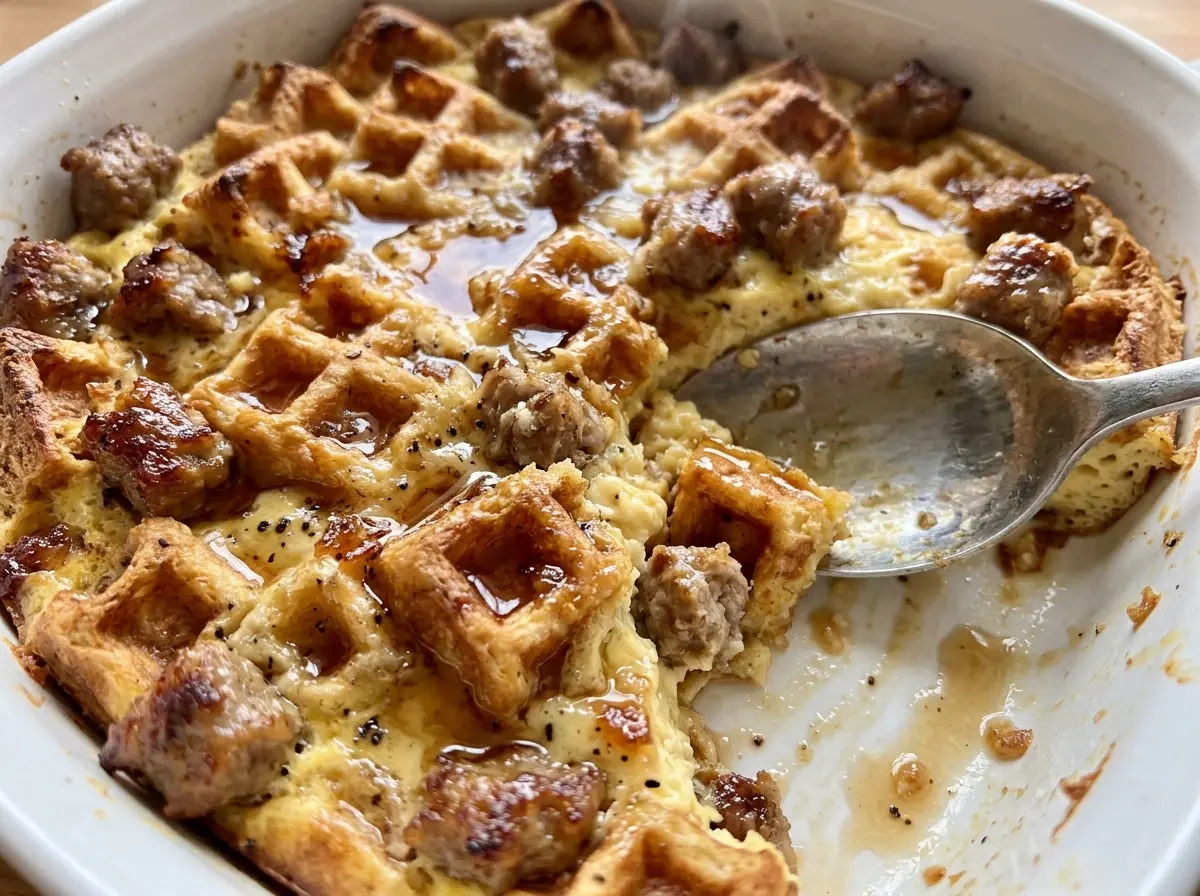
The toaster clicks off, and the waffles should feel crisp before they go anywhere near the custard. That little bit of extra toasting gives this Maple Waffle Breakfast Casserole a soft, tender center without leaving you with cubes that have gone completely limp. I cut them while they’re just cool enough to handle, then spread them across the dish so the custard has room to settle between the pieces.
The maple flavor is baked right into the egg-and-milk mixture, so each bite tastes gently sweet instead of depending on a last-minute pour of syrup. I like how the top turns golden while the waffles underneath soften into something close to a cross between French toast and a baked waffle. It’s a useful make-for-eight breakfast when you want the familiar waffle flavor in a dish you can slice and serve.
Kitchen Note
Give the custard its full 20-minute stand before baking. The waffle pieces take up some of that mixture during the wait, which helps the casserole bake evenly rather than leaving a puddle of egg custard at the bottom.
Save this Maple Waffle Breakfast Casserole for a breakfast with maple sweetness baked into every soft, golden slice.
Why the Maple Belongs in the Custard, Not Just on Top
Pouring syrup over waffles at the table gives you sweetness in a few sticky spots; whisking maple syrup into the custard spreads that flavor through the casserole. The eggs and milk carry it into the gaps between waffle cubes, so the sweetness doesn’t depend on which piece happens to catch a drizzle. It also keeps the finished dish easy to cut and serve, without a layer of syrup pooling around the edges.
Pure maple syrup brings a woodsy, caramel-like note that pairs naturally with cinnamon and vanilla. Pancake syrup can sweeten the custard, but it won’t have quite the same maple character. Keep the syrup measured rather than adding extra on instinct: too much liquid changes the balance of the custard, while more sweetness can always be added at the table.
The waffles already have their own flavor and a crisp exterior after toasting, so the custard doesn’t need to be heavily spiced. A little cinnamon rounds out the maple without taking over. Once the casserole is baked, those flavors taste blended rather than layered on top of one another.
What the Waffles, Eggs, and Maple Each Bring to the Dish
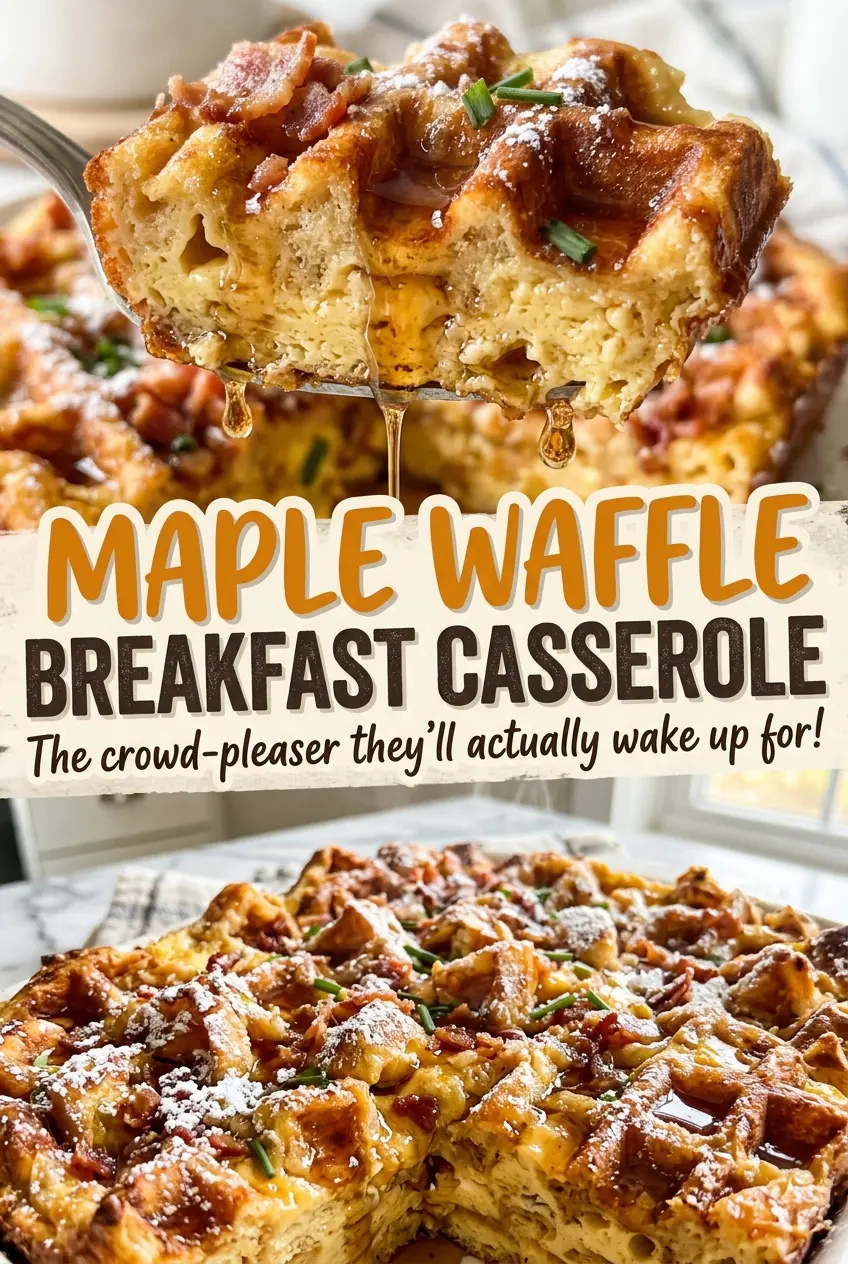
- Frozen waffles — Their grid holds custard in small pockets, and the waffle structure stays recognizable after baking. An inexpensive standard waffle works well; save specialty waffles for a recipe where their flavor is the main event. Toast them until crisp before cubing so they don’t collapse into the custard.
- Large eggs — Eggs set the milk into a sliceable custard, so their size matters to the balance. Large eggs are the right choice here; there isn’t a simple egg-free replacement that gives this casserole the same set and texture.
- Whole milk — Whole milk gives the custard enough richness to soften the waffles without making the dish overly heavy. For a richer result, use the same amount of half-and-half instead; it makes the custard more substantial.
- Pure maple syrup — Choose real maple syrup for its distinct flavor, but there’s no need to buy an especially expensive bottle for baking. Pancake syrup can stand in if that’s what you have, with a less pronounced maple taste.
- Butter — Butter greases the dish and gives the top a golden finish. Standard butter is fine; the maple, vanilla, and cinnamon provide plenty of character, so a premium cultured butter isn’t necessary.
- Vanilla and cinnamon — Vanilla softens the eggy edge of the custard, while cinnamon gives the maple a warm, familiar note. If you’re out of cinnamon, an equal amount of ground nutmeg works, though it shifts the flavor toward a deeper, more fragrant spice.
Build the Custard Around Crisp Waffle Cubes
Toast, Cool, and Cube the Waffles
Heat the oven to 350°F and grease a 9×13-inch baking dish with 1 tablespoon of butter. Toast the frozen waffles until crisp, then let them cool briefly before cutting them into 1-inch cubes. If the waffles are still hot and steamy, give them another moment before cubing so they don’t soften in the dish. Spread the pieces across the prepared baking dish.
Whisk a Smooth Maple Custard
In a large bowl, whisk the eggs, whole milk, maple syrup, vanilla, cinnamon, and kosher salt until the mixture looks evenly combined. Check the bottom of the bowl for any streaks of egg white before you stop whisking. Pour the custard over the waffles as evenly as you can, then gently press the cubes down so they make contact with the liquid. Let the casserole stand for 20 minutes.
Drizzle on the Remaining Butter
Melt the remaining 2 tablespoons of butter while the casserole stands. Drizzle it across the top rather than tipping it all into one spot. The butter should reach several areas of the waffle surface, not collect in a single corner. That gives the top a more even golden finish as it bakes.
Bake Until the Center Sets
Bake for 45 to 55 minutes, until the casserole is puffed and golden and the center reaches 160°F. The middle should look set rather than wet, and a thermometer gives you a clear check when the surface is already browned. If the center hasn’t reached 160°F, keep baking and check again. Rest the casserole for 10 minutes before serving so the slices hold together.
Easy Ways to Adapt the Waffles and Custard
Make It Gluten-Free with Frozen Waffles
Use ten gluten-free frozen waffles weighing about 10 ounces in place of the regular waffles. Toast them until crisp just as you would standard waffles; the finished casserole may have a slightly firmer, less uniform texture, depending on the waffle brand.
Make a Dairy-Free Version
Replace the whole milk with the same amount of unsweetened oat milk, and use plant-based butter in place of the butter. Choose dairy-free waffles, too. The casserole will be a little less rich, but the oat milk still makes a soft custard around the waffles.
Use Whole-Grain Waffles
Swap in ten frozen whole-grain waffles weighing about 10 ounces. Their nuttier taste makes the casserole less sweet-tasting, even though the maple custard stays the same. Toast them until crisp, since a softer waffle won’t give the cubes as much structure.
Storage and Reheating
- Refrigerator: Refrigerate leftovers within 2 hours and keep them covered for up to 3 to 4 days. The waffles soften more as they sit, but the custard stays sliceable.
- Freezer: Freeze cooled individual portions in airtight containers or tightly wrapped portions for up to 2 months. Thaw overnight in the refrigerator for more even reheating.
- Reheating: Warm a portion in the microwave until hot throughout, or cover the baking dish and reheat it in the oven until the center is hot. Leaving the dish uncovered can dry out the edges before the middle warms.
Questions That Come Up When Baking Waffle Casserole
Maple Waffle Breakfast Casserole
Ingredients
Equipment
Method
- Heat the oven to 350°F.
- Grease a 9x13-inch baking dish with 1 tablespoon of the butter.
- Toast the waffles until crisp.
- Let the waffles cool briefly.
- Cut the waffles into 1-inch cubes.
- Arrange the waffle cubes in the baking dish.
- Whisk the eggs, milk, maple syrup, vanilla, cinnamon, and salt in a large bowl until combined.
- Pour the egg mixture evenly over the waffles.
- Gently press the waffles into the custard.
- Let stand for 20 minutes.
- Melt the remaining 2 tablespoons butter.
- Drizzle the melted butter over the casserole.
- Bake for 45 to 55 minutes, until puffed and golden and the center reaches 160°F.
- Rest for 10 minutes before serving.