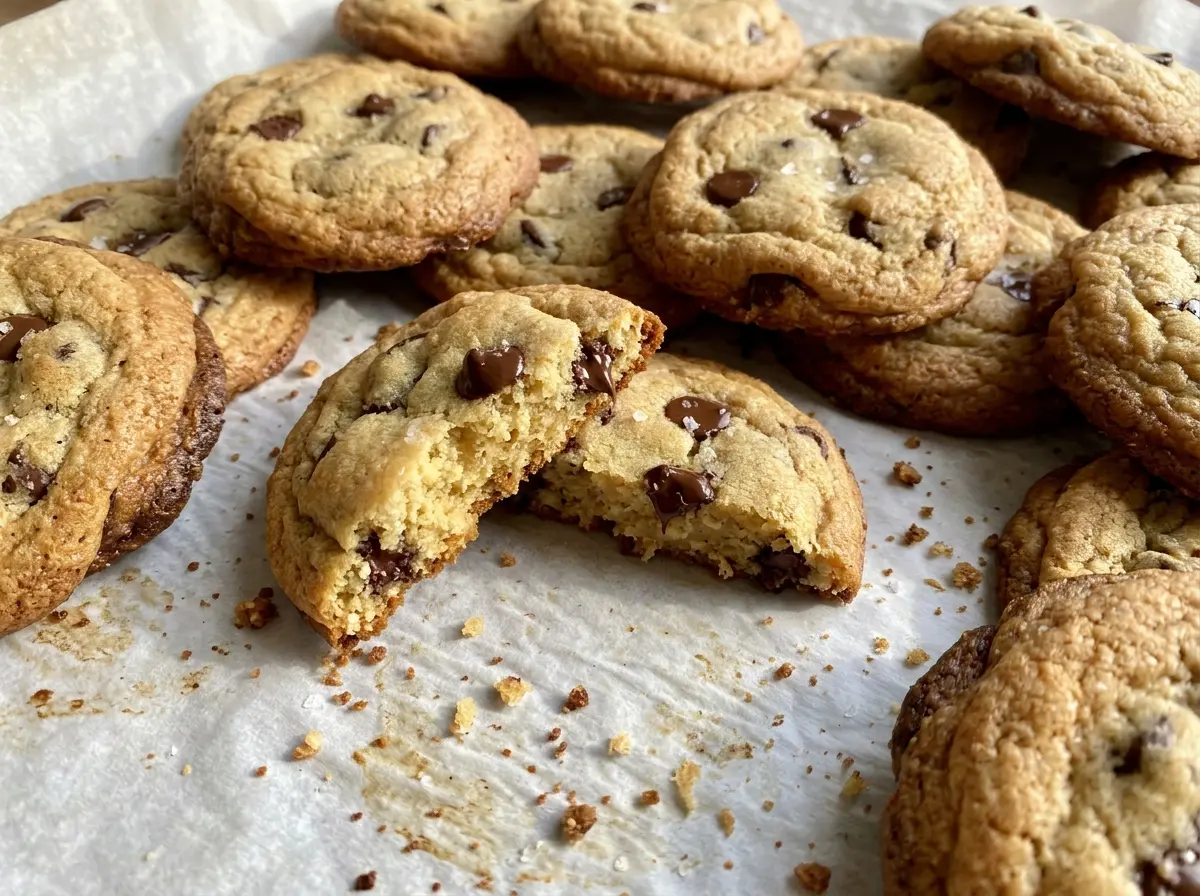
The dough gets noticeably softer when the Greek yogurt goes in, and that can make these cookies feel different from a classic chocolate chip batch. Chilling isn’t just a pause in the recipe; it firms the dough enough to scoop neatly and bake into cookies that don’t run together. These Greek yogurt chocolate chip cookies bake at 350°F, with lightly golden edges and centers that look set.
I like how the yogurt brings a gentle tang alongside the brown sugar and semisweet chocolate. The dough makes about 30 cookies, so it’s a good batch to divide between two baking sheets. Keep the flour mixing brief, give the dough its full 30 minutes in the refrigerator, and you’ll have chocolate in every bite without the cookies spreading into one another.
Kitchen Note
Once the flour goes in, stop mixing as soon as the last dry streak disappears. Beating the dough longer can make the cookies tougher, so a few small streaks are better than an extra minute of mixing.
Save these Greek yogurt chocolate chip cookies for a batch with tender centers, semisweet chocolate, and a dough that scoops cleanly after chilling.
Why Greek Yogurt Needs Both Baking Soda and Baking Powder
Greek yogurt does more here than make the dough moist. Its acidity also matters: baking soda reacts with acidic ingredients, while baking powder supplies additional lift. Using both gives the cookies more balanced leavening than relying on either one alone. They’re a matched pair in this dough, not two versions of the same ingredient.
That balance helps explain why it’s worth measuring the leaveners carefully. Too much baking soda can leave an unpleasant aftertaste, while leaving out the baking powder changes how much lift the cookies get. Whisking the dry ingredients together before adding them helps distribute the small amounts evenly, so one cookie doesn’t end up with a concentrated patch of leavener. The whole-milk yogurt also brings a thicker consistency than regular yogurt, which suits a dough that needs to hold its shape for scooping.
What the Yogurt, Sugars, and Leaveners Each Bring

- Whole-milk Greek yogurt — Its thickness adds moisture without making the dough as loose as regular yogurt could. If regular plain yogurt is what you have, strain it until it’s thick like Greek yogurt before using it. Choose plain rather than sweetened or flavored yogurt so the dough’s sweetness and flavor stay in balance.
- Butter and sugars — Softened butter creams with the sugars to create the dough’s base. Light brown sugar gives it a deeper, more molasses-like note, while granulated sugar keeps the flavor from leaning too far in that direction. If you only have salted butter, use it in place of the unsalted butter and leave out the kosher salt; the cookies may taste a little saltier depending on the butter.
- Flour and leaveners — All-purpose flour gives the dough enough structure to hold the chocolate chips. Measure it without packing it into the cup; too much flour is a common route to dry, dense cookies. Keep the baking soda and baking powder as separate ingredients rather than swapping one for the other, since they play different roles with the yogurt.
- Semisweet chocolate chips — Semisweet chocolate balances the sweet dough and holds its shape as the cookies bake. A chopped semisweet chocolate bar works in place of chips if you want pockets of melted chocolate; use the same volume and chop it into pieces small enough to fold through the dough.
- Vanilla and egg — Vanilla rounds out the brown sugar and chocolate, while the egg helps bind the dough. Use a large egg, as smaller or larger eggs change the moisture balance. There isn’t a dependable swap within the other ingredients for the egg in this formula.
From Creamed Butter to Cookies with Set Centers
Cream the Butter and Sugars
Beat the softened butter with the brown sugar and granulated sugar until the mixture looks creamy, about 2 minutes. Scrape the sides of the bowl if pockets of butter or sugar are clinging there. Starting with softened butter helps it blend smoothly; melted butter won’t cream the same way.
Blend in the Yogurt, Egg, and Vanilla
Beat in the Greek yogurt, egg, and vanilla until the mixture is combined. The bowl may look a little different from a butter-and-sugar mixture without yogurt, but it should be evenly blended rather than streaky. If you still see distinct patches of yogurt, keep mixing briefly and scrape the bowl once.
Fold in the Dry Ingredients and Chocolate
Whisk the flour, baking soda, baking powder, and salt together in a separate bowl before adding them to the wet mixture. Mix only until no dry flour remains, then fold in the semisweet chips so they’re spread through the dough. Cover the bowl and chill the dough for 30 minutes; this gives it time to firm before portioning.
Portion and Bake on Both Racks
Heat the oven to 350°F and line two 18×13-inch rimmed baking sheets with parchment. Scoop the dough into 2-tablespoon portions, leaving about 2 inches between them. Bake the sheets on the upper and lower racks for 10–12 minutes, swapping their positions and rotating them front to back halfway through; look for lightly golden edges and centers that look set.
Let the Cookies Set Before Moving Them
Leave the cookies on their baking sheets for 5 minutes after they come out of the oven. They’re delicate while hot, and moving them straight to a rack can break them. After that short rest, transfer them to a wire rack to cool completely.
Three Small Changes That Give You a Different Batch
A dairy-free version with plant-based swaps
Replace the butter with the same amount of plant-based butter sticks and use an equal amount of thick, plain, unsweetened dairy-free yogurt in place of the Greek yogurt. Avoid soft tub spreads and thin yogurt, which add more water to the dough. The cookies will have a slightly different flavor and may not brown in quite the same way.
A deeper, softer brown-sugar batch
Replace the granulated sugar with the same volume of packed light brown sugar. The extra molasses note makes the cookies taste richer, and the texture will lean softer and chewier than the original balance of sugars.
A less chocolate-heavy cookie
Use 1 cup of semisweet chocolate chips instead of the full amount. You’ll get more of the brown-sugar cookie in each bite, while keeping chocolate in every portion.
Cookie Storage and Reheating
- Counter: Once completely cool, keep the cookies in an airtight container at room temperature for up to 4 days. They’ll gradually lose some of their fresh-from-the-oven softness.
- Freezer: Freeze cooled cookies in an airtight freezer-safe container for up to 2 months. Separate layers with parchment so they’re easier to take out a few at a time.
- Reheating: Warm an individual cookie in the microwave for about 5 seconds, then add a few more seconds if needed. Longer heating can make the cookie tough and overheat the chocolate.
Questions That Come Up While Making These Cookies
Greek Yogurt Chocolate Chip Cookies
Ingredients
Equipment
Method
- Heat the oven to 350°F.
- Line two 18x13-inch rimmed baking sheets with parchment paper.
- Beat the butter, brown sugar, and granulated sugar in a large bowl until creamy, about 2 minutes.
- Beat in the Greek yogurt, egg, and vanilla until combined.
- Whisk the flour, baking soda, baking powder, and salt in a medium bowl.
- Mix the dry ingredients into the butter mixture just until no dry flour remains.
- Fold in the chocolate chips.
- Cover the bowl and chill the dough for 30 minutes.
- Scoop the dough into 2-tablespoon portions and arrange them about 2 inches apart on the prepared baking sheets.
- Bake the sheets on the upper and lower oven racks for 10–12 minutes, swapping their positions and rotating them front to back halfway through, until the edges are lightly golden and the centers look set.
- Cool the cookies on the baking sheets for 5 minutes.
- Transfer the cookies to a wire rack to cool completely.