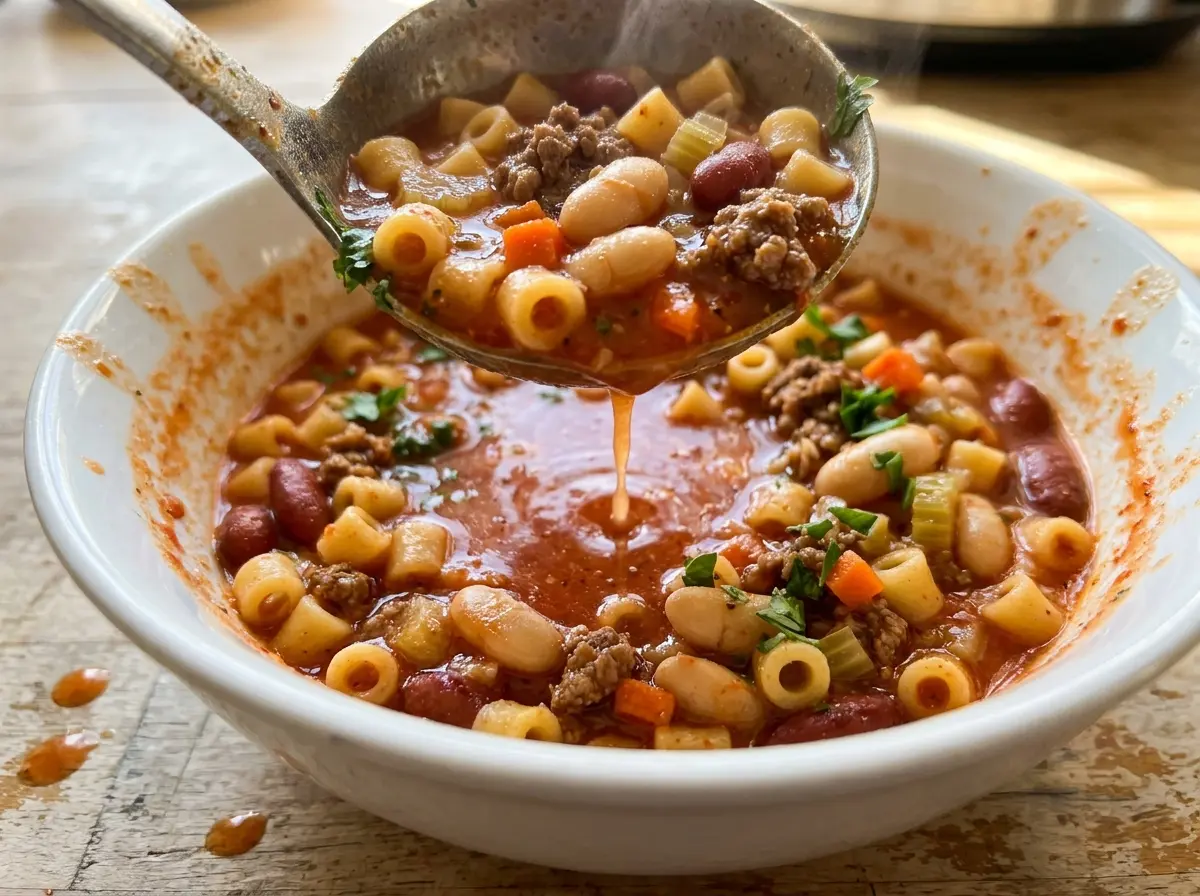
The beef starts to brown around the edges while the onion softens beside it, and the skillet smells savory before the slow cooker is even switched on. That quick start gives Crock Pot Pasta Fagioli a deeper base than simply putting everything in the cooker cold. I break the beef into small pieces as it cooks, then let the tomatoes, broth, carrots, and celery take their time until the vegetables are tender.
I keep the pasta out of the slow cooker until serving. Ditalini cooks quickly in a separate pot, so it stays pleasantly firm instead of soaking up the tomato broth during hours of cooking. The result is a hearty bowl with tender beans, a rich tomato base, and just enough small pasta to catch on a spoon.
Kitchen Note
Add the beans near the end rather than letting them cook all day. They need only the final covered half-hour to heat through, which helps them keep their shape in the soup.
Save Crock Pot Pasta Fagioli for a slow-cooker dinner with tender vegetables, two kinds of beans, and pasta that stays al dente in the bowl.
Why the Ditalini Goes in the Bowl, Not the Slow Cooker
Small pasta seems like an obvious addition to a slow-cooker soup, but it keeps cooking for as long as it sits in hot broth. Ditalini added at the beginning would have hours to soften and swell, and it would draw liquid away from the tomato broth as it did. The soup would be thicker, and the pasta could turn mushy by the time the vegetables were tender.
Cooking the ditalini separately gives you control over its texture. Drain it when it’s al dente, then divide it among the bowls and ladle the hot soup over it. Each serving gets pasta without changing the consistency of the pot.
This also makes leftovers easier to manage. Keep any remaining pasta apart from the soup, and it won’t continue absorbing broth in the refrigerator. When you reheat a bowl later, the soup still tastes like soup instead of a pot of pasta with just a little liquid left.
What the Beef, Tomatoes, and Beans Each Bring to This Pot

- Ground beef — The 85% lean beef gives the broth a savory, meaty base without leaving as much excess fat as a fattier grind. Choose a fresh package; there’s no need to pay extra for a specialty grind. Ground turkey works as a leaner swap, though the soup will taste milder and the meat needs to reach 165°F.
- Onion, carrots, and celery — These vegetables soften into the broth and give each spoonful a little sweetness and texture. A firm onion and crisp carrots and celery are all you need; finely chop the onion and dice the other vegetables evenly so they cook at a similar pace.
- Crushed tomatoes and tomato sauce — Crushed tomatoes provide the soup’s tomato body, while tomato sauce makes that base smoother. Canned tomatoes are a practical choice here, and crushed tomatoes shouldn’t be replaced with tomato sauce alone because the soup would lose its thicker, textured tomato character.
- Low-sodium beef broth — It carries the tomato and beef flavors through the slow cooker while leaving room for the measured salt. If you’re making the meat-free version, vegetable broth replaces it; the finished soup will have a lighter, less beefy taste.
- Cannellini and kidney beans — Cannellini beans are soft and creamy, while kidney beans hold their shape and give the soup more bite. Drain and rinse both kinds before adding them. Great northern beans can stand in for cannellini, or pinto beans for kidney beans, using the same amount.
- Ditalini — Its short, small shape fits neatly on a spoon and holds up when cooked separately. If you can’t find it, small elbow pasta is a useful substitute; cook it in a separate pot according to its package directions.
- Dried oregano, dried basil, garlic, and bay leaf — These pantry seasonings flavor the broth over the long cook. Mince the garlic so it disperses evenly, and remove the bay leaf before serving; it adds aroma but isn’t meant to be eaten.
Build the Slow-Cooker Base Before the Long Cook
Brown the Beef and Soften the Onion
Heat the olive oil in a 12-inch skillet over medium-high heat, then add the ground beef and finely chopped onion. Cook for 6–8 minutes, breaking the beef into small crumbles as it browns, until the beef reaches 160°F. The onion should look softened and the beef should no longer be pink. Drain off the excess fat before moving on so the broth doesn’t end up greasy.
Let the Garlic Turn Fragrant
Stir the minced garlic into the skillet and cook it for 30 seconds. It should smell fragrant without taking on dark brown spots; garlic left too long in a hot pan can turn bitter. Transfer the beef mixture to a 6-quart slow cooker as soon as it’s ready. Add the carrots, celery, crushed tomatoes, tomato sauce, broth, oregano, basil, salt, pepper, and bay leaf.
Slow-Cook Until the Vegetables Are Tender
Cover the slow cooker and cook on LOW for 6–8 hours or HIGH for 3–4 hours. The useful doneness cue is the vegetables: a carrot should give easily when pierced, and the celery should no longer have a crisp, raw bite. Slow cookers vary, so check the vegetables toward the earlier end of the time range. Add both drained and rinsed kinds of beans, cover, and cook for 30 minutes on the same setting until heated through, then remove the bay leaf.
Cook the Pasta Just Before Serving
Bring a large pot of water to a boil and cook the ditalini according to the package directions, about 8–10 minutes, until al dente. Check a piece near the end of its cooking time; it should be tender but still hold its shape when bitten. Drain the pasta, divide it among bowls, and ladle the soup over the top. Keep any extra pasta separate from the soup.
Three Practical Ways to Adapt Crock Pot Pasta Fagioli
Use Ground Turkey for a Lighter Meat Version
Swap the ground beef for the same amount of ground turkey and brown it with the onion as you would the beef. Cook the turkey until it reaches 165°F before adding it to the slow cooker. The soup will be a little less rich, but the tomatoes, herbs, and beans still make a full-bodied bowl.
Make It Vegetarian With Beans as the Main Event
Leave out the ground beef and use vegetable broth instead of beef broth. Warm the olive oil in the skillet, cook the onion until softened, stir in the garlic for 30 seconds, then continue with the vegetables and slow-cooker ingredients. The soup loses the beefy depth but keeps its tomato base and two kinds of beans.
Use Gluten-Free Ditalini
Choose gluten-free ditalini and boil it separately, following the package directions until al dente. Gluten-free pasta can soften quickly once it sits in hot soup, so keep it out of the slow cooker and portion it into bowls just before ladling over the broth.
Storage and Reheating
- Refrigerator: Store the soup and pasta separately in airtight containers for 3–4 days. Pasta stored in the broth will soften and absorb liquid.
- Freezer: Freeze the soup without the pasta in an airtight freezer-safe container for up to 3 months. Thaw it in the refrigerator before reheating, then cook fresh pasta for serving.
- Reheating: Reheat the soup on the stovetop, stirring, until it reaches 165°F; add the pasta to bowls afterward. Reheating pasta in the soup for a long time can leave it too soft.
Questions That Come Up While Making This Slow-Cooker Soup
Crock Pot Pasta Fagioli
Ingredients
Equipment
Method
- Heat the olive oil in a 12-inch skillet over medium-high heat. Add the beef and onion and cook for 6–8 minutes, breaking up the beef, until it reaches 160°F.
- Drain excess fat.
- Stir in the garlic and cook for 30 seconds.
- Transfer the mixture to a 6-quart slow cooker and add the carrots, celery, crushed tomatoes, tomato sauce, broth, oregano, basil, salt, pepper, and bay leaf.
- Cover and cook on LOW for 6–8 hours or HIGH for 3–4 hours, until the vegetables are tender.
- Stir in both kinds of beans, cover, and cook for 30 minutes on the same setting, until the beans are heated through.
- Remove the bay leaf.
- Bring a large pot of water to a boil and cook the ditalini according to the package directions, about 8–10 minutes, until al dente; drain.
- Divide the pasta among bowls and ladle the soup over it.