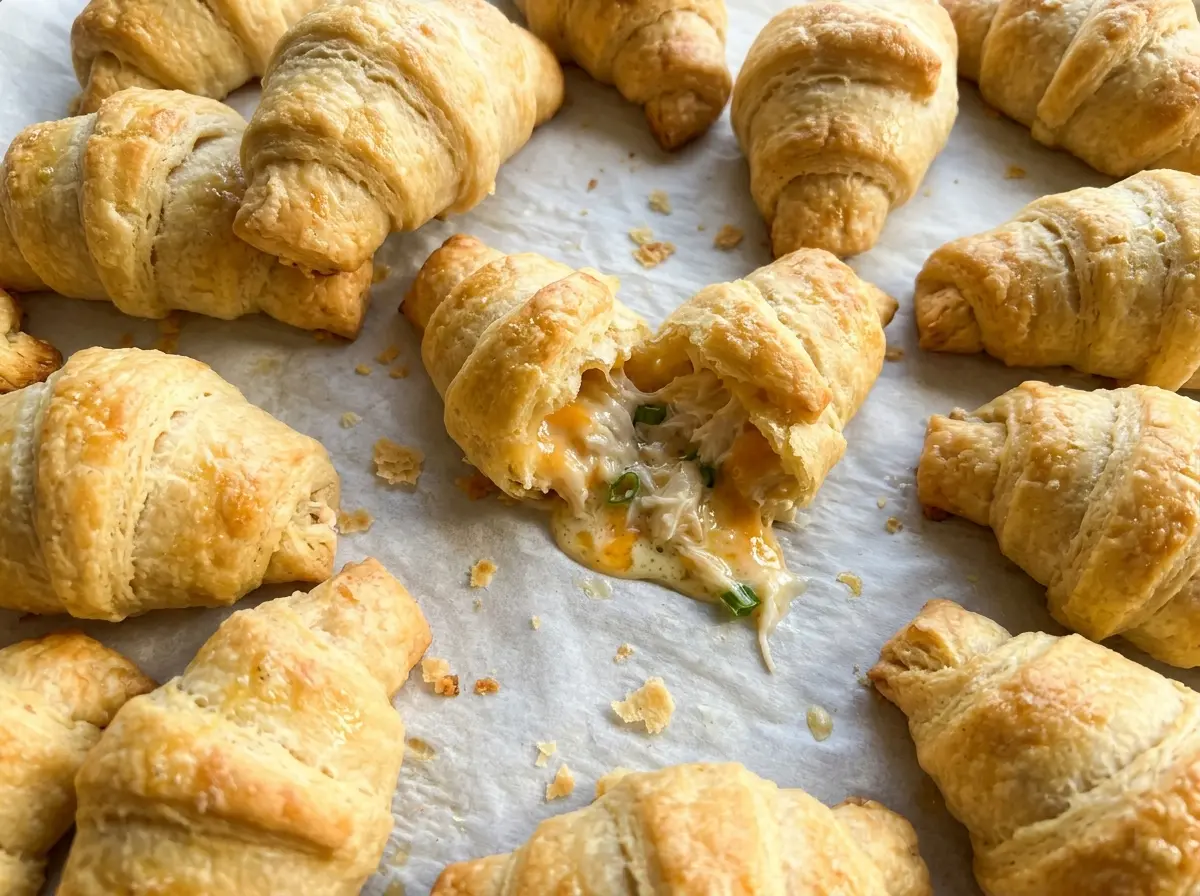
The pastry tips are the first thing to turn golden in the oven, while the crab filling stays tucked into the center. That contrast is what I want from Crab Crescent Bites: a crisp, buttery edge around a warm, creamy filling, without having to shape or seal individual pastries.
I keep the filling simple so the lump crab still comes through. Cream cheese makes it easy to scoop into the dough, and a little Worcestershire, lemon juice, and Old Bay season it without turning the mixture into a heavy dip. The small muffin cups also make the portions tidy; each one gets its own crescent-dough shell and a generous spoonful of crab.
Kitchen Note
Pick through the drained crab before it goes into the bowl. Shell fragments are easy to miss in lump crab, and checking first means you can fold the meat in gently instead of searching through the finished filling.
Save these Crab Crescent Bites for a party tray or appetizer spread: golden crescent edges with a warm, seasoned lump-crab center.
The Crescent Points Are Part of the Cup, Not Scraps
When you press the dough into the mini muffin wells, leave the pointed ends standing above the rim. Those tips are meant to stay visible; they bake into the little golden edges that make each bite look like a crescent instead of a flat pastry lid. Pushing every bit of dough down inside the well changes the shape and can leave you with less of that browned edge.
Cutting each of the eight dough triangles lengthwise gives you sixteen smaller triangles, one for each filled cup. The narrow pieces fit the mini wells without needing to be patched together, and the pointed ends naturally extend upward when you press the wider part into the bottom. The pan has twenty-four wells, but the dough makes sixteen portions, so use sixteen wells rather than stretching the pieces thin to fill every cup. That keeps the shells substantial enough to hold the filling.
The filling is also easier to portion once the dough is already in the pan. Each cup gets about a tablespoon, which leaves room for the mixture to warm while the pastry browns. A heaping spoonful can bury the dough tips and make the finished bites harder to lift cleanly.
Why Lump Crab Needs a Soft Landing

- Lump crabmeat — Its larger pieces give each bite a distinct crab texture, rather than blending into a smooth filling. Drain it well so the mixture stays thick enough to sit in the dough cups. A more affordable crab option can work if it’s also drained and picked over, but smaller pieces make the filling less chunky.
- Cream cheese — Softened cream cheese gives the filling its creamy base and helps the other seasonings cling to the crab. Let it soften before stirring so you can get the Worcestershire, lemon juice, and Old Bay smooth without crushing the crab later.
- Old Bay, Worcestershire, and lemon juice — Old Bay brings the familiar seasoning, Worcestershire adds a savory note, and lemon juice keeps the cream cheese mixture from tasting too rich. Each one has a distinct job here, so leaving one out changes the balance rather than simply making the filling milder.
- Green onion — Thin slices add a fresh onion bite throughout the creamy filling. Slice it finely so it distributes evenly and doesn’t make the spoonfuls difficult to portion.
- Refrigerated crescent dough — The dough supplies the buttery, flaky shell and is already cut into triangles, which makes portioning straightforward. Keep it refrigerated until you’re ready to shape it; warm dough is softer and less tidy to press into the wells.
- Softened butter — A light coating on the mini muffin wells helps the baked dough release. Brush the wells rather than adding a thick layer, which could leave the bottoms greasy.
Mixing, Shaping, and Baking 16 Neat Crescent Cups
Stir the Cream Cheese Base Smooth
In a medium bowl, stir the softened cream cheese with the Worcestershire sauce, lemon juice, and Old Bay until the mixture looks smooth and evenly seasoned. Work out any cream cheese lumps before adding the crab; they’re much harder to smooth away once the delicate pieces are in the bowl. Fold in the green onion and crab gently until the filling is evenly combined. Stop as soon as the crab is distributed so the lump pieces stay intact.
Cut the Dough Into Sixteen Pieces
Heat the oven to 375°F and brush the wells of a 24-cup mini muffin pan with the softened butter. Unroll the crescent dough and separate it into eight triangles, then cut each triangle lengthwise into two smaller triangles. You should have sixteen pieces; if one tears, press the edges back together rather than stretching it thin. Set one piece into each of sixteen muffin wells, with the pointed ends extending above the rims.
Fill Without Burying the Tips
Spoon about one tablespoon of filling into each dough cup. Keep the filling centered in the well instead of spreading it over the pointed ends, so the exposed dough can turn golden. The cream cheese mixture is thick, so use the back of the spoon to settle it into each cup without pressing hard on the pastry. Leave the remaining muffin wells empty.
Bake Until the Pastry Is Golden
Bake for 12 to 15 minutes, until the crescent dough is golden brown and the filling is hot. Start checking at the shorter end of the range; the visible dough tips give you a useful color cue as they bake. If the pastry still looks pale, give the bites more time within the range rather than taking them out before the filling is hot. Let them rest in the pan for 5 minutes, then loosen each one gently before serving warm.
Small Changes That Keep the Crab in the Spotlight
Leave Out the Green Onion
For a smoother, less onion-forward filling, omit the green onion and keep the rest of the mixture the same. The crab and Old Bay come through more plainly, though you lose the fresh, lightly sharp contrast from the onion.
Make the Seasoning Gentler
Omit the Old Bay if you prefer the filling less boldly seasoned. The cream cheese and crab will taste more prominent, but the bites will lose the distinctive spice that gives this version its familiar seafood-appetizer character.
Storage and Reheating
- Refrigerator: Refrigerate leftovers within 2 hours and keep them covered for 3 to 4 days. The crescent pastry softens as it sits.
- Freezer: I don’t recommend freezing the baked bites; thawing softens the pastry and can change the creamy filling’s texture.
- Reheating: Warm them in a 350°F oven until heated through to 165°F. Avoid the microwave if you want to keep the pastry from turning softer and chewier.
Questions About Making Crab Crescent Bites
Crab Crescent Bites
Ingredients
Equipment
Method
- In a medium bowl, stir together the cream cheese, Worcestershire sauce, lemon juice, and Old Bay seasoning until smooth.
- Gently fold in the green onion and crabmeat until evenly combined.
- Heat the oven to 375°F.
- Brush the wells of a 24-cup mini muffin pan with the butter.
- Unroll the crescent dough and separate it into 8 triangles.
- Cut each triangle lengthwise into 2 smaller triangles to make 16 pieces.
- Press one dough piece into each of 16 muffin wells, leaving the points extending above the rims.
- Spoon about 1 tablespoon of filling into each cup.
- Bake for 12 to 15 minutes, until the crescent dough is golden brown and the filling is hot.
- Let the bites rest in the pan for 5 minutes.
- Loosen them gently and serve warm.