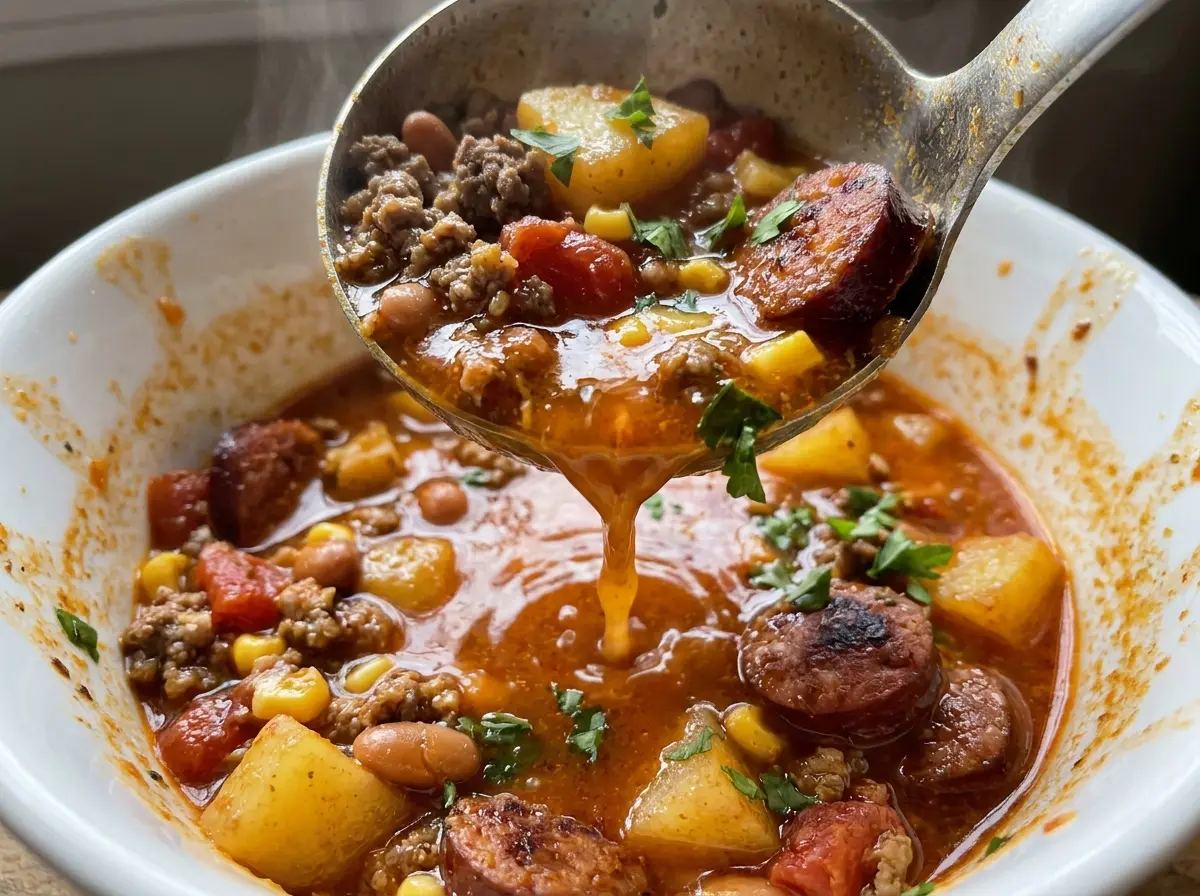
When the pot first reaches a boil, the broth turns brick red around the tomatoes, and the smoked sausage perfumes the kitchen before the potatoes are tender. Cowboy stew is the kind of one-pot dinner I reach for when plain ground beef needs a little more character. Each bowl has beef, sausage, beans, corn, and potato, with enough broth to bring it all together without turning it into a thick paste.
I brown the beef before anything wet goes into the Dutch oven, then give the smoked sausage and onion their own few minutes in the same pot. That order matters: the beef gets an actual browned surface instead of gray, steamed crumbles, while the already-cooked sausage only needs a little color. Chili powder, cumin, and garlic get a brief turn in the hot pot before the broth and tomatoes cool everything down.
The simmer is steady and simple, but the potatoes tell you when it’s time to stop. They should take a fork without dissolving, leaving a chunky, red-brown stew that smells smoky and savory. The canned beans and corn go straight in, so there’s no separate pan or timing puzzle to manage.
Kitchen Note
Use a 6-quart Dutch oven or another heavy pot with room for the broth and all the hearty add-ins. A cramped pot makes stirring awkward, and it’s easier for the broth to slosh over as it comes to a boil.
Save this Cowboy Stew for a cold night when smoky sausage, tender potatoes, and a rich beef broth sound just right.
Why Cowboy Stew Starts With Two Kinds of Meat
The beef and smoked sausage do different jobs in the pot. Ground beef gives the stew its hearty, savory base, while smoked sausage brings a distinct smoky note that carries through the tomatoes and broth. Browning the beef first gives it a chance to develop color before liquid enters the pot; if you add it straight to broth, it cooks through but won’t build that same browned flavor.
The sausage is already fully cooked, so it doesn’t need a long stretch in the pot to become safe to eat. A short turn with the onion is enough to warm it and give the outside a little color. Keeping those steps separate lets each meat contribute its own character instead of leaving you with one blended, indistinct flavor. It’s a small bit of sequencing that makes this stew taste rounded without adding a long list of seasonings.
The Ingredients That Give This Stew Its Smoky, Hearty Base
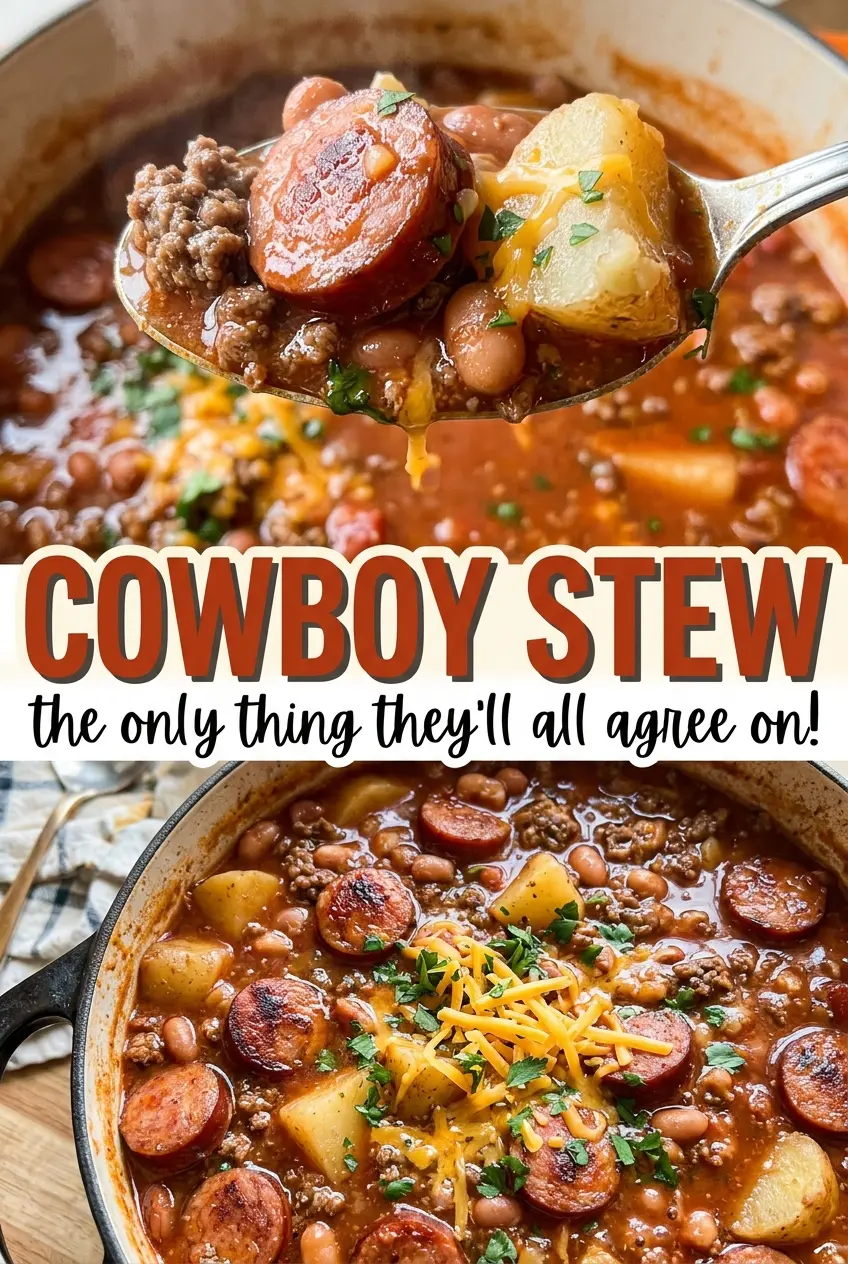
- Ground beef and smoked sausage — The 85% lean beef has enough fat to brown well without making the broth overly rich; drain off excess fat if there’s a noticeable pool after browning. Use a fully cooked smoked sausage with a flavor you like, since its smoke comes through in every bowl. Fully cooked kielbasa is a close swap; slice it into rounds so it warms and browns along with the onion.
- Russet potatoes — Russets soften at the edges and lend a little body to the broth while still holding their shape when cut evenly. Scrub them well, then cut them into uniform cubes so they finish cooking together. Yukon Gold potatoes can stand in, but they hold a firmer shape and make the broth less starchy.
- Diced tomatoes and beef broth — The juices from the canned tomatoes belong in the pot; draining them would remove both flavor and liquid. Regular canned tomatoes work well here, so there’s no need to pay extra for a premium brand. Lower-sodium beef broth is a useful choice if you’re sensitive to salt, since the sausage also seasons the stew.
- Pinto beans and corn — Canned beans are convenient and already tender, but drain and rinse them so their canning liquid doesn’t cloud the broth. Drained black beans can replace the pintos, with a slightly firmer bite. For the corn, frozen kernels work in place of canned corn; thaw and drain them before adding so they don’t bring extra water into the pot.
- Onion, garlic, chili powder, and cumin — A fresh yellow onion and freshly minced garlic bring a brighter aroma than dried or powdered versions. Standard American chili powder is a seasoned blend, not just ground hot peppers, so it gives the stew its familiar mild warmth. Fresh, fragrant cumin matters more than buying an expensive brand; older spices tend to taste flat.
Brown the Meats First, Then Let the Pot Simmer
Build a browned base with the beef
Heat the vegetable oil in a 6-quart Dutch oven or heavy pot over medium-high heat, then add the ground beef. Break it into small pieces as it cooks so you don’t end up with large clumps hiding in the stew. Give it 7 to 9 minutes, until it’s browned and reaches 160°F. If excess fat collects in the pot, drain it before moving on.
Soften the onion and brown the sausage
Add the sliced smoked sausage and diced onion to the browned beef. Cook for 4 to 5 minutes, stirring occasionally, until the onion begins to soften and the sausage is lightly browned. You’re looking for a little color on the sausage, not crisp edges. The onion should start turning translucent but doesn’t need to be completely soft yet.
Wake up the garlic and spices
Stir in the minced garlic, chili powder, cumin, kosher salt, and black pepper. Cook for 30 seconds, stirring, until the garlic and spices smell fragrant. Keep the mixture moving across the bottom of the pot; garlic can scorch quickly, and browned garlic tastes bitter rather than savory. Add the potatoes, diced tomatoes with their juices, beef broth, pinto beans, and corn, then stir until everything is distributed.
Simmer until the potatoes yield to a fork
Bring the pot to a boil, then reduce the heat to low and cover it. Simmer for 20 to 25 minutes, stirring occasionally, until a fork slides into the potatoes without resistance. Keep the heat low enough for a gentle simmer; a hard, rolling boil can knock the potato cubes apart. Take the pot off the heat and let the stew rest for 5 minutes before serving.
Two Easy Ways to Adapt Cowboy Stew
Make it gluten-free
Use certified gluten-free smoked sausage and certified gluten-free beef broth in place of the standard versions. The stew keeps its familiar smoky, savory character, so you don’t need to change the potatoes, beans, corn, or seasonings.
Turn up the chile warmth
Replace the regular chili powder with hot chili powder, keeping the same amount. The broth will have a sharper heat that stands out more against the mild potatoes and beans. Hot chili powders vary, so choose one whose heat level you already enjoy.
Storage and Reheating
- Refrigerator: Cool and refrigerate within 2 hours, then keep for 3 to 4 days. The potatoes will soften a little as they sit in the broth.
- Freezer: Freeze cooled portions in airtight containers for up to 2 to 3 months. The stew freezes well, though thawed potatoes will be softer than freshly cooked ones.
- Reheating: Warm it in a covered saucepan over medium-low heat, stirring gently, until it reaches 165°F. If it has thickened, add a small splash of broth or water; avoid a vigorous boil, which can break up the potatoes.
Questions That Come Up While Making Cowboy Stew
Cowboy Stew
Ingredients
Equipment
Method
- Heat the vegetable oil in a 6-quart Dutch oven or heavy pot over medium-high heat.
- Add the ground beef and cook, breaking it into small pieces, for 7 to 9 minutes, until browned and it reaches 160°F; drain excess fat if needed.
- Add the smoked sausage and onion and cook for 4 to 5 minutes, stirring occasionally, until the onion begins to soften and the sausage is lightly browned.
- Stir in the garlic, chili powder, cumin, salt, and pepper and cook for 30 seconds, until fragrant.
- Add the potatoes, diced tomatoes with their juices, beef broth, pinto beans, and corn; stir to combine.
- Bring the stew to a boil.
- Reduce the heat to low, cover, and simmer for 20 to 25 minutes, stirring occasionally, until the potatoes are fork-tender.
- Remove the pot from the heat and let the stew rest for 5 minutes before serving.