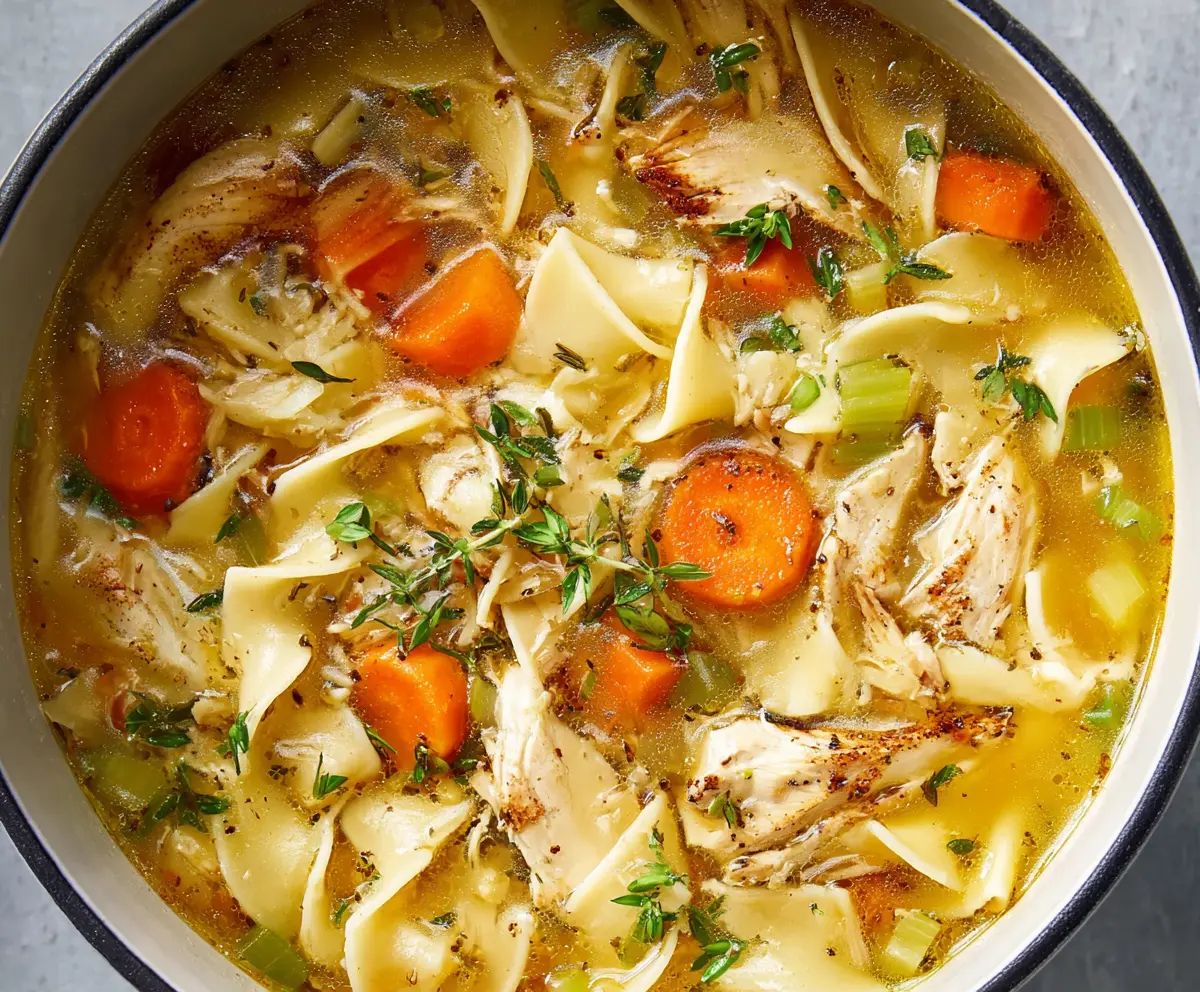
Traditional Chicken Noodle Soup is that comforting classic everyone seems to love. It’s made with tender chunks of chicken, soft noodles, and lots of cozy broth simmered with carrots, celery, and onions. The flavors are simple but so satisfying, making it the perfect go-to on a chilly day or when you need a little pick-me-up.
I always think of this soup as the ultimate comfort food. When I make it, I like to let it simmer just long enough for the flavors to blend, but not so long that the noodles get mushy. A little tip I’ve learned is to add the noodles towards the end so they stay just right. It’s such a warm and homey dish that reminds me of family dinners and feeling cared for.
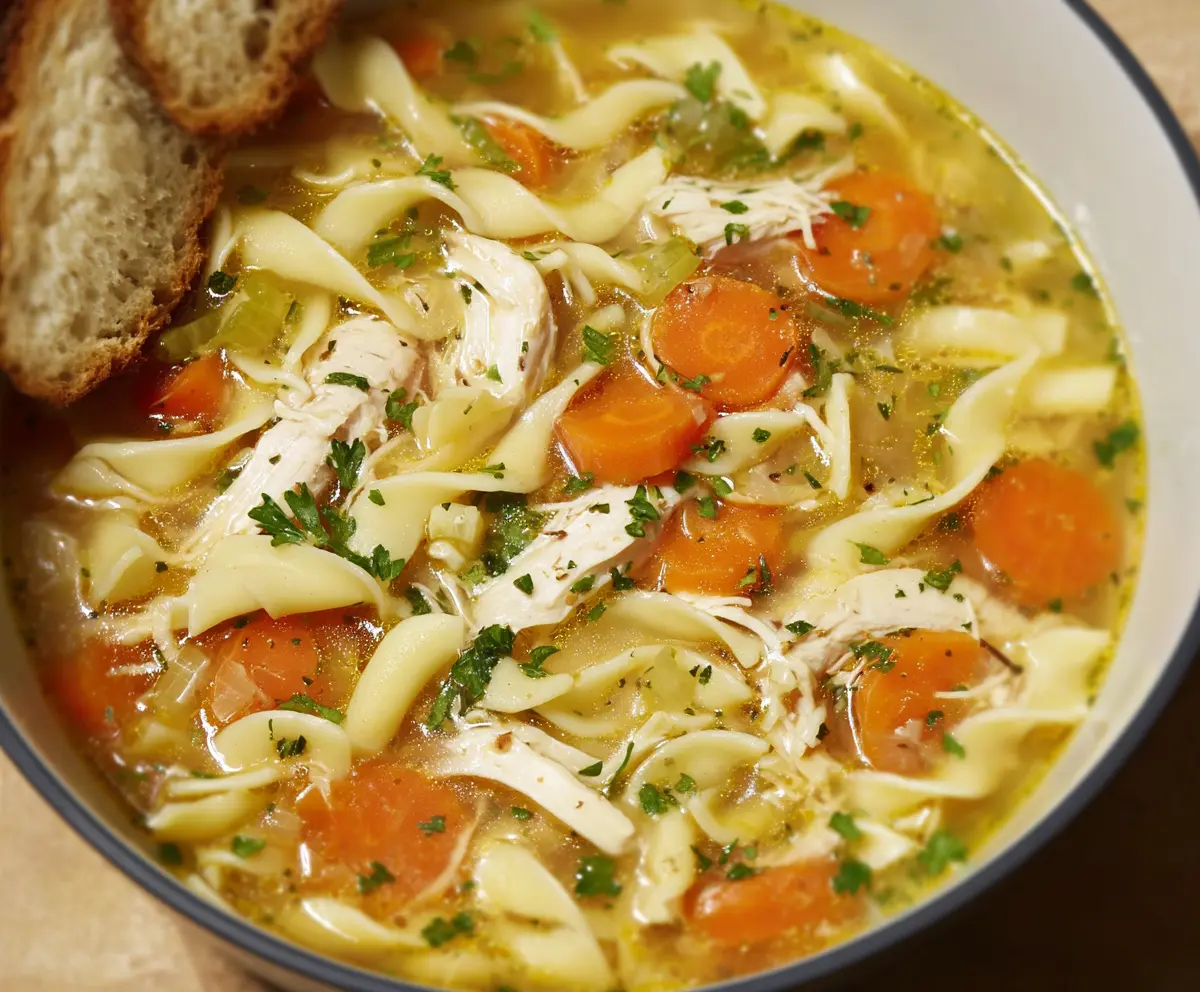
My favorite way to enjoy this soup is with a slice of crusty bread or some simple crackers on the side. It’s perfect for lunch or dinner and even better the next day when the flavors have had time to settle. Whenever I’m feeling under the weather or just in need of some comfort, this Traditional Chicken Noodle Soup is my ultimate go-to dish.
Key Ingredients & Substitutions
Chicken: Shredded cooked chicken is the heart of this soup. Rotisserie chicken is a great quick choice, but you can also poach chicken breasts or thighs for extra tenderness. Dark meat adds more flavor and richness, if you prefer.
Broth: Homemade chicken broth makes a big difference in flavor and depth. If you don’t have time, use good-quality low-sodium store-bought broth. This way, you can control the salt level easily.
Egg Noodles: Wide egg noodles are classic here because they hold up well without getting mushy too fast. If you can’t find egg noodles, try other pasta shapes like fusilli, or even gluten-free noodles. Always add noodles at the end to keep their texture.
Vegetables: Carrots, celery, and onions form the base. Fresh is best, but frozen mixed soup vegetables can work in a pinch. Don’t skip the celery, as it adds important flavor and crunch.
How Do You Keep the Noodles from Becoming Mushy?
Overcooked noodles are the biggest challenge in chicken noodle soup. To prevent mushiness:
- Cook the soup broth and vegetables fully before adding noodles.
- Add noodles toward the end, about 6-8 minutes before serving, based on the package.
- Don’t cover the pot when cooking noodles; this helps prevent overcooking.
- If making ahead, cook the noodles separately and add them right before serving, to keep them fresh.
These small steps keep your noodles firm but tender, giving you that perfect texture in every spoonful.
Equipment You’ll Need
- Large pot or Dutch oven – great for cooking the soup evenly and giving plenty of room to stir.
- Wooden spoon or heatproof spatula – perfect for stirring without scratching your pot.
- Sharp knife – for chopping your veggies neatly and safely.
- Cutting board – essential for organizing your ingredients and protecting surfaces.
- Measuring cups and spoons – to get the broth and seasonings just right.
- Colander or strainer – handy if you cook noodles separately to avoid mushiness.
Flavor Variations & Add-Ins
- Use turkey instead of chicken – especially great for using up holiday leftovers with a mild flavor.
- Add fresh ginger and a splash of soy sauce for an Asian-inspired twist with a little zing.
- Stir in chopped spinach or kale at the end for extra color and a boost of nutrients.
- Swap regular egg noodles for gluten-free or spiralized zucchini noodles to suit dietary needs.
Traditional Chicken Noodle Soup
Ingredients You’ll Need:
For The Soup:
- 2 tablespoons olive oil or butter
- 1 medium onion, chopped
- 3 large carrots, sliced
- 3 celery stalks, sliced
- 3 garlic cloves, minced
- 8 cups chicken broth (preferably homemade or low-sodium)
- 2 bay leaves
- 1 teaspoon dried thyme (or 1 tablespoon fresh thyme leaves)
- Salt and freshly ground black pepper, to taste
- 2 cups cooked chicken, shredded (rotisserie chicken or cooked chicken breasts/thighs)
- 2 cups wide egg noodles or your preferred noodle type
- Fresh parsley or thyme sprigs, for garnish
How Much Time Will You Need?
This recipe takes about 10 minutes to prepare and around 30 minutes to cook, for a total of approximately 40 minutes. The soup comes together quickly, making it perfect for a warm, delicious meal any day of the week.
Step-by-Step Instructions:
1. Sauté the Vegetables:
Start by heating the olive oil or butter in a large pot or Dutch oven over medium heat. Add the chopped onions, sliced carrots, and celery, and sauté them for 5 to 7 minutes until they start to soften. Then stir in the minced garlic and cook for another minute until you can smell its aroma.
2. Cook the Broth and Vegetables:
Pour in the chicken broth, and add the bay leaves and thyme. Bring the soup to a boil, then reduce the heat to a gentle simmer. Let it cook uncovered for 15 to 20 minutes, or until the carrots are tender.
3. Finish with Chicken and Noodles:
Season the broth with salt and pepper to your liking. Add the shredded cooked chicken, stirring it in to warm through. Then carefully add the egg noodles and cook following the package instructions, usually about 6 to 8 minutes, until the noodles are tender but not mushy.
4. Serve and Garnish:
Remove the bay leaves from your soup. Give it a final taste and adjust the seasoning if needed. Serve your chicken noodle soup hot, garnished with fresh parsley or thyme sprigs for a lovely fresh touch.
Can I Use Frozen Chicken in This Soup?
Yes! Just make sure to fully thaw the chicken before shredding and adding it to the soup. Thaw in the fridge overnight or use the cold water method for quicker thawing.
Can I Make This Soup Ahead of Time?
Absolutely! Prepare the soup up to the point before adding noodles. Store it in the fridge for up to 3 days. Add freshly cooked noodles when reheating to avoid mushy pasta.
How Should I Store Leftovers?
Keep leftovers in an airtight container in the refrigerator for up to 3 days. Reheat gently on the stove or microwave, adding a splash of broth if it’s too thick.
Can I Substitute Different Noodles?
Yes, you can use any noodle you like! Just add them towards the end of cooking and adjust the cooking time according to the package instructions to keep them from overcooking.