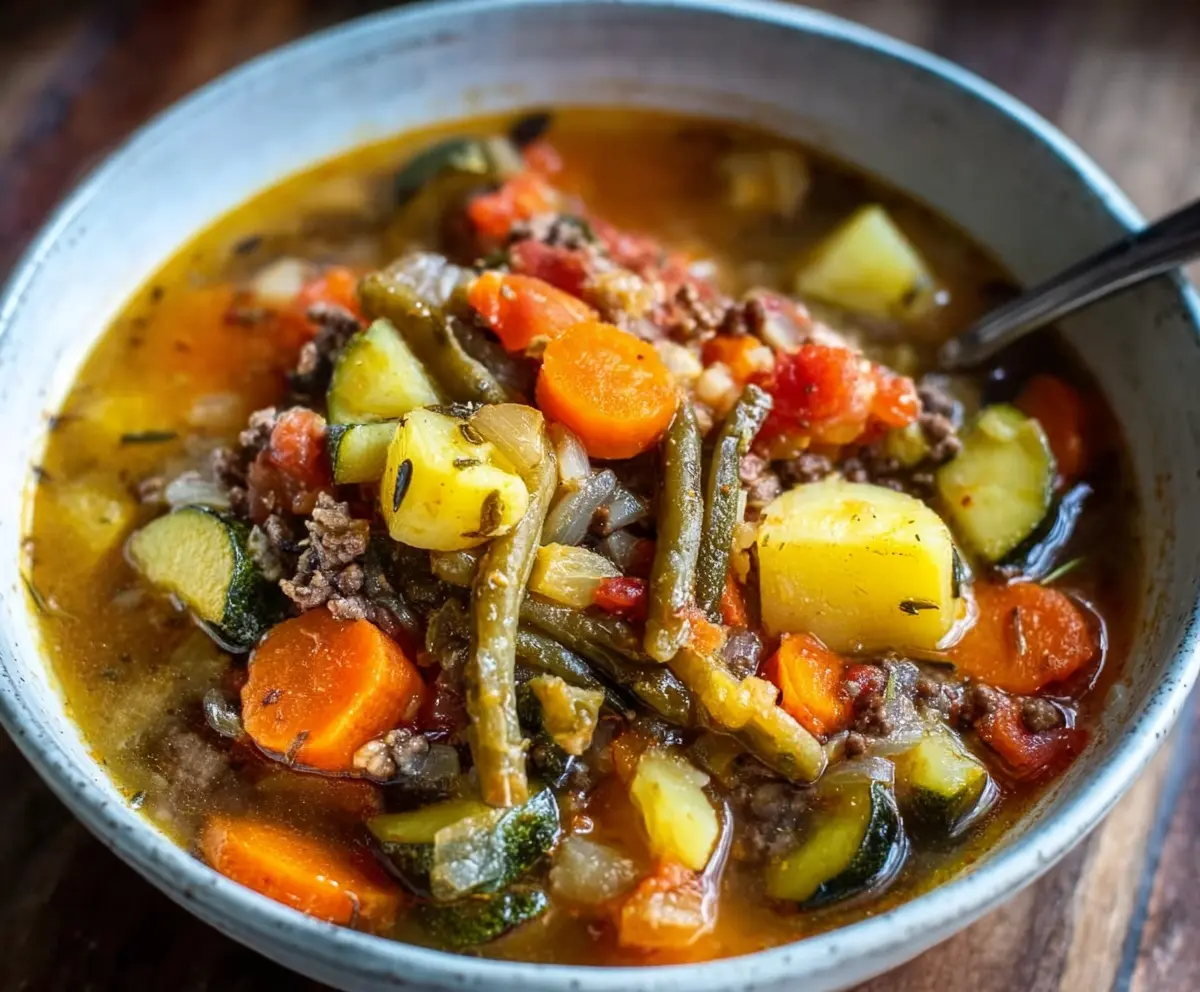
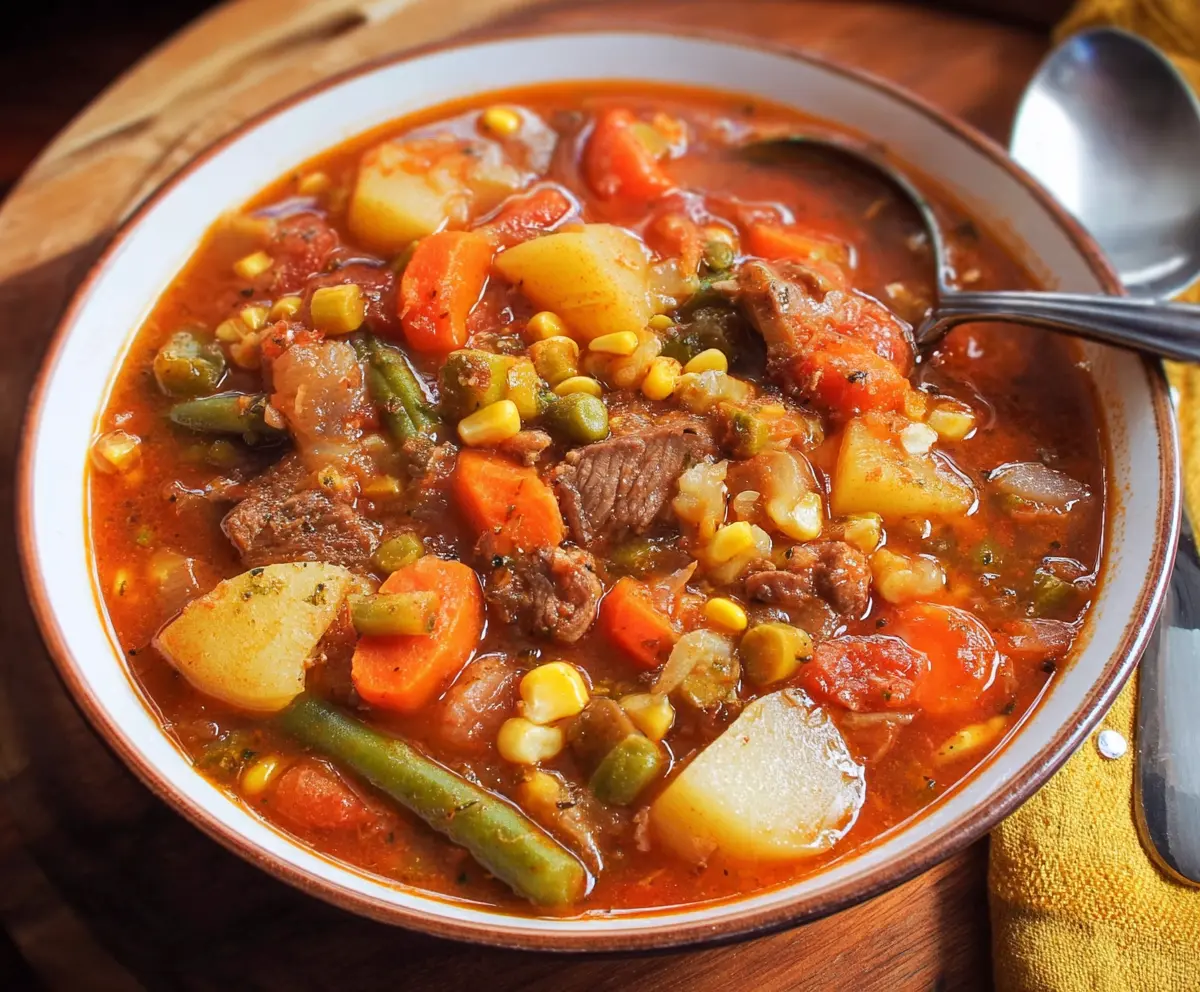
Rustic Vegetable Soup is a hearty and wholesome bowl filled with colorful veggies like carrots, potatoes, tomatoes, and green beans. It’s a simple, comforting soup that warms you up with every spoonful and feels like a little hug in a bowl. The chunky vegetables give it a nice texture that makes each bite satisfying.
I love making this soup when I want something easy but filling. It’s great because you can toss in whatever vegetables you have on hand, so it’s perfect for cleaning out the fridge without any fuss. I usually add some garlic and herbs to give it a little extra flavor, which makes it feel like more than just plain veggie soup.
My favorite way to enjoy this soup is with a piece of crusty bread on the side for dipping. It’s the kind of meal that makes the whole kitchen smell great and leaves you feeling cozy, especially on chilly days. Whenever I serve it to friends or family, they always ask for seconds, and I know it’s because it tastes like home.
Key Ingredients & Substitutions
Onion & Garlic: These build the flavor base. Yellow or white onions work well. If you don’t have fresh garlic, garlic powder is an okay swap—just use less to avoid overpowering.
Carrots & Potatoes: These add heartiness and texture. Sweet potatoes or parsnips make tasty substitutes if you want a twist.
Green Beans & Zucchini: These veggies add freshness and color. Feel free to swap with frozen green beans if fresh aren’t available, and summer squash can replace zucchini easily.
Diced Tomatoes: Choose canned diced tomatoes with juice for good flavor and broth richness. Fresh tomatoes can be used, but it’s best to peel and chop them finely.
Ground Beef (optional): Adds extra protein and richness but can be left out for a vegetarian version. You could also swap beef for ground turkey or lentils for plant-based protein.
Broth: Vegetable broth keeps it light and vegetarian, but beef broth pairs well if you use ground beef. Low-sodium broth helps control saltiness.
Herbs (Thyme & Oregano): These herbs give a subtle earthy note. Fresh herbs work great if you have them—just add a bit more than dried.
How Can I Make Sure the Vegetables Cook Evenly Without Getting Mushy?
Cooking multiple vegetables with different textures can be tricky. Here’s how I get it right:
- Start by sautéing onions and garlic to develop flavor first.
- Add root vegetables like carrots and potatoes early since they take longer to soften.
- Green beans go in next for moderate cooking time.
- Save delicate veggies like zucchini for last—they cook quickly and shouldn’t get mushy.
- Keep the soup simmering, not boiling, to gently cook vegetables and keep their shapes.
- Stir occasionally but gently to avoid breaking the veggies apart.
This way, each vegetable stays tender yet intact, giving your soup a wonderful mix of textures.
Equipment You’ll Need
- Large stockpot or Dutch oven – great for cooking all the vegetables evenly and holding plenty of liquid.
- Wooden spoon – perfect for stirring without scratching your pot.
- Sharp knife and cutting board – chopping veggies neatly saves time and helps them cook evenly.
- Measuring spoons – handy for adding herbs and spices accurately.
Flavor Variations & Add-Ins
- Swap ground beef for cooked shredded chicken to keep it lighter but still filling.
- Add beans like cannellini or chickpeas for extra protein and a creamy texture.
- Stir in some chopped kale or spinach near the end for added green goodness.
- Spice it up by adding a pinch of red pepper flakes or smoked paprika for mild heat and depth.
How to Make Rustic Vegetable Soup
Ingredients You’ll Need:
For The Soup:
- 2 tablespoons olive oil
- 1 medium onion, diced
- 2 cloves garlic, minced
- 2 large carrots, sliced
- 2 medium potatoes, peeled and diced
- 1 cup green beans, trimmed and cut into pieces
- 1 medium zucchini, chopped
- 1 can (14 oz) diced tomatoes
- 1 cup ground beef (optional, for added heartiness)
- 6 cups vegetable broth (or beef broth if using ground beef)
- 1 teaspoon dried thyme
- 1 teaspoon dried oregano
- Salt and pepper, to taste
- Fresh parsley, chopped for garnish (optional)
How Much Time Will You Need?
This soup takes about 10 minutes to prepare and about 30 minutes to cook. Total time is roughly 40 minutes, making it a great choice for a quick and hearty meal.
Step-by-Step Instructions:
1. Sauté the Base:
Heat the olive oil in a large pot over medium heat. Add the diced onion and cook until translucent, about 3-4 minutes. Then add the minced garlic and cook for one more minute until fragrant.
2. Add the Ground Beef (Optional):
If using ground beef, add it now. Cook, stirring and breaking it up with a spoon, until browned. Drain any excess fat if needed.
3. Cook the Vegetables:
Stir in the carrots, potatoes, and green beans. Cook for about 5 minutes, stirring occasionally to mix flavors.
4. Add Tomatoes, Broth, and Herbs:
Pour in the can of diced tomatoes with their juice and the broth. Sprinkle in the dried thyme and oregano. Bring everything to a boil.
5. Simmer Until Tender:
Lower the heat to a simmer and cook for about 20 minutes, or until the harder vegetables are tender.
6. Add Zucchini and Finish:
Add the chopped zucchini and simmer another 5-7 minutes until the zucchini is tender but not mushy. Season with salt and pepper to taste.
7. Serve and Enjoy:
Ladle the soup into bowls and garnish with fresh parsley if you like. Serve hot, ideally with a side of crusty bread to soak up all the delicious broth.
Can I Use Frozen Vegetables Instead of Fresh?
Absolutely! Frozen vegetables like green beans, carrots, and zucchini work well. Just add them a little earlier during simmering to ensure they cook through without becoming too soft.
How Can I Make This Soup Vegetarian?
Simply skip the ground beef and use vegetable broth instead of beef broth. For extra protein, try adding beans like chickpeas or lentils.
What’s the Best Way to Store Leftovers?
Store leftovers in an airtight container in the refrigerator for up to 3 days. Reheat gently on the stove or in the microwave until warmed through.
Can I Make This Soup Ahead of Time?
Yes! Rustic Vegetable Soup actually tastes better the next day as the flavors meld. Prepare it fully, cool, then refrigerate or freeze for later.