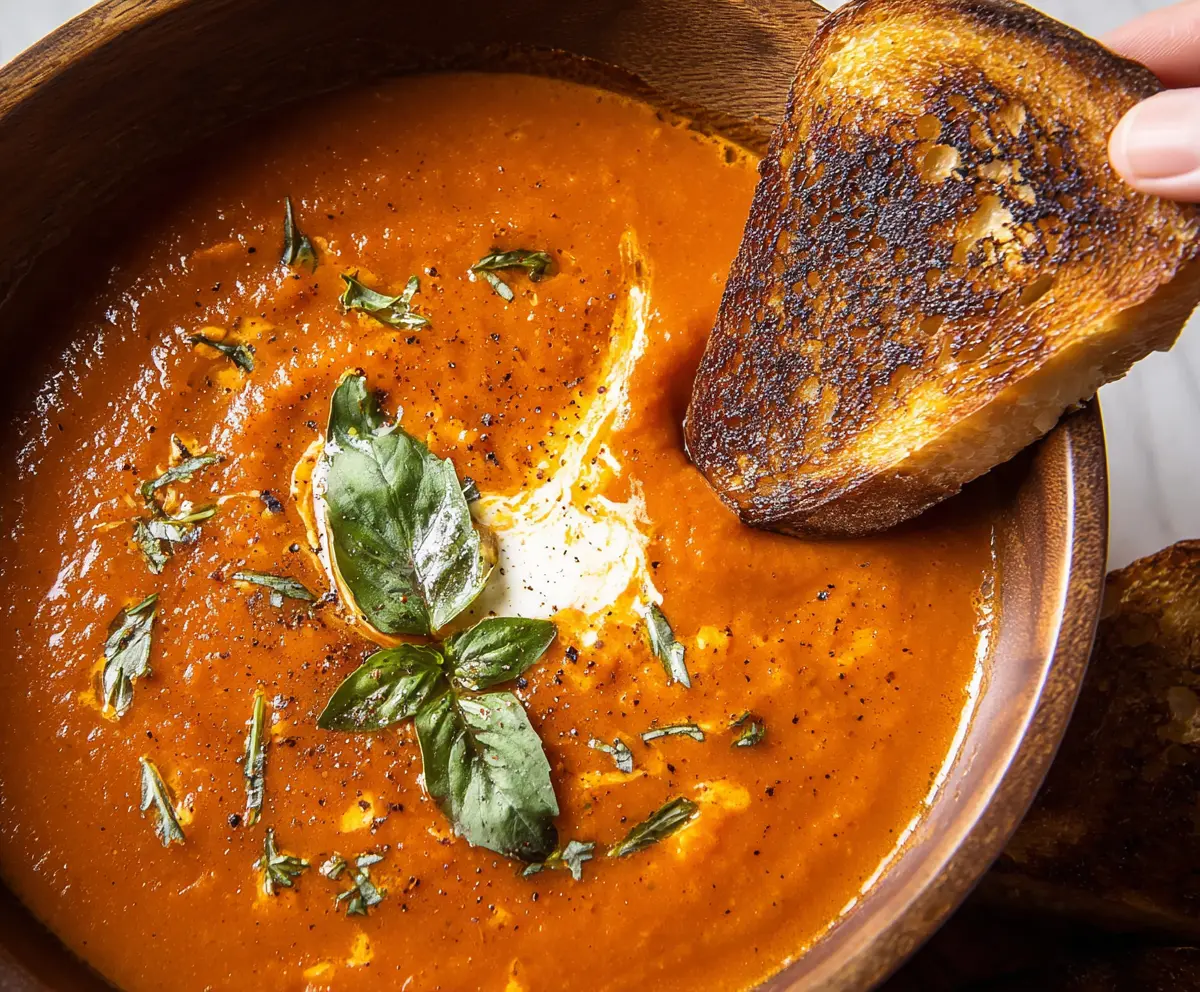
Roasted Tomato Soup is a simple, comforting dish that bursts with the deep, rich flavors of slow-roasted tomatoes, garlic, and a hint of fresh herbs. It’s smooth, warm, and just a little bit tangy, making it perfect for cozy days when you want something fresh yet satisfying.
I love how roasting the tomatoes brings out a natural sweetness that really makes this soup stand out. I usually roast a big batch, which fills the kitchen with a wonderful aroma and builds my appetite before I even start blending. Plus, it’s an easy recipe to tweak depending on what herbs or spices you have on hand.
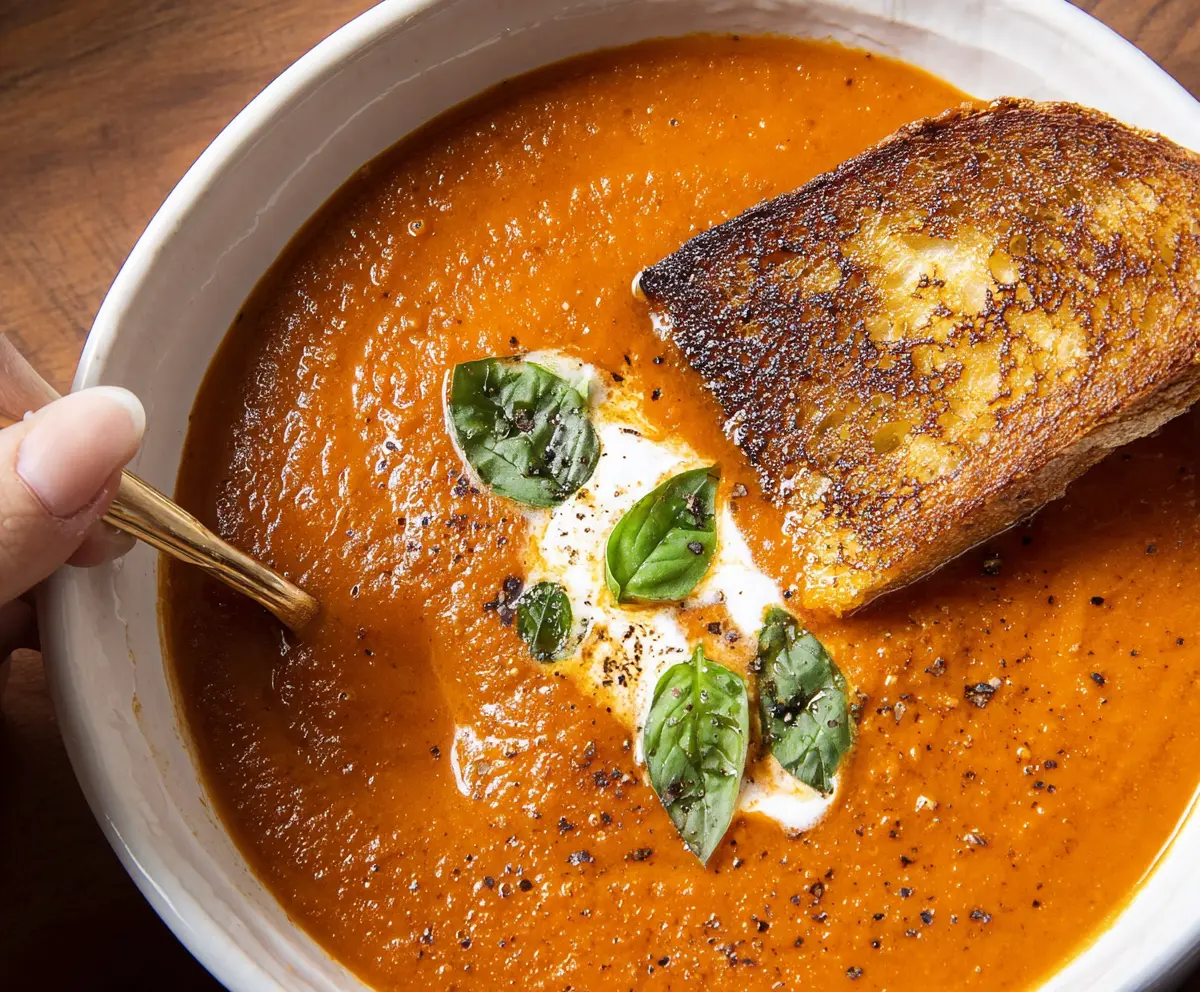
My favorite way to serve this soup is with a crispy grilled cheese sandwich on the side. There’s something so classic and comforting about dipping melty cheese into the warm, flavorful tomato broth. It’s a meal that always feels like a hug in a bowl, especially when the weather turns chilly.
Key Ingredients & Substitutions
Tomatoes: Using ripe Roma or vine-ripened tomatoes works best for a rich flavor and good texture when roasted. If you can’t find these, plum tomatoes or even canned fire-roasted tomatoes are fine substitutes.
Olive Oil: It helps caramelize the veggies and adds smoothness. If you want a milder flavor, use avocado or light vegetable oil instead.
Broth: Vegetable broth keeps the soup vegetarian, but chicken broth adds a lovely depth of flavor. If you’re short on broth, water with a bit of bouillon works too.
Heavy Cream: This is optional for creaminess. For a dairy-free option, stir in full-fat coconut milk or cashew cream at the end.
Basil: Fresh basil is a fragrant topping that brightens the soup. If you can’t find fresh, sprinkle dried basil into the soup during cooking.
How Do You Get the Best Roasted Tomato Flavor?
Roasting is key to deepening the soup’s flavor. Here’s how I do it well:
- Preheat your oven to a high temperature (425°F) to encourage caramelization.
- Cut tomatoes in half to expose the fleshy part, and toss everything in olive oil for even roasting.
- Arrange the veggies cut side up on a baking sheet so they dry out slightly instead of steaming.
- Roast for 35-40 minutes until edges turn brown and juicy juices are caramelized—this brings out natural sweetness.
Don’t rush this step: the natural sugars develop slowly and create a richer soup base. After roasting, blending the garlic along with tomatoes adds sweet, mellow garlic flavor without harshness.
Equipment You’ll Need
- Baking sheet – perfect for roasting tomatoes and veggies evenly without crowding.
- Blender or immersion blender – makes the soup smooth and creamy in just a few seconds.
- Large pot – great for warming the soup and mixing flavors before serving.
- Sharp knife – helps you cut tomatoes and onions cleanly and safely.
- Wooden spoon – ideal for stirring the soup gently without scratching your pot.
Flavor Variations & Add-Ins
- Add roasted red bell peppers for a sweeter, smoky twist that lifts the soup’s flavor.
- Stir in fresh basil or thyme at the end to add fragrant herbal notes that brighten the taste.
- Mix in a pinch of red pepper flakes if you like a little heat and extra depth.
- Top with a dollop of pesto or grated Parmesan for a rich, cheesy boost.
Roasted Tomato Soup
Ingredients You’ll Need:
Soup:
- 3 pounds ripe tomatoes (Roma or vine-ripened), halved
- 1 large onion, peeled and quartered
- 6 cloves garlic, peeled
- 3 tablespoons olive oil, divided
- Salt and freshly ground black pepper, to taste
- 1 teaspoon dried oregano (optional)
- 2 cups vegetable broth or chicken broth
- 1 tablespoon tomato paste
- 1 teaspoon sugar (optional, to balance acidity)
- 1/4 cup heavy cream or half-and-half (optional, for creaminess)
Garnishes and Serving:
- Fresh basil leaves, for garnish
- Sour cream or crème fraîche, for garnish (optional)
- Grilled bread or croutons, for serving
How Much Time Will You Need?
This recipe takes about 10 minutes to prep, 35-40 minutes to roast the vegetables, and another 15-20 minutes to blend and simmer. All together, you’ll spend roughly an hour to enjoy this cozy soup.
Step-by-Step Instructions:
1. Preheat and Prep:
Preheat your oven to 425°F (220°C). Place the halved tomatoes, quartered onion, and peeled garlic cloves on a large baking sheet. Drizzle with 2 tablespoons of olive oil, then season with salt, pepper, and oregano if using. Toss everything gently to coat evenly.
2. Roast the Vegetables:
Roast the tomatoes, onion, and garlic in the oven for 35-40 minutes. You want the tomatoes to be soft and slightly caramelized, and the onion tender. This roasting brings out a deep, sweet flavor.
3. Blend the Soup Base:
Transfer the roasted veggies into a blender or food processor. Add the tomato paste and 1 cup of broth, then blend until smooth. If needed, do this in batches to avoid overfilling. Pour the blended mixture into a large pot.
4. Simmer and Adjust:
Stir in the remaining 1 cup of broth. Simmer the soup over medium heat for 10-15 minutes, stirring occasionally. Taste and add sugar if the soup is too acidic. For a creamy finish, stir in the heavy cream or half-and-half. Adjust seasoning with salt and pepper.
5. Serve and Garnish:
Ladle the soup into bowls. Garnish with a swirl of sour cream or crème fraîche if you like, fresh basil leaves, and a sprinkle of freshly ground black pepper. Serve with grilled bread or croutons for a comforting meal.
Can I Use Canned Tomatoes Instead of Fresh?
Yes, you can substitute canned whole or diced tomatoes if fresh ones aren’t available. Use about 3 to 4 cups, and roast them briefly or simmer them to develop flavor before blending.
How Do I Store Leftover Roasted Tomato Soup?
Store leftover soup in an airtight container in the refrigerator for up to 3 days. Reheat gently on the stove or in the microwave, stirring occasionally to ensure even warming.
Can I Make This Soup Vegan or Dairy-Free?
Absolutely! Just skip the heavy cream or use coconut milk or cashew cream as a dairy-free alternative to keep the soup rich and creamy.
Is It Okay to Freeze Roasted Tomato Soup?
Yes, roasted tomato soup freezes well. Cool it completely, then store in airtight, freezer-safe containers for up to 3 months. Thaw overnight in the fridge before reheating on the stove.