
Roasted Butternut Squash Soup is a cozy, creamy bowl full of rich, sweet flavors from roasted butternut squash, blended to perfection with just the right touch of warmth from spices. The roasting brings out the natural sweetness and gives it that lovely caramelized flavor that makes every spoonful feel like a little hug.
I love making this soup on chilly days because it fills the kitchen with a comforting aroma and tastes like fall in a bowl. I often add a sprinkle of cinnamon or nutmeg to give it a little extra warmth, and a splash of cream or coconut milk makes it silky smooth, which I always find so satisfying. It’s pretty easy to make but feels like a real treat.
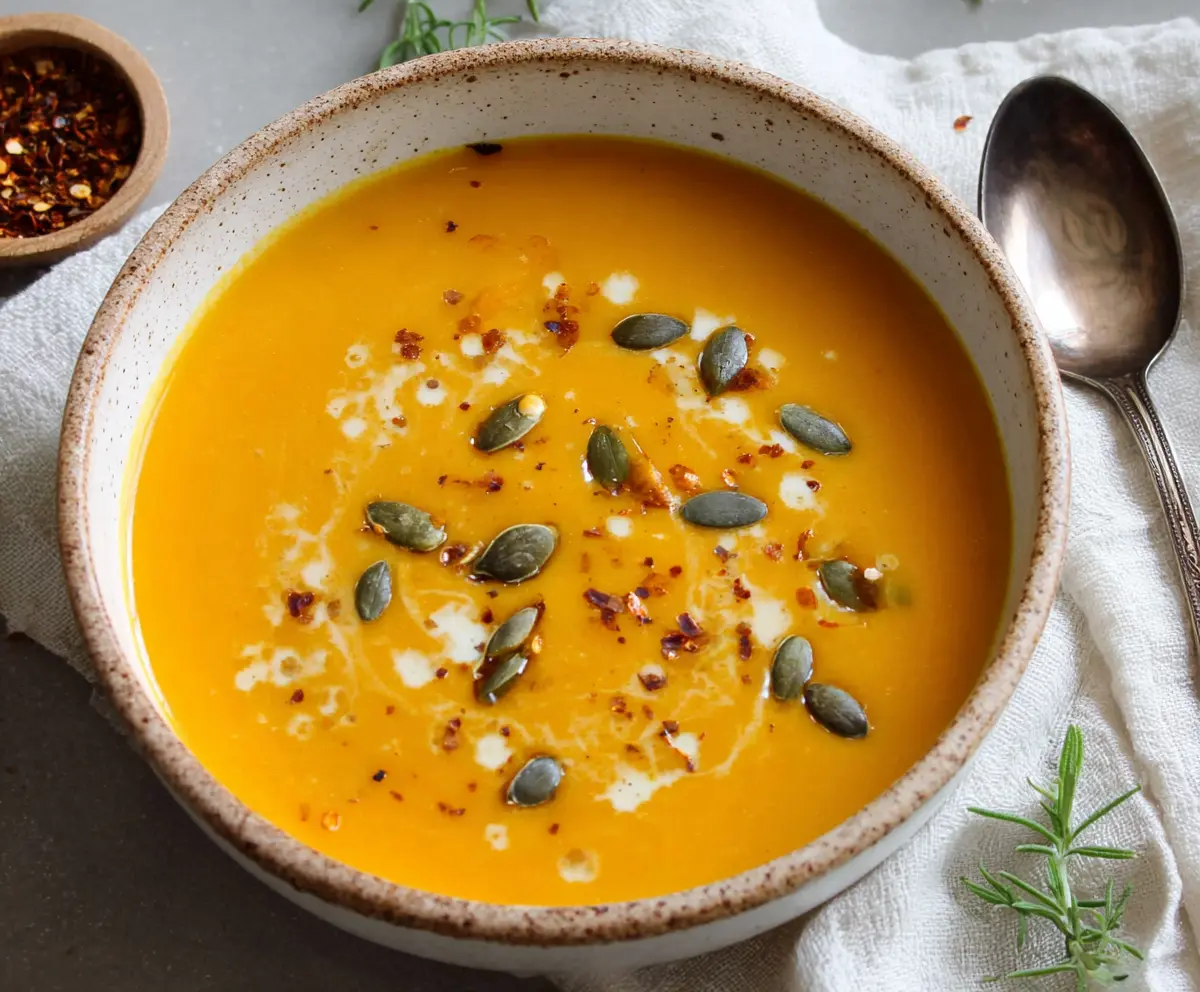
My favorite way to enjoy this soup is with a piece of crusty bread or some toasted pumpkin seeds on top for a bit of crunch. It’s perfect for dinner or as a starter when I have friends over. Honestly, every time I make it, people ask for the recipe because it’s just so cozy and yummy, without being complicated.
Key Ingredients & Substitutions
Butternut Squash: This is the star of the soup, bringing sweetness and creaminess after roasting. If you can’t find butternut squash, try kabocha or pumpkin for a similar texture and flavor.
Olive Oil: Used for roasting and sautéing, it adds a mild fruity taste. You can swap it with avocado or sunflower oil if you want a neutral option.
Broth: Vegetable broth keeps it vegetarian, while chicken broth adds extra depth. No broth? Water works fine—just boost seasoning to keep flavor strong.
Spices (Cinnamon & Nutmeg): These are optional but add warmth and complexity. Feel free to leave them out or add a pinch of ginger or smoked paprika for a different twist.
Cream or Coconut Milk: For smoothness and richness. Coconut milk is great for a dairy-free version and gives a hint of tropical flavor. I often use half the amount if I want lighter soup.
How Do You Get Perfectly Roasted Butternut Squash for Soup?
Roasting the squash well is key to tasty soup. Here’s how I do it:
- Peel and cube the squash evenly so it cooks uniformly.
- Toss cubes with olive oil, salt, and pepper to help caramelize and enhance flavor.
- Spread on a baking sheet without crowding—this helps the squash roast instead of steam.
- Roast at 400°F (200°C) for about 30-40 minutes, turning once. Look for tender pieces with golden, slightly browned edges.
- If squash isn’t caramelizing well, raise oven temp slightly or roast a bit longer—but watch closely to avoid burning.
This method brings out the natural sugars and adds a lovely depth to your soup before blending.
Equipment You’ll Need
- Baking sheet – for roasting the squash evenly with plenty of space to caramelize.
- Sharp knife – you’ll need this to safely peel and cube the butternut squash.
- Large pot – perfect for sautéing onions and simmering the soup.
- Immersion blender – makes pureeing the soup smooth and easy right in the pot.
- Wooden spoon – great for stirring the soup without scratching your pot.
Flavor Variations & Add-Ins
- Add a pinch of curry powder or cumin for a warm, slightly spicy twist that pairs well with the sweetness.
- Stir in some cooked apple or pear near the end for a subtle fruity note and extra sweetness.
- Top with crispy bacon or sautéed pancetta for a smoky, salty contrast.
- Mix in fresh ginger during sautéing for a bright, zesty flavor that lifts the soup.
How to Make Roasted Butternut Squash Soup?
Ingredients You’ll Need:
Main Ingredients:
- 1 medium butternut squash (about 2 to 3 pounds), peeled, seeded, and cubed
- 2 tablespoons olive oil
- Salt and freshly ground black pepper, to taste
- 1 medium onion, chopped
- 2 cloves garlic, minced
- 4 cups vegetable or chicken broth
Spices and Creaminess (Optional):
- ½ teaspoon ground cinnamon (optional, for warmth)
- ¼ teaspoon ground nutmeg (optional)
- ½ cup heavy cream or coconut milk (optional, for creaminess)
For Garnishing:
- Pumpkin seeds (pepitas)
- Fresh thyme sprigs or chopped herbs
- Sour cream or crème fraîche (optional)
How Much Time Will You Need?
This recipe takes about 15 minutes to prep, around 30-40 minutes to roast the squash, and an extra 15 minutes for cooking and blending. In total, set aside around 1 hour from start to finish for a deliciously smooth and flavorful soup.
Step-by-Step Instructions:
1. Roasting the Butternut Squash:
Preheat your oven to 400°F (200°C). Toss the cubed butternut squash with 1 tablespoon of olive oil, salt, and freshly ground pepper. Spread the cubes out evenly on a baking sheet. Roast them for 30 to 40 minutes, turning once halfway through, until tender and slightly caramelized on the edges.
2. Sauté Onion and Garlic:
While the squash roasts, heat the remaining tablespoon of olive oil in a large pot over medium heat. Add the chopped onion and sauté until soft and translucent, about 5 to 7 minutes. Add the minced garlic and cook another 1 to 2 minutes, until fragrant.
3. Combining and Simmering:
Add the roasted squash to the pot with onions and garlic. Pour in the broth, and stir in the cinnamon and nutmeg if using. Bring the soup to a boil, then reduce the heat and let it simmer for 10 minutes to allow the flavors to meld.
4. Blending the Soup:
Use an immersion blender directly in the pot to puree the soup until smooth and creamy. Alternatively, carefully transfer the hot soup in batches to a blender, puree until smooth, and then return to the pot.
5. Adding Cream and Finishing Touches:
Stir in the heavy cream or coconut milk if using. Season to taste with salt and pepper. Heat gently, but do not bring to a boil after adding the cream.
6. Serving:
Ladle the soup into bowls, and garnish with a swirl of sour cream or crème fraîche, toasted pumpkin seeds, and fresh thyme. Serve warm with crusty bread for dipping. Enjoy your cozy and delicious roasted butternut squash soup!
Can I Use Frozen Butternut Squash Instead of Fresh?
Yes! Just make sure to thaw it completely before roasting to avoid excess moisture, which can prevent caramelization. Roast as usual, but keep an eye on cooking time since frozen squash might soften faster.
Can I Make This Soup Ahead of Time?
Absolutely! The soup tastes even better the next day as the flavors meld. Store it in an airtight container in the fridge for up to 3 days. Reheat gently on the stove, stirring occasionally.
How Should I Store Leftovers?
Keep leftovers in an airtight container in the refrigerator for up to 3 days or freeze for up to 3 months. When freezing, leave out any cream or dairy garnish and add it fresh when reheating.
What Are Good Substitutes for Heavy Cream?
Coconut milk is a great dairy-free alternative that adds a lovely creaminess and subtle flavor. For a lighter option, you can also use plain yogurt or omit the cream altogether.