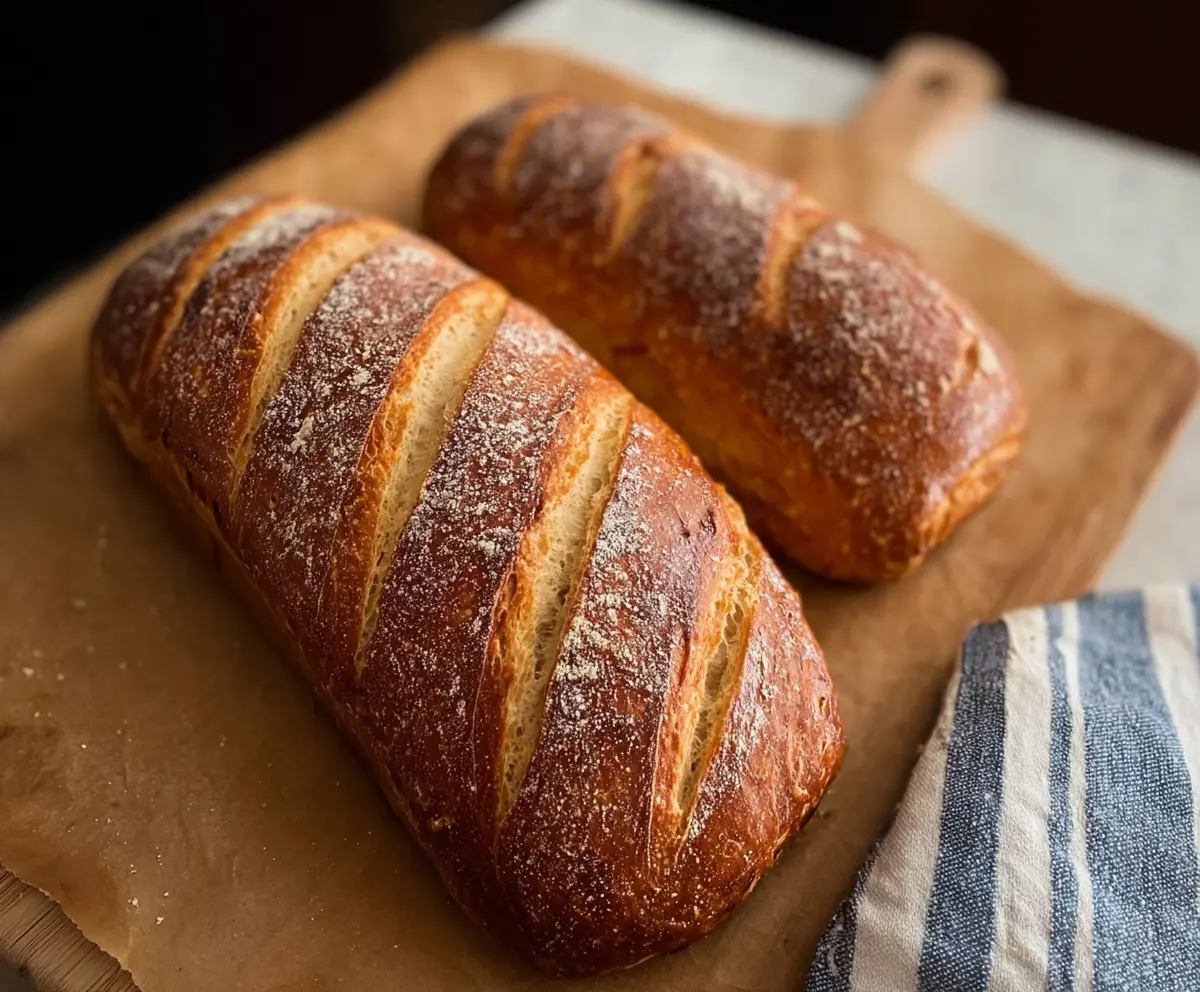
Quick Sourdough Discard French Bread is a simple and tasty way to use up your sourdough starter discard while making a crusty, golden loaf that’s perfect for any meal. With a crisp exterior and soft, chewy inside, this bread captures all the best parts of classic French bread but comes together much faster.
I love this recipe because it lets me enjoy the rich flavor of sourdough without the long wait. Using the discard means nothing goes to waste, and you get to bake fresh bread that fills your kitchen with the best aroma. It’s also forgiving, so even if you’re new to baking bread, you can have a great result without too much fuss.
My favorite way to enjoy this bread is simply toasted with butter or alongside a bowl of soup. It’s also fantastic for making sandwiches or dipping into olive oil and balsamic vinegar. This loaf quickly becomes a kitchen staple because it’s delicious, easy to bake, and always satisfying.
Key Ingredients & Substitutions
Sourdough starter discard: This adds gentle tang and flavor without the wait. If you don’t have discard, you can add a little extra yeast or a spoon of yogurt for mild acidity.
All-purpose flour: This gives structure but you can swap half with bread flour for more chewiness or whole wheat for nuttier flavor.
Active dry yeast: It helps the bread rise faster. Instant yeast works too; just reduce the water a bit or add it directly to dry ingredients.
Sugar: Helps activate the yeast and adds a slight sweetness, but you can leave it out if you prefer a more traditional, less sweet taste.
How Do You Get That Crusty, Crispy French Bread Crust?
Steam in the oven is the secret to a crispy crust. Here’s how I do it:
- Preheat the oven with a pan on the bottom rack.
- When the oven is hot, pour a cup of hot water into the pan to create steam. Be careful to avoid steam burns!
- The steam keeps the outside of the bread moist at first, allowing it to expand fully before forming a crust.
- After the initial steam, the crust dries and crisps up beautifully during baking.
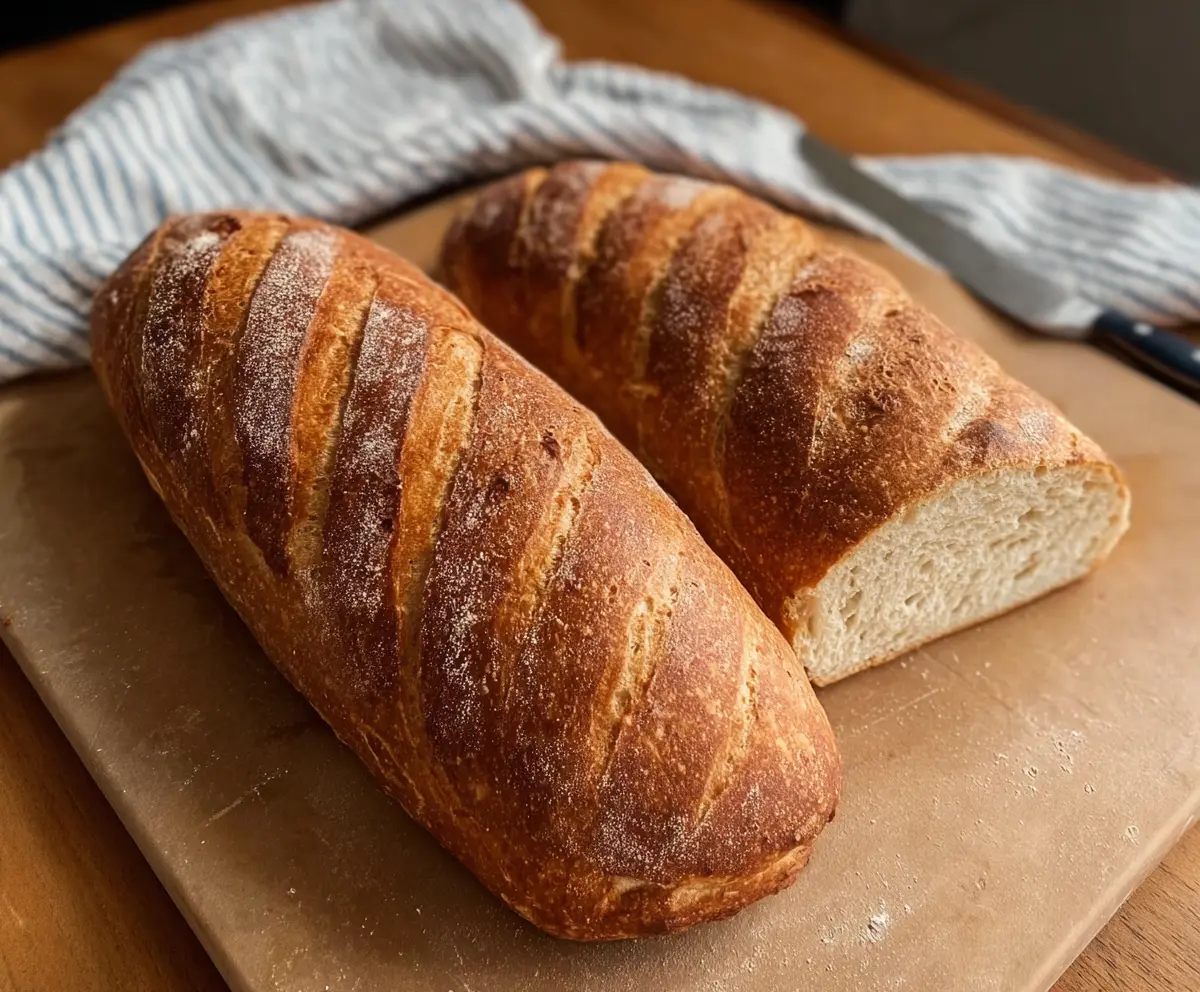
Also, scoring the dough with slashes lets it expand without tearing and adds those classic French bread lines. Using a sharp knife or lame is best for clean cuts.
Equipment You’ll Need
- Large mixing bowl – big enough to hold all the dough as it rises without spilling over.
- Wooden spoon or dough scraper – helps mix and handle sticky dough easily.
- Kitchen scale or measuring cups – for accurate flour and water amounts to get the right dough texture.
- Sharp knife or bread lame – perfect for making clean slashes on the dough surface before baking.
- Baking sheet lined with parchment paper – keeps the bread from sticking and helps with easy cleanup.
- Oven-safe pan or tray – to create steam by pouring hot water during baking for a crisp crust.
- Cooling rack – lets the bread cool evenly so it doesn’t get soggy on the bottom.
Flavor Variations & Add-Ins
- Add 1 teaspoon dried herbs like rosemary or thyme to the dough for a fragrant twist that pairs well with soups.
- Mix in ½ cup grated parmesan or cheddar cheese before kneading for a cheesy crust and rich flavor.
- Stir in ¼ cup chopped olives or sun-dried tomatoes to give the bread a Mediterranean flair.
- Try swapping half the all-purpose flour for whole wheat for a heartier, nuttier loaf with more fiber.
Quick Sourdough Discard French Bread
Ingredients You’ll Need:
- 1 cup (240g) sourdough starter discard (unfed)
- 1 ½ cups (360ml) warm water
- 3 ½ cups (440g) all-purpose flour
- 2 teaspoons (12g) salt
- 1 tablespoon (12g) sugar
- 2 teaspoons (7g) active dry yeast
- 1 tablespoon (15ml) olive oil (for greasing)
- Extra flour for dusting
How Much Time Will You Need?
This bread takes about 20 minutes to prepare and knead, plus 1 to 1 ½ hours for the first rise and an additional 30 to 45 minutes for the second rise. Baking takes about 25 to 30 minutes. So, in total, expect around 2.5 to 3 hours from start to finish, mostly hands-off while the dough rises.
Step-by-Step Instructions:
1. Activate the Yeast:
In a large bowl, mix the warm water and active dry yeast. Stir gently and let it sit for 5 to 10 minutes until the mixture becomes foamy. This means the yeast is active and ready to work.
2. Mix the Dough:
Add the sourdough discard, sugar, and salt to the yeast mixture. Stir to combine everything well. Then, slowly add the flour while mixing until a shaggy dough forms.
3. Knead the Dough:
Turn the dough onto a lightly floured surface and knead by hand for about 8 to 10 minutes. The dough should become smooth and elastic. Add a little flour if the dough is too sticky, but keep it slightly tacky so your bread stays soft inside.
4. First Rise:
Lightly oil a clean bowl with olive oil and place the dough inside, turning it to coat all sides with oil. Cover with a damp towel or plastic wrap and leave in a warm spot for about 1 to 1 ½ hours, or until the dough has doubled in size.
5. Shape the Loaves:
After the dough has risen, punch it down gently to release the air. Divide it into two equal parts. Shape each piece by flattening it slightly, folding the edges toward the center, and rolling it into an oval or baguette shape.
6. Prepare for Second Rise:
Place the shaped loaves on a baking sheet lined with parchment paper. Lightly dust the tops with flour. Using a sharp knife or bread lame, make 4 to 5 diagonal slashes across each loaf. Cover loosely with a towel and let them rest for 30 to 45 minutes until puffed.
7. Bake with Steam:
Preheat your oven to 450°F (230°C). Put an oven-safe pan on the lowest rack to preheat as well. When ready, carefully pour a cup of hot water into the preheated pan to create steam — be cautious to avoid steam burns. Place the loaves on the middle rack and bake for 25 to 30 minutes until golden brown and the loaves sound hollow when tapped on the bottom.
8. Cool and Enjoy:
Remove the bread from the oven and transfer to a cooling rack. Let the loaves cool before slicing to keep the crumb intact. Enjoy your crusty, flavorful bread fresh or toasted!
Can I Use Frozen Sourdough Discard?
Yes! Just make sure to thaw it completely in the refrigerator overnight and bring it to room temperature before mixing. This helps the yeast activate properly for the best rise.
Can I Make the Dough Ahead of Time?
Absolutely! After the first rise, you can refrigerate the dough for up to 24 hours. When ready to bake, let it come to room temperature and complete the second rise before baking.
How Should I Store Leftover Bread?
Keep the bread in a paper bag at room temperature for up to 2 days to maintain crustiness. For longer storage, wrap tightly and freeze; thaw at room temperature and refresh by warming in the oven.
What Can I Use Instead of Active Dry Yeast?
Instant yeast is a great substitute—use slightly less and add it directly to the dry ingredients without proofing. Alternatively, if you want to skip commercial yeast, increase the sourdough discard and extend the rising time, but expect a longer ferment.