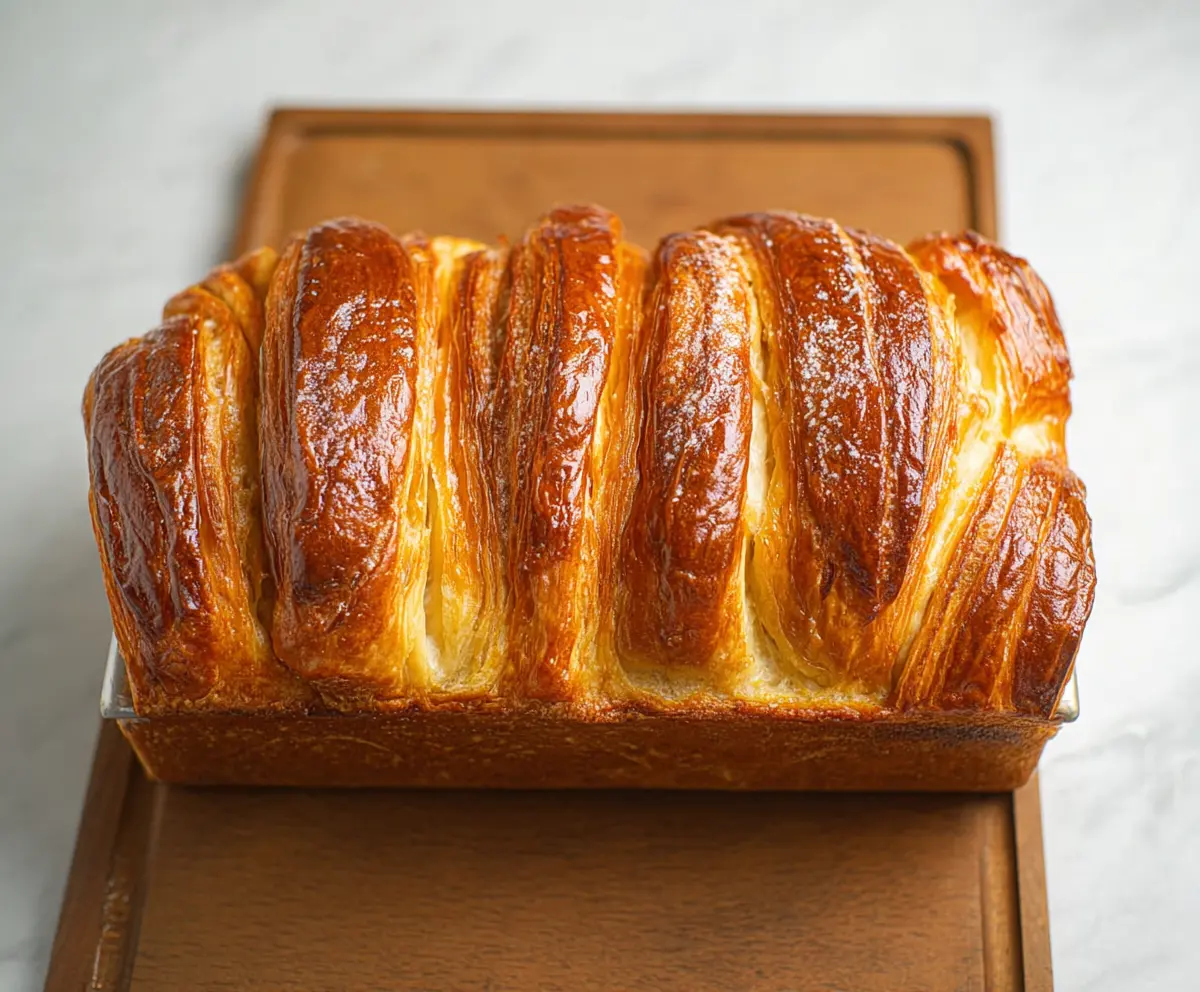
Croissant Bread Loaf is like the best of both worlds—soft, flaky layers of buttery croissant dough baked into the shape of a loaf. It’s golden on the outside with that irresistible crispiness, and inside it’s tender and light, almost like a big, pull-apart croissant. It’s perfect for breakfast or anytime you’re craving something warm and comforting with a little extra love baked in.
I love making this loaf because it feels so special but is really not complicated at all. Watching the dough rise and then turning it into layers that puff up in the oven always makes me feel like I’m giving a little gift to everyone who will get a slice. A little trick I use is brushing the loaf with melted butter right after baking to get it super shiny and rich—trust me, it makes a big difference in taste and look.
My favorite way to enjoy Croissant Bread Loaf is toasted lightly and topped with a bit of jam or honey. Sometimes I even slice it up and use it for fancy sandwiches with ham and cheese, and it never disappoints. It’s one of those recipes that quickly becomes a family favorite because it’s just so tasty and versatile, and I think you’ll find yourself baking it over and over again!
Key Ingredients & Substitutions
All-purpose flour: It’s the base for this dough and provides the right structure. If you want a bit lighter texture, you can mix in some bread flour, but all-purpose works well for tender layers.
Butter (for laminating): Cold unsalted butter is critical here to create flaky layers. If you can, use European-style butter for extra richness. If unavailable, regular unsalted butter is just fine.
Yeast: Active dry yeast is used to get a good rise. Instant yeast can be used instead; just reduce the amount slightly and mix it directly with the flour.
Milk and sugar: Milk adds tenderness and a mild flavor. You can swap milk for a non-dairy milk like oat or almond for lactose-free options but keep it at room temperature for best results. Sugar helps with browning and balances the butter’s richness.
How Do You Create Those Perfect Flaky Layers in Croissant Bread Loaf?
The secret to flaky layers is in laminating the dough, which means rolling and folding the butter into the dough multiple times to create thin layers.
- Start with a cold butter block and place it on the rolled-out dough.
- Fold the dough over the butter like a letter to trap it inside.
- Roll the dough into a rectangle, then fold it into thirds again. This is called a “turn.”
- Chill the dough between turns to keep the butter firm and stop it from melting.
- Repeat this rolling and folding process 2-3 times — the layers multiply each time, creating the classic croissant texture.
- Keep everything cool! Warm hands and a warm kitchen can make the butter too soft, which ruins the layering.
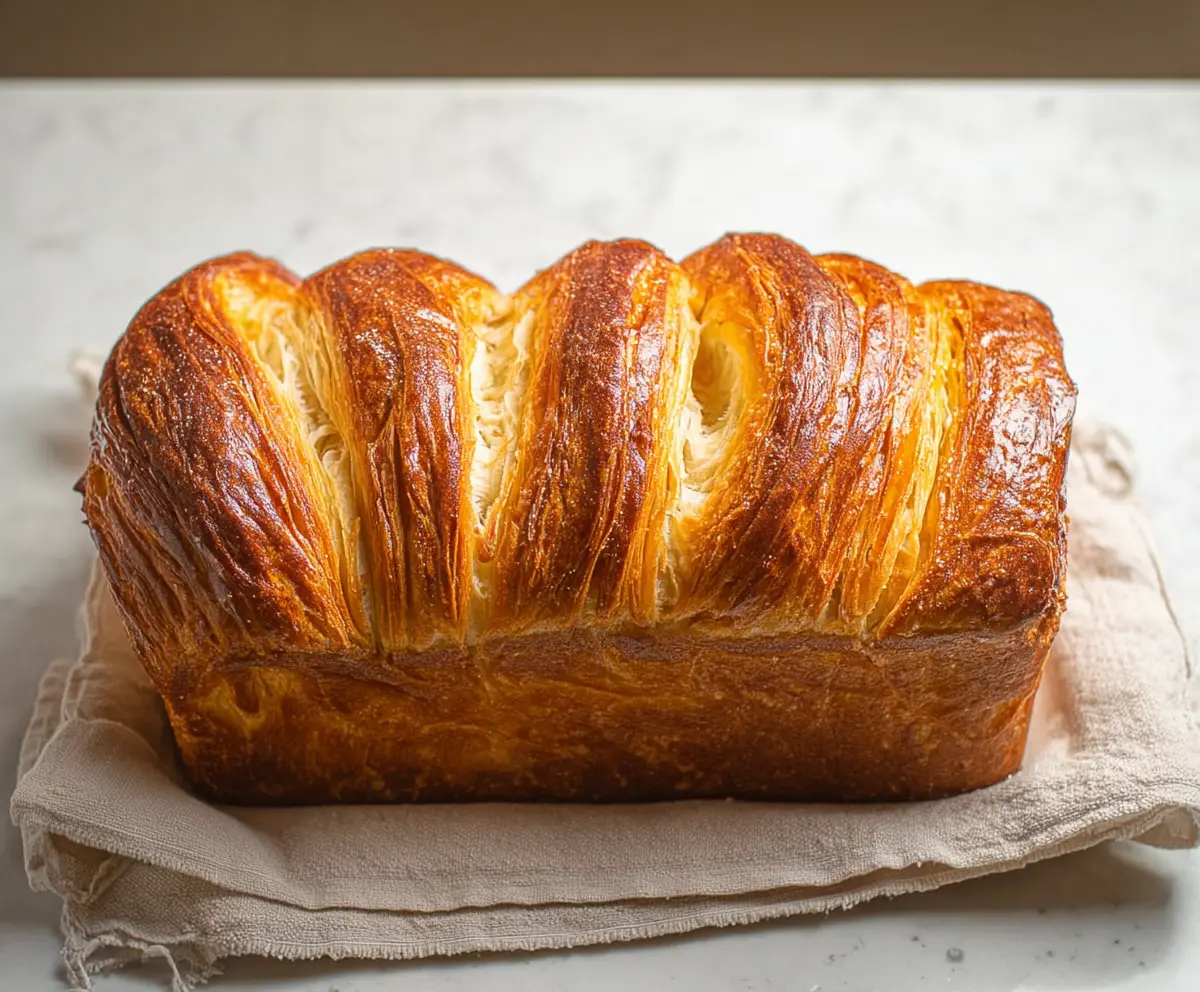
Taking your time with these folds, chilling between steps, and handling the dough gently will give you a loaf with a delicate, layered crumb and a golden crispy crust.
Equipment You’ll Need
- Stand mixer with dough hook – makes kneading easier and saves your hands.
- Rolling pin – essential for evenly rolling out the dough and butter layers.
- Parchment paper – helps you shape the butter block and prevents sticking.
- 9×5-inch loaf pan – perfect size to shape and bake the croissant loaf.
- Basting brush – for spreading egg wash and melted butter evenly on the crust.
Flavor Variations & Add-Ins
- Add herbs like rosemary or thyme to the dough for a fresh, savory note great with cheeses.
- Mix mini chocolate chips between layers before folding for a sweet twist.
- Spread a thin layer of almond paste or jam on the dough before folding to add sweetness inside.
- Use a mix of cheeses like gruyere or cheddar inside for a cheesy pull-apart loaf perfect for sandwiches.
How to Make Croissant Bread Loaf
Ingredients You’ll Need:
- 4 cups (500g) all-purpose flour
- 1/4 cup (50g) granulated sugar
- 2 tsp salt
- 1 tbsp active dry yeast
- 1 1/4 cups (300ml) warm milk (about 110°F/43°C)
- 2 tbsp unsalted butter, melted
- 1 1/4 cups (285g) cold unsalted butter (for laminating)
- 1 egg (for egg wash)
- Powdered sugar for dusting (optional)
How Much Time Will You Need?
This recipe takes about 30 minutes of active preparation including mixing and rolling, plus around 3 to 4 hours total for rising and chilling time. Don’t rush the resting phases—those are what give the loaf its delicious flaky layers. Baking itself takes about 35-45 minutes.
Step-by-Step Instructions:
1. Making the Dough:
In a large bowl, mix the flour, sugar, salt, and yeast well. Add warm milk and melted butter. Stir until a shaggy dough forms. Turn the dough onto a floured surface and knead for 8-10 minutes by hand or 6-7 minutes using a stand mixer with a dough hook, until smooth and elastic. Shape into a ball, place in a greased bowl, cover with plastic wrap, and let it rise in a warm spot for about 1 to 1.5 hours until doubled in size.
2. Preparing the Butter Block:
While the dough rises, put the cold butter between two pieces of parchment paper. Pound and roll it into a flat square about 7 inches (18cm) per side. Chill this butter slab in the fridge so it becomes firm yet pliable.
3. Rolling and Laminating the Dough:
Once the dough has doubled, gently deflate it and roll it out on a floured surface into a 12×18 inch (30x45cm) rectangle. Place the chilled butter block onto one half of the dough. Fold the other half of the dough over the butter and seal edges. Roll out the dough into a 10×24 inch (25x60cm) rectangle. Now fold the dough into thirds, like a letter. Wrap it in plastic and chill in the fridge for 30 minutes.
Repeat the rolling and folding (called “turns”) two more times, chilling for 30 minutes between each one. This creates the flaky layers. After the last fold, roll the dough into a 9×20 inch (23x50cm) rectangle.
4. Assembling the Loaf:
Cut the dough lengthwise into 3 to 4 long strips. Fold each strip in half lengthwise to keep the butter inside. Then gently fold or stack these strips accordion-style (loosely) to fit into a greased 9×5 inch (23x13cm) loaf pan. Cover loosely with plastic wrap and let rise at room temperature until puffy and nearly doubled, about 1 to 1.5 hours.
5. Baking the Loaf:
Preheat your oven to 375°F (190°C). Brush the top of the loaf lightly with beaten egg for a shiny golden finish. Bake for about 35-45 minutes until the crust is a deep golden color and the loaf sounds hollow when tapped. Once out of the oven, immediately brush with melted butter to add shine and richness.
6. Cooling and Serving:
Allow the bread to cool in the pan for 10 minutes before transferring to a wire rack to cool completely. Before serving, sprinkle with powdered sugar if you like for a pretty touch.
Enjoy your delicious homemade croissant bread loaf plain, toasted with jam, or sliced for fancy sandwiches!
Can I Use Frozen Butter for Laminating?
It’s best to use cold, but not frozen, butter for laminating. If your butter is frozen, let it thaw in the fridge until it’s firm yet pliable—this helps create those flaky layers without breaking the dough.
How Do I Store Leftover Croissant Bread Loaf?
Store leftovers in an airtight container or wrapped tightly in plastic wrap at room temperature for up to 2 days. For longer storage, wrap well and freeze for up to 1 month. Thaw at room temperature before enjoying.
Can I Add Flavors or Fillings?
Absolutely! You can add chocolate chips, herbs, or a thin spread of jam or almond paste between layers before folding to customize your loaf. Just avoid overfilling to keep the dough layers nice and flaky.
Is It Okay to Use Instant Yeast Instead of Active Dry Yeast?
Yes, you can substitute instant yeast for active dry yeast. Use slightly less—about 2 1/4 teaspoons—and mix it directly with the flour. Instant yeast often shortens the rising time, so keep an eye on your dough.