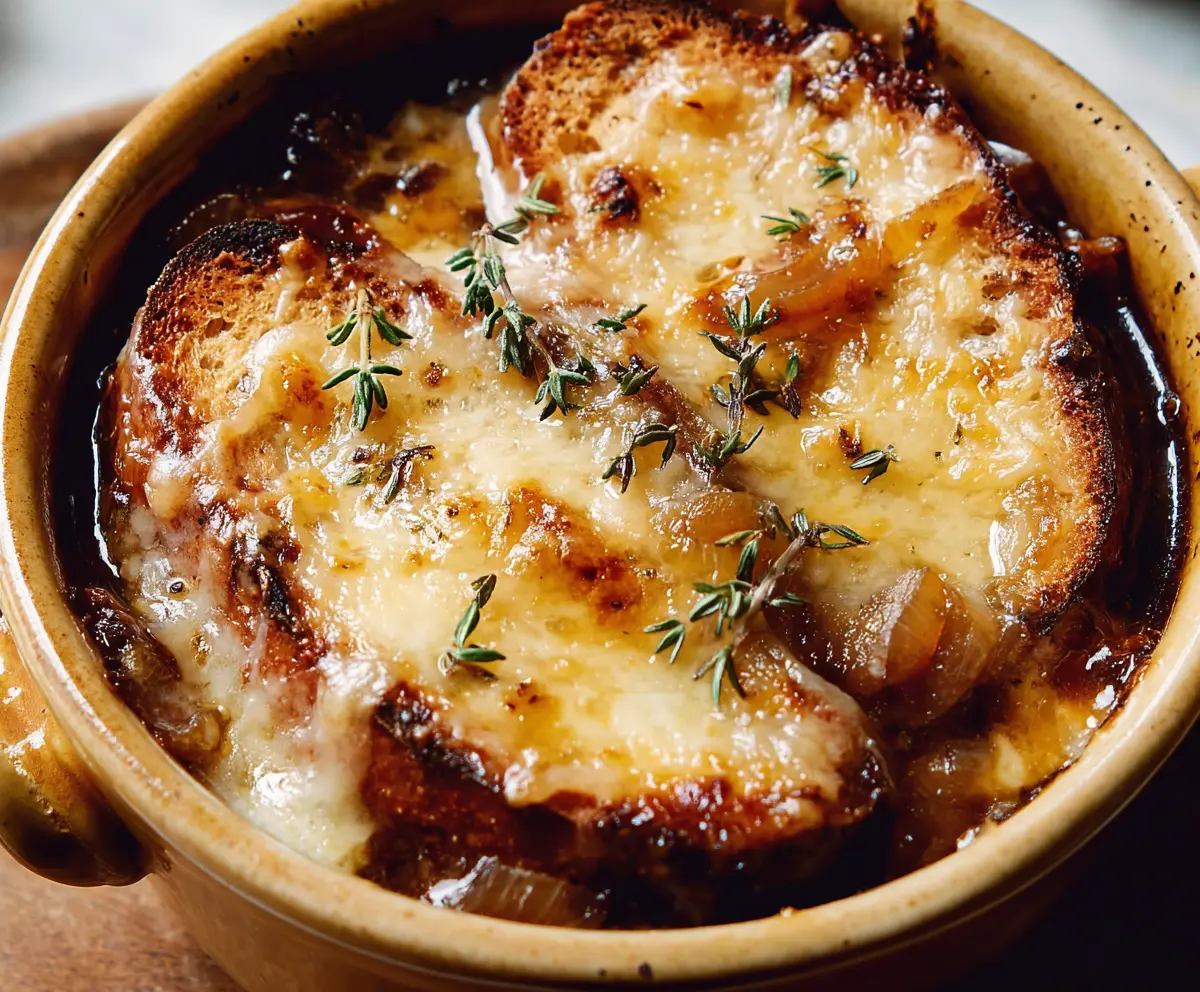
Caramelized Onion Soup is a warm, comforting bowl filled with deep, sweet flavors from slowly cooked onions. The rich, golden caramelized onions give the soup a natural sweetness, while the broth is smooth and soothing. It’s the kind of soup that feels like a gentle hug on a chilly day.
I love making this soup when I have some extra time because truly caramelizing the onions brings out so much wonderful flavor. It’s a bit of patience well worth it, as those long, slow-cooked onions create a taste that makes everyone smile. I always find that stirring gently and letting the onions soften without rushing gives the best results.
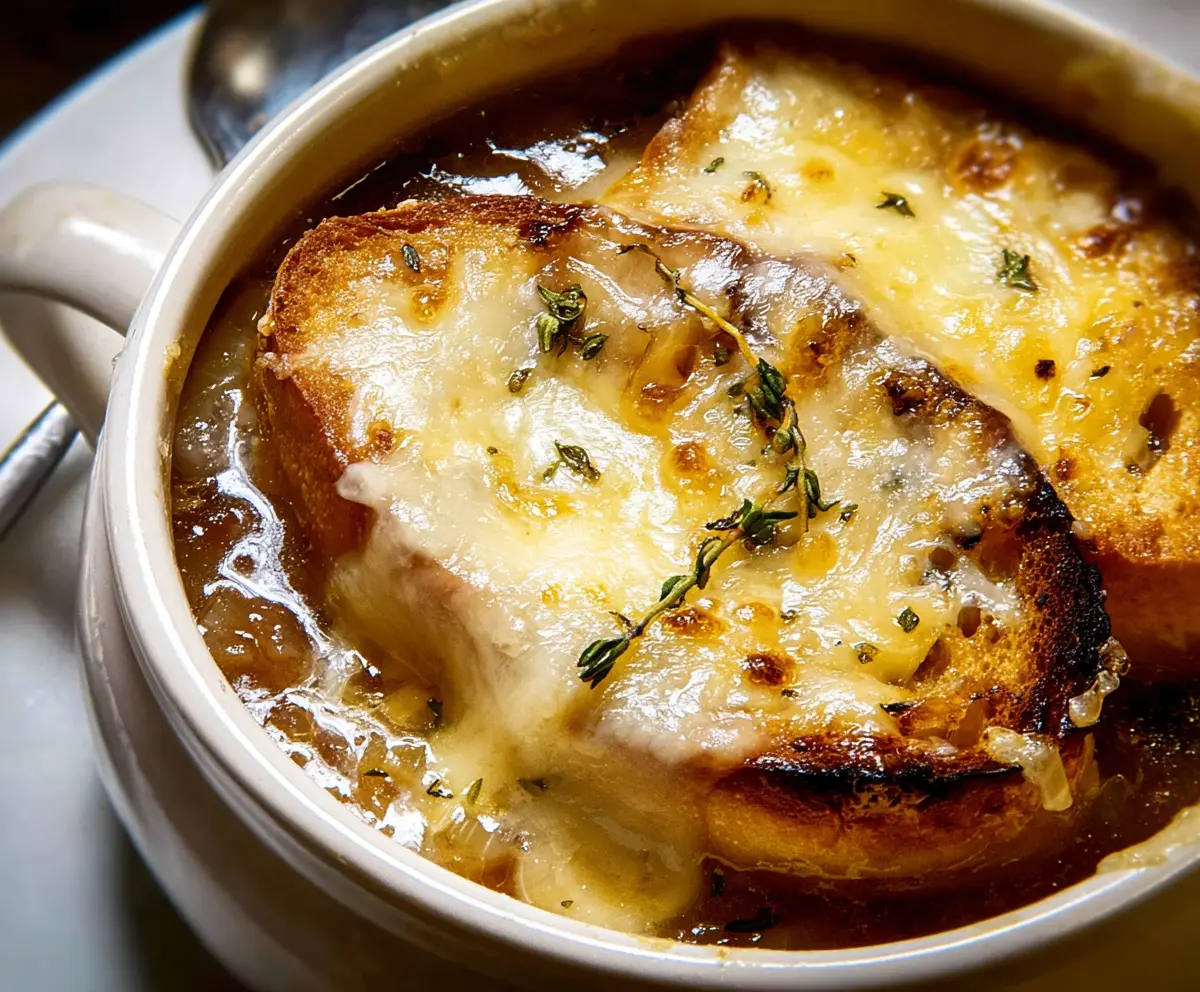
My favorite way to serve this soup is with a crispy piece of crusty bread on top and a melt of gooey cheese. Toasting the bread and broiling the cheese until bubbly adds such a nice texture that pairs perfectly with the silky soup. It’s simple, cozy, and always a favorite at my table, especially when shared with family or friends.
Key Ingredients & Substitutions
Yellow Onions: These are the best choice for caramelizing because they get sweet and soft. If you don’t have yellow onions, sweet onions or Vidalia can work well too.
Butter & Olive Oil: The combo helps brown the onions without burning. You can use all butter or all oil if you prefer, but butter adds richness I really enjoy.
Broth: Traditional recipes use beef broth for depth. For a lighter soup, try chicken or vegetable broth. Low-sodium versions give you control over the salt.
White Wine: This adds acidity to balance the sweetness. If you don’t want alcohol, a splash of apple cider vinegar or extra broth works fine.
Gruyère Cheese: It melts nicely and adds a nutty, creamy topping. If you can’t find Gruyère, Swiss or even mozzarella can be a tasty substitute.
How Do You Perfectly Caramelize Onions Without Burning Them?
Caramelizing onions is the heart of this soup. It takes time and patience but is worth it for that sweet, rich flavor:
- Use a wide, heavy-bottomed pan for even cooking.
- Cook the onions on medium-low heat with butter and oil.
- Stir every few minutes to prevent sticking or burning.
- If onions start to brown too quickly, lower the heat slightly.
- Adding a pinch of sugar after 10 minutes can help speed up caramelization.
- The process usually takes about 45-60 minutes. Don’t rush it—the color and sweetness develop slowly.
Slow and steady wins with caramelizing onions. The deep golden color and soft texture make your soup special!
Equipment You’ll Need
- Large heavy-bottomed pot – perfect for even heat that helps onions caramelize slowly without burning.
- Wooden spoon – great for stirring the onions gently and scraping the pot without scratching.
- Oven-safe bowls or ramekins – to broil the cheese-topped soup right before serving.
- Baking sheet – for toasting the bread slices evenly under the broiler.
Flavor Variations & Add-Ins
- Use vegetable broth instead of beef for a lighter, vegetarian version that still tastes rich.
- Add a splash of sherry or dry vermouth instead of white wine for a different acidic note.
- Top with different cheeses like mozzarella or fontina for varied meltiness and flavor.
- Stir in fresh herbs like rosemary or sage during simmering for an earthy twist.
How to Make Caramelized Onion Soup?
Ingredients You’ll Need:
For The Soup:
- 6 large yellow onions, thinly sliced
- 4 tablespoons unsalted butter
- 2 tablespoons olive oil
- 1 teaspoon salt
- ½ teaspoon sugar (optional)
- 3 cloves garlic, minced
- 8 cups beef broth (or mix of beef and chicken broth)
- ½ cup dry white wine (optional)
- 2 sprigs fresh thyme, plus extra for garnish
- 1 bay leaf
- Freshly ground black pepper, to taste
For The Topping:
- Baguette or crusty bread, sliced
- 2 cups grated Gruyère cheese (or Swiss cheese)
How Much Time Will You Need?
This recipe takes about 15 minutes for prep and 1 to 1½ hours for cooking. The caramelizing step is slow but important, needing 45 to 60 minutes. After simmering and assembling, broiling the cheese-topped soup only takes a few minutes. Overall, plan for about 1 hour 15 minutes to 1 hour 30 minutes.
Step-by-Step Instructions:
1. Caramelizing the Onions:
Heat a large, heavy-bottomed pot over medium heat. Melt butter with olive oil. Add the sliced onions and salt. Cook gently, stirring every few minutes, until onions soften and turn deep golden brown. This will take 45 to 60 minutes. After about 10 minutes, add optional sugar to speed caramelization.
2. Building the Soup:
Add minced garlic and cook for 1–2 minutes until fragrant. Pour in white wine to deglaze, scraping up browned bits from the pot. Let the wine reduce by half, about 3 to 5 minutes. Add broth, thyme sprigs, and bay leaf. Bring to a simmer and cook gently for 20 to 30 minutes. Season with pepper and adjust salt to taste.
3. Preparing the Topping and Serving:
Preheat your broiler. Toast bread slices on a baking sheet until dry and lightly browned. Remove thyme and bay leaf from the soup. Ladle soup into oven-safe bowls. Place toasted bread on top and cover generously with shredded Gruyère cheese. Broil until cheese is melted and golden brown. Garnish with fresh thyme and serve immediately.
Can I Use Frozen Onions for This Soup?
It’s best to use fresh onions for caramelization since frozen onions release excess water and won’t brown as nicely. If you only have frozen, thaw and drain them well, then cook low and slow, but expect a slightly different texture.
Can I Make Caramelized Onion Soup Ahead of Time?
Absolutely! The soup tastes even better the next day after flavors meld. Store it in the fridge for up to 3 days, then reheat gently on the stove. Add the bread and cheese just before serving to keep the topping crisp and melty.
What’s the Best Bread and Cheese for Topping?
Crusty baguette or sourdough works wonderfully for toasting and soaking up the soup. For cheese, Gruyère is classic for its nutty flavor and excellent melting, but Swiss or mozzarella can be tasty substitutes.
How Can I Speed Up Caramelizing the Onions?
While patience is key, adding a pinch of sugar early on can help speed caramelization. Make sure your pan is wide for even cooking, keep the heat medium-low, and stir regularly to avoid burning while encouraging browning.