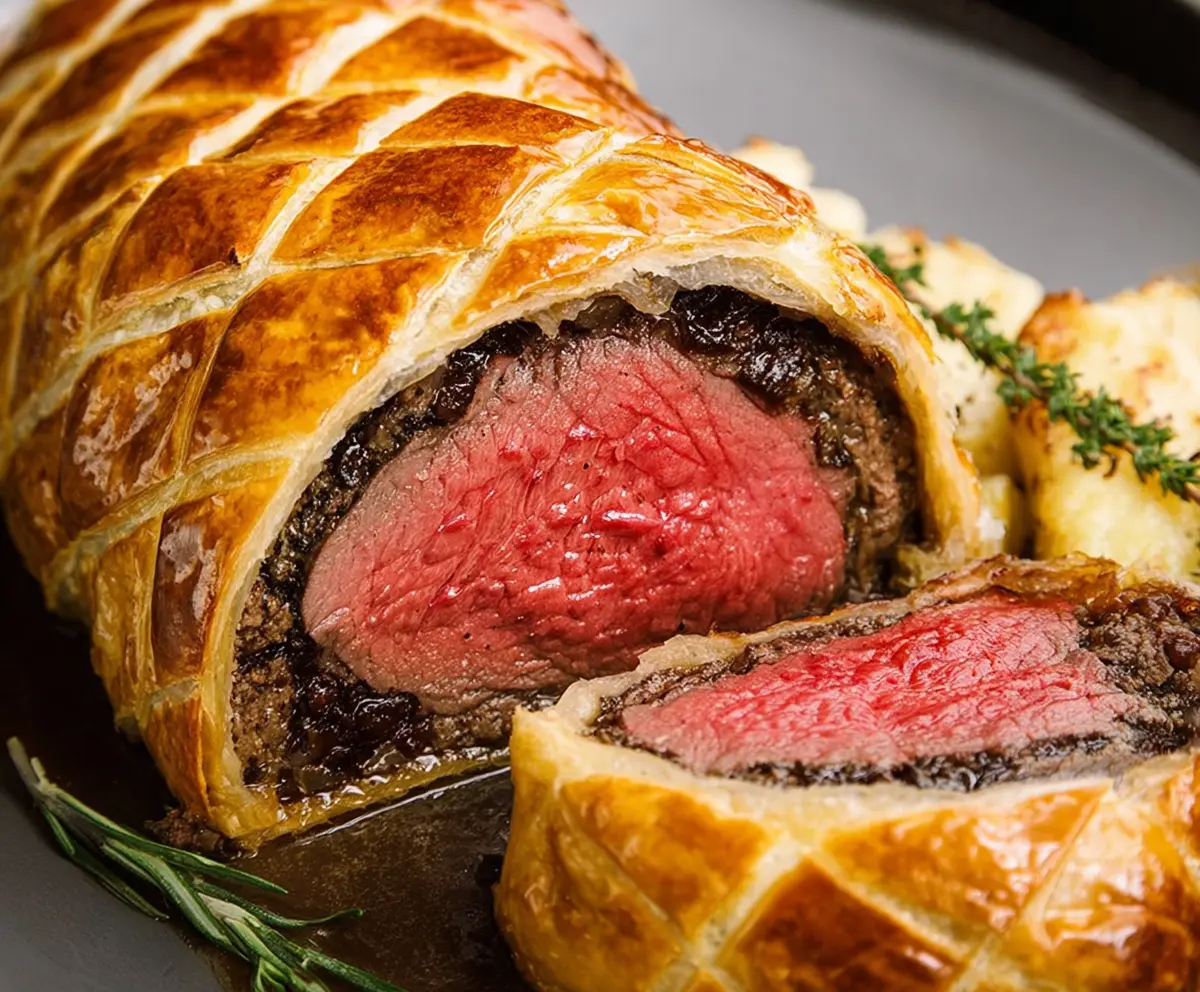
Beef Wellington is a classic dish that feels like a special occasion on a plate. It’s all about a juicy, tender beef fillet wrapped in a layer of mushroom duxelles, then hugged by flaky, golden puff pastry. The mix of the rich beef, earthy mushrooms, and buttery crust makes each bite a real treat.
I love making Beef Wellington when I want to impress friends or family without spending all day in the kitchen. The key for me is to keep the beef perfectly pink inside and let the pastry get nice and crisp. It’s easier than it looks once you get the hang of wrapping everything up neatly, and the smell while it’s baking is absolutely amazing.
When I serve Beef Wellington, I usually pair it with some simple roasted veggies or a fresh salad to balance out the richness. It’s great for a cozy dinner but also shines at holiday meals or celebrations. Every time I make it, it feels like treating everyone to something truly memorable and delicious.
Key Ingredients & Substitutions
Beef Tenderloin: The star of Beef Wellington, this cut is tender and cooks quickly. If tenderloin is hard to find, you can try a center-cut sirloin roast, but expect a slightly different texture.
Mushrooms: Cremini or button mushrooms work well for the duxelles. You can add shiitake or portobello for a deeper flavor. Just keep them finely chopped and cook until dry!
Prosciutto: This adds saltiness and helps keep moisture away from the pastry. If you can’t find prosciutto, you might use thin slices of ham or bacon, but prosciutto’s delicate flavor is best.
Puff Pastry: Ready-made works great and saves time. Keep it chilled until wrapping to prevent it from becoming too soft and sticky.
Dijon Mustard: Brushed on the beef to add flavor and help the duxelles stick. You can substitute with whole-grain mustard for a bit of texture.
How Can You Keep the Beef Juicy While Getting the Pastry Crispy?
Balancing the juicy beef and crisp pastry can be tricky. Here’s what I do:
- First, sear the beef well on all sides. This locks in the juices and builds flavor.
- Brush the beef with mustard once it’s cooled—it adds flavor and helps the mushroom layer stick.
- Cook the mushroom duxelles until very dry. Mushrooms release water; drying them prevents soggy pastry.
- Wrap the beef tightly in prosciutto and chill before puff pastry wrapping—this creates a moisture barrier.
- Chill the wrapped beef before baking to let everything firm up for crisp pastry.
- Finally, bake the Wellington at a high enough temp (around 400°F/200°C) to brown the pastry quickly but check for doneness to keep beef medium-rare.
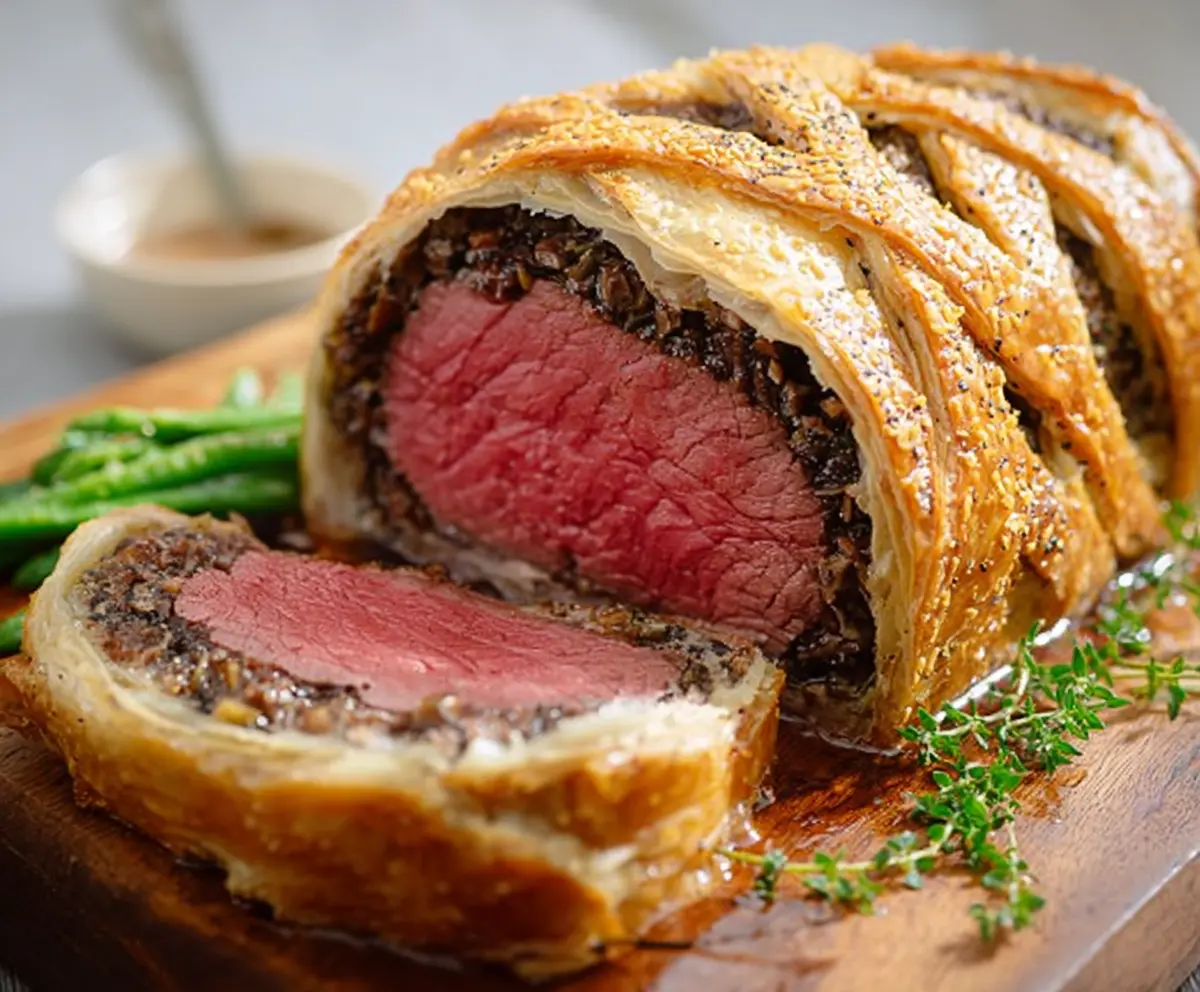
Equipment You’ll Need
- Heavy skillet – perfect for searing the beef evenly and building flavor.
- Food processor or sharp knife – helps finely chop mushrooms for the duxelles.
- Plastic wrap – lets you roll the beef and mushroom layers tightly before wrapping in pastry.
- Rolling pin – to roll out puff pastry evenly without tearing it.
- Baking sheet lined with parchment paper – keeps the pastry from sticking and makes cleanup easy.
- Pastry brush – helpful for applying egg wash for a golden, shiny crust.
Flavor Variations & Add-Ins
- Swap prosciutto for thin slices of smoked ham for a milder, smoky touch.
- Add finely chopped fresh herbs like rosemary or thyme to the mushroom duxelles for extra fragrance.
- Stir in finely chopped cooked chestnuts or walnuts for a subtle crunch inside the filling.
- For a twist, spread a thin layer of pate (like chicken liver pate) beneath the mushroom for richer flavor.
Beef Wellington Recipe
Ingredients You’ll Need:
For the Beef and Filling:
- 1 center-cut beef tenderloin (about 2-2.5 lbs), trimmed
- Salt and freshly ground black pepper, to taste
- 2 tbsp olive oil
- 4 oz prosciutto, thinly sliced
- 8 oz cremini or button mushrooms, finely chopped
- 2 tbsp unsalted butter
- 1 small shallot, finely chopped
- 2 cloves garlic, minced
- 2 tsp fresh thyme leaves, chopped
- 1/4 cup dry white wine or dry sherry (optional)
- 2 tbsp Dijon mustard
For the Pastry:
- 1 sheet puff pastry, thawed
- 1 egg yolk, beaten with 1 tsp water (egg wash)
- Fresh rosemary or thyme sprigs for garnish (optional)
How Much Time Will You Need?
This Beef Wellington recipe takes around 45 minutes for preparation, including searing the beef and making the mushroom mixture. Then, factor in 30 minutes of chilling time to set the wrapped beef before baking. The baking time is about 25-30 minutes, plus 10 minutes resting before serving. Altogether, plan for about 1 hour 45 minutes from start to finish.
Step-by-Step Instructions:
1. Prepare the Beef:
Season the beef tenderloin generously with salt and freshly ground black pepper. Heat olive oil in a heavy skillet over medium-high heat. Sear the beef on all sides until it’s nicely browned, about 2-3 minutes per side. Remove the beef from the skillet and let it cool slightly. Once cooled, brush the beef all over with Dijon mustard. Set aside.
2. Make the Mushroom Duxelles:
Finely chop the mushrooms using a food processor or knife. In the same skillet, melt butter over medium heat. Add the shallot and garlic, cooking until softened. Add the chopped mushrooms, thyme, salt, and pepper. Cook the mixture, stirring frequently, until it’s dry and caramelized, about 10-15 minutes. If you’d like, pour in the white wine or dry sherry and cook until evaporated. Remove from heat and let cool.
3. Assemble the Prosciutto and Mushroom Layer:
Lay out a sheet of plastic wrap on your work surface. Arrange the prosciutto slices overlapping each other to form a rectangle large enough to wrap around the beef. Spread the cooled mushroom duxelles evenly over the prosciutto slices.
4. Wrap the Beef:
Place the mustard-coated beef on top of the mushroom mixture. Using the plastic wrap, carefully roll the prosciutto and mushroom layer around the beef to form a tight barrel shape. Twist the ends of the plastic wrap to secure and chill in the refrigerator for 30 minutes.
5. Wrap in Puff Pastry:
On a lightly floured surface, roll out the puff pastry into a rectangle big enough to wrap around the beef roll. Remove the plastic wrap from the beef and place it in the center of the pastry. Fold the pastry over the beef, trimming any excess, and seal the edges firmly. Brush the entire pastry with the egg wash for a shiny, golden finish. You can optionally score or decorate the pastry lightly with a knife.
6. Bake:
Preheat the oven to 400°F (200°C). Place the wrapped beef seam side down on a baking sheet lined with parchment paper. Brush once more with the egg wash. Bake for 25-30 minutes, or until the puff pastry is golden brown and crisp.
7. Rest and Serve:
Remove the Wellington from the oven and let it rest for 10 minutes. Slice carefully and serve with your favorite sides like roasted potatoes and steamed vegetables. Garnish with fresh rosemary or thyme if you like. Enjoy!
Can I Use Frozen Beef Tenderloin for Beef Wellington?
Yes, but make sure to fully thaw it in the refrigerator overnight before cooking. Pat it dry with paper towels to remove excess moisture, which helps with searing and achieving a crispy crust.
Can I Prepare Beef Wellington Ahead of Time?
Absolutely! You can assemble the wrapped beef up to the puff pastry stage and keep it refrigerated for up to 24 hours before baking. Just brush with egg wash and bake fresh when ready to serve.
What Should I Do If My Puff Pastry Becomes Too Soft?
Keep the pastry as cold as possible while working with it. If it softens, chill it in the fridge or freezer for a few minutes to firm up before wrapping the beef to prevent tearing or sticking.
How Do I Know When the Beef is Cooked Perfectly?
Use a meat thermometer inserted into the center of the beef: 125°F (52°C) for rare, 135°F (57°C) for medium-rare. Remember the beef will continue to cook slightly during resting, so take it out just before it reaches the desired temperature.